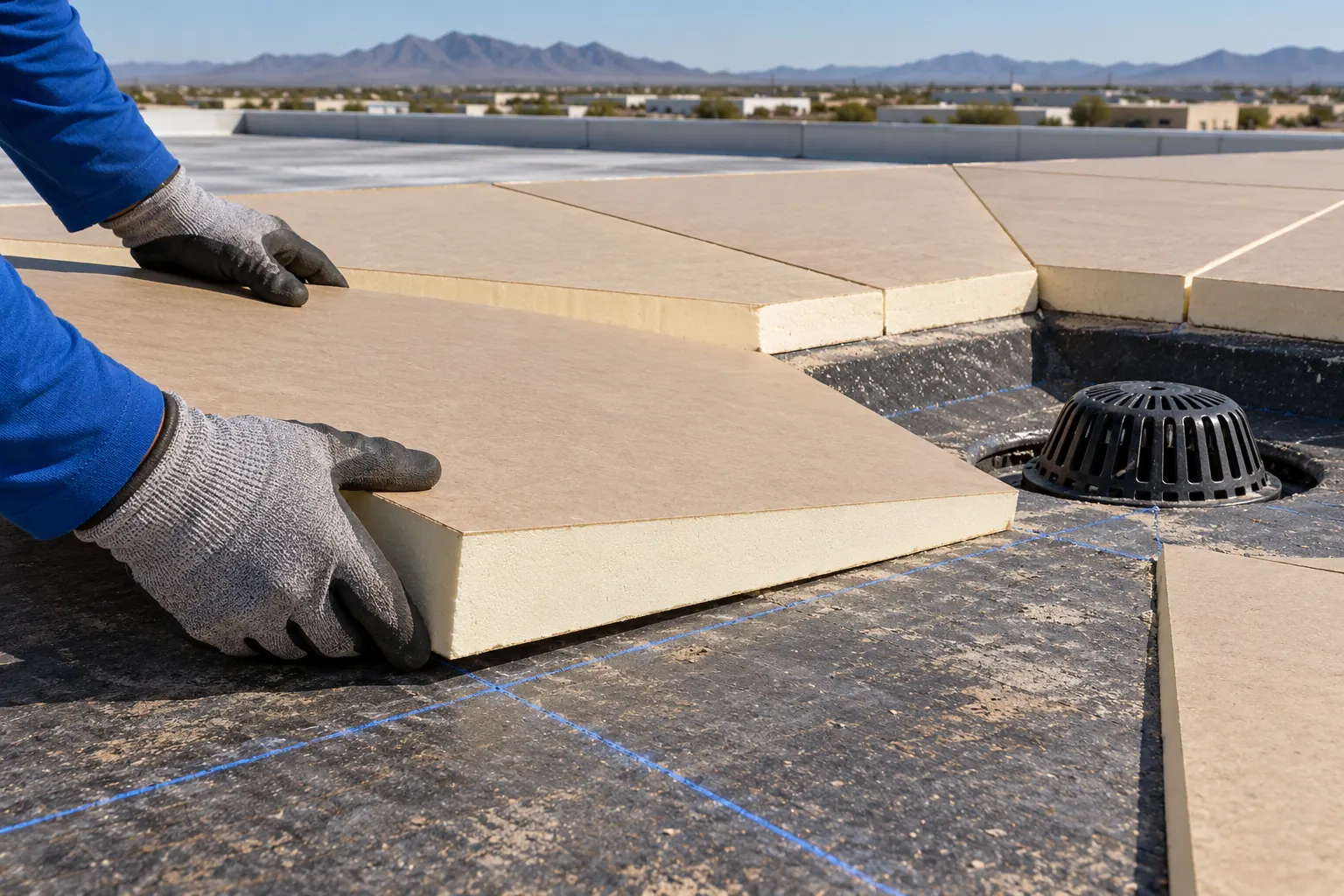
New TPO Over Tapered Insulation
On a tear-off, we lay tapered boards toward the drains, add cover board, and fasten or adhere new white sheet with welded laps.

As a TPO roofing contractor in Tolleson, we install, replace, and repair white TPO roofs on distribution, cold-storage, and retail buildings, with hot-air welded seams and insulation sized to the space below.
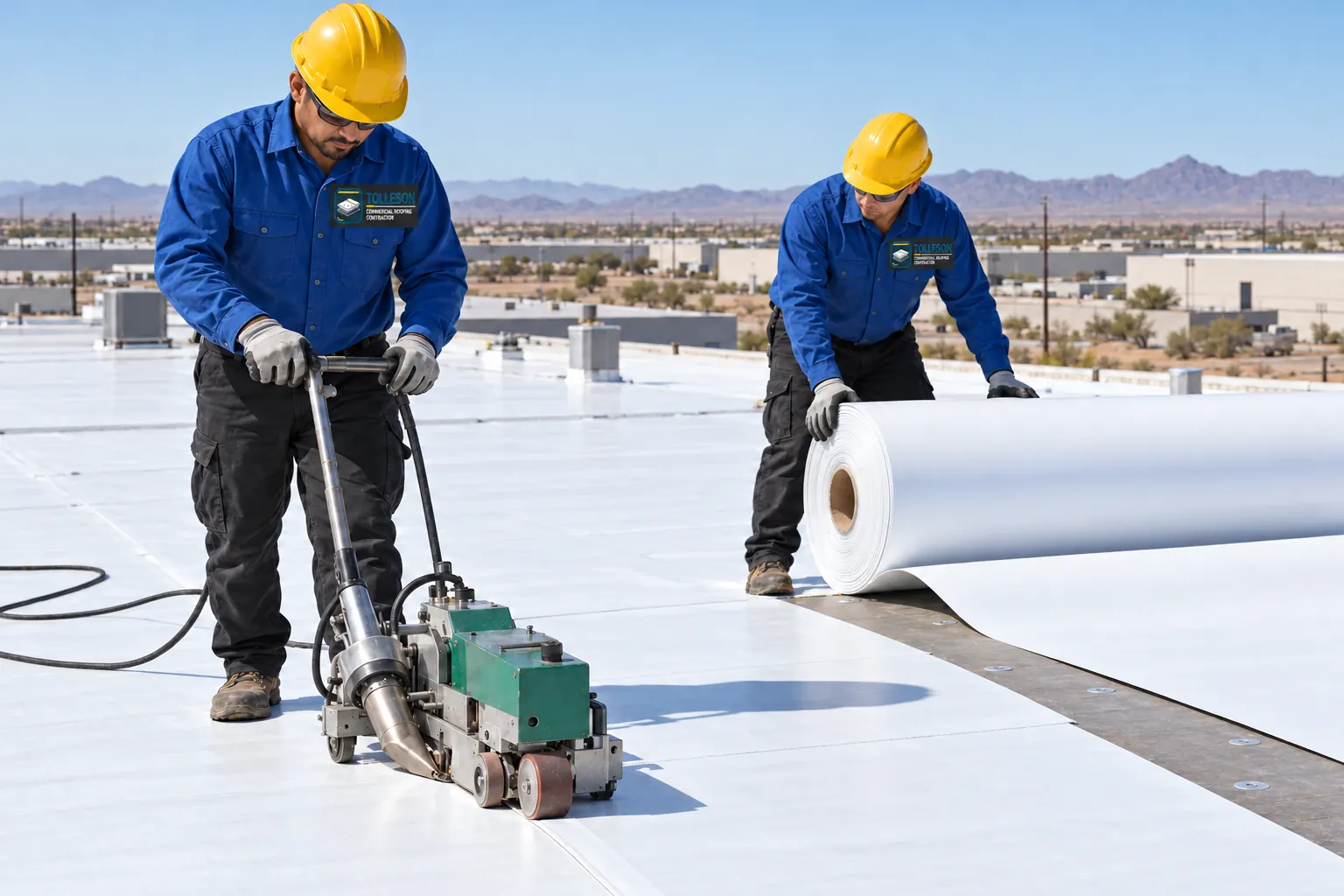
TPO goes on low-slope decks. These lists show when a roof is ready for it and when something else comes first.
Welded TPO holds up well in the West Valley. Leaks on a TPO warehouse roof start at these five spots.
A cold weld from the original install, or a lap that was never cleaned before welding.
Probe the full run, cut out the weak weld, clean the sheet, and weld a cover strip over it.
Membrane flashing pulled away from the curb corner as the unit vibrated.
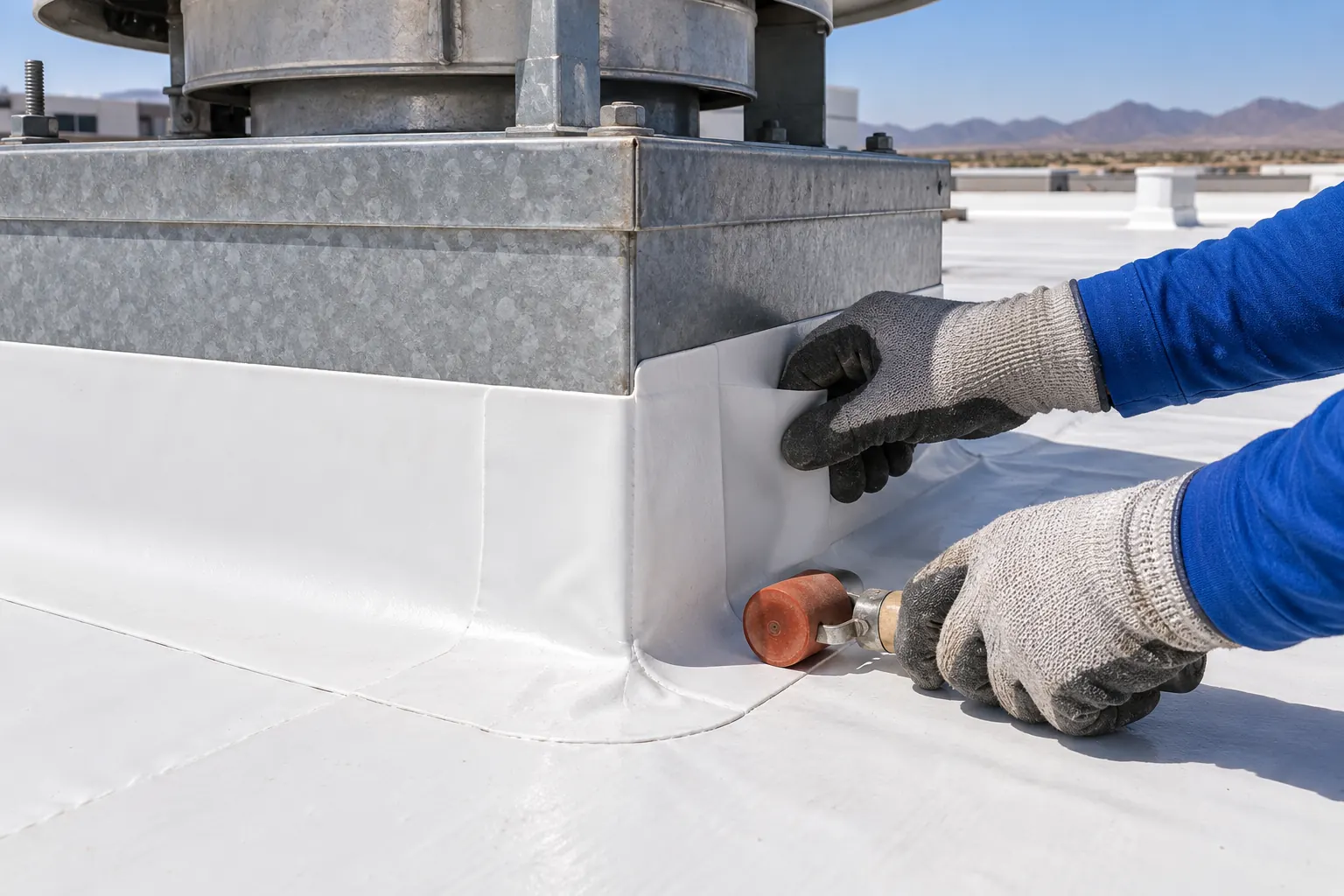
Reflash the curb with new base flashing and corners, and seal the counterflashing at the top.
Sheet that shrank, or was pulled tight into the corner with no relief.
Install a new corner patch and wall flashing, and re-terminate the sheet under a new bar.
A drain set high, or insulation crushed by foot traffic around it.
Reset the drain sump with tapered insulation and confirm the clamp ring seals the membrane.
Plates backing out on a mechanically attached roof with a weak or damp deck.
Check deck pull-out, add fasteners or replace plates, and weld new strips over the area.
Four ways we handle a TPO job, picked after the inspection.
On a tear-off, we lay tapered boards toward the drains, add cover board, and fasten or adhere new white sheet with welded laps.
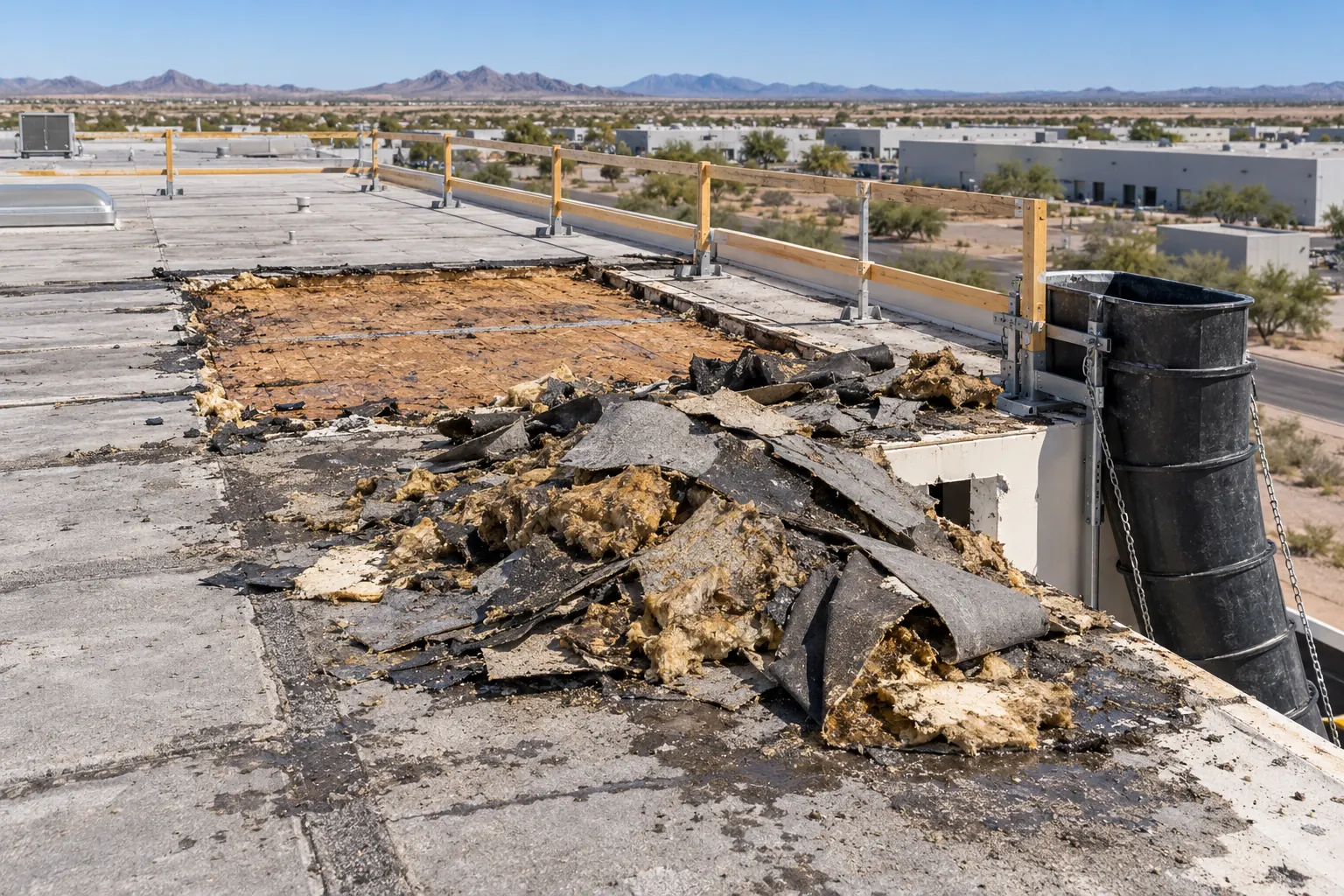
Wet insulation and failed sheet come off in sections, the deck gets checked and repaired, and each section is closed before nightfall.
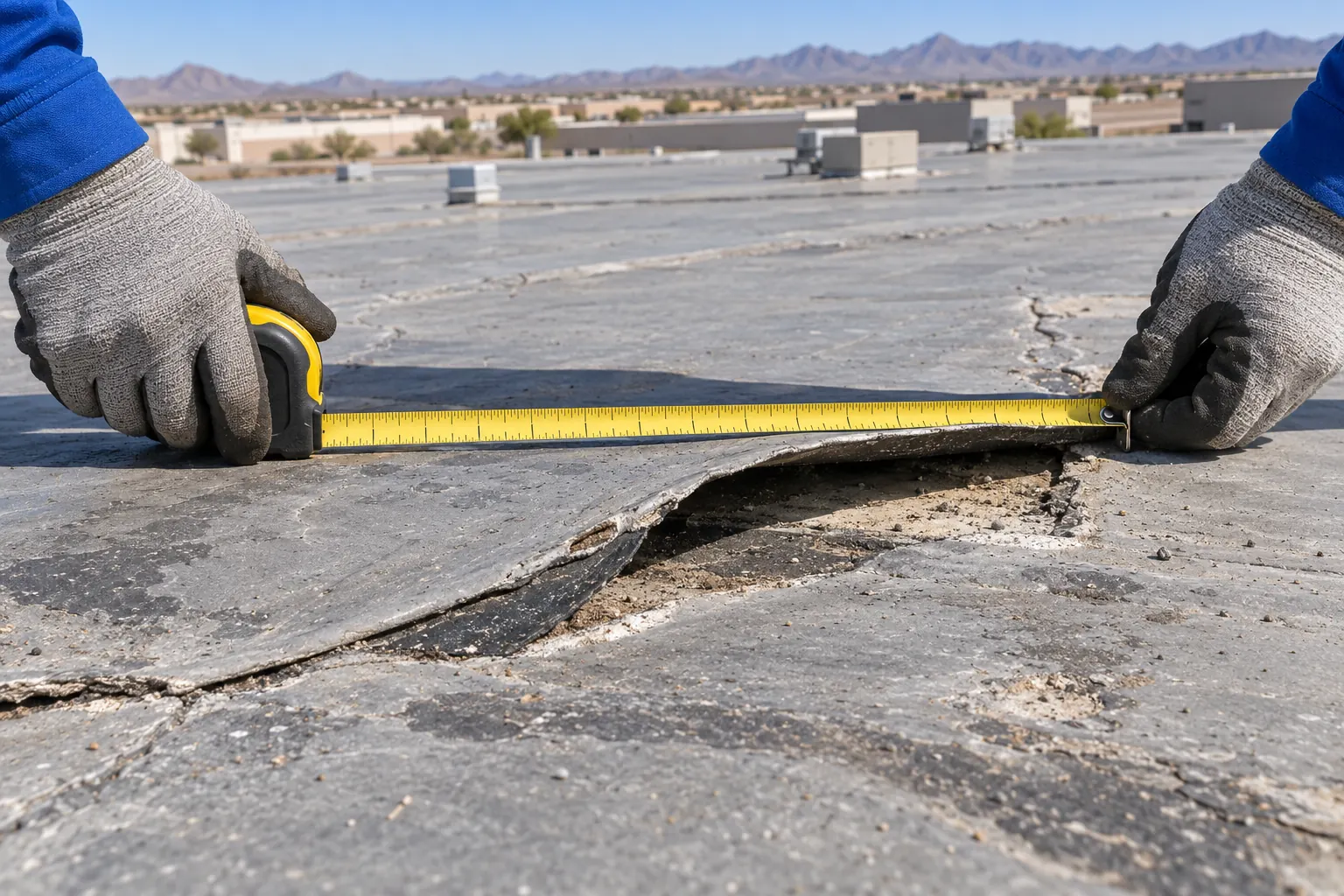
When cores show dry insulation and the building has room for another layer, new TPO goes over cover board without a full tear-off.
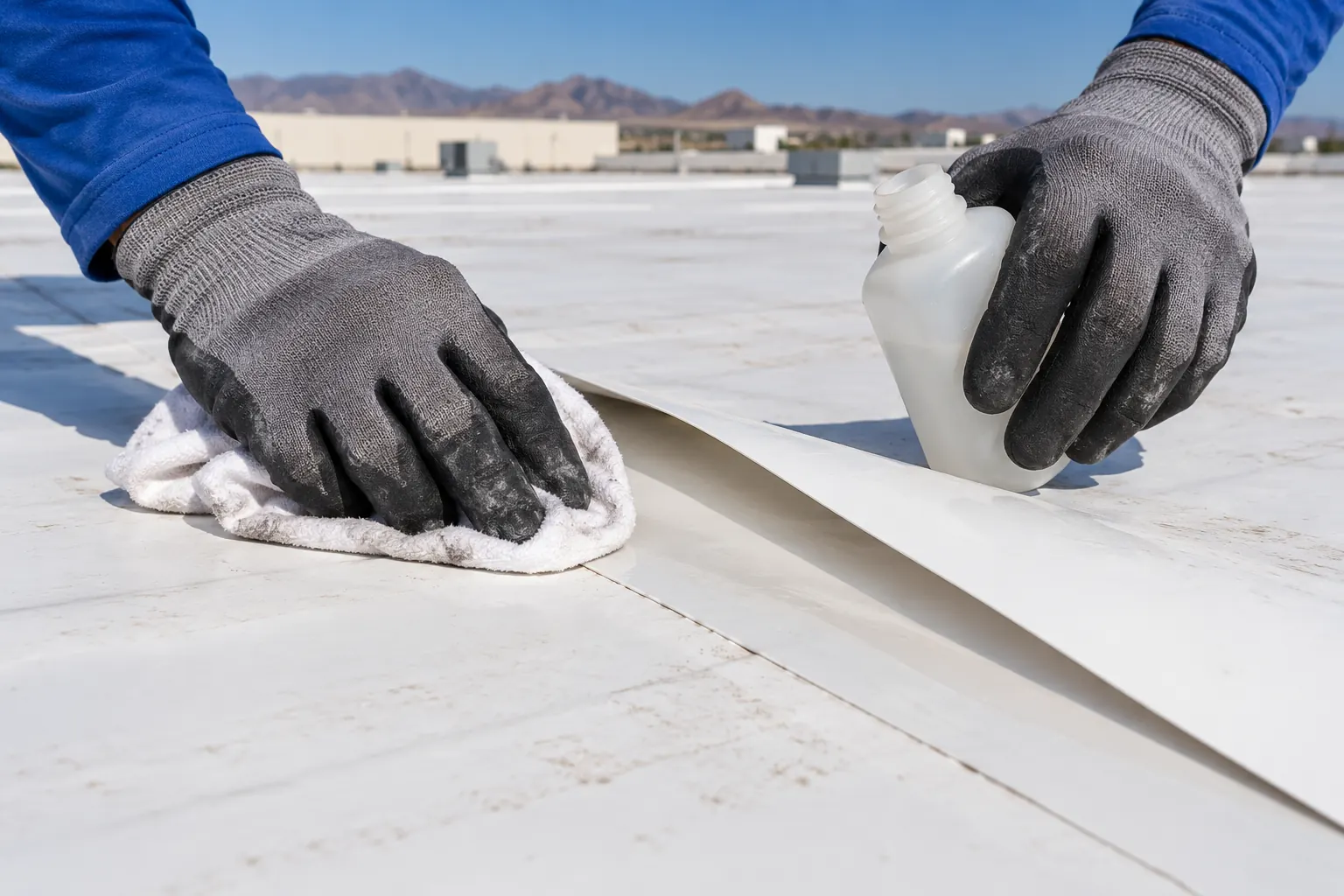
Open laps, loose corners, and tired curb flashing on a newer TPO roof get cleaned, welded, and patched with matching sheet.
Compare your TPO roof against both columns before deciding.
| Roof Factor | Repair The TPO | New TPO Roof |
|---|---|---|
| Seams | A few open laps in one area | Weld failures across many runs |
| Sheet surface | Smooth and weldable after cleaning | Chalky, cracked, or refuses a weld |
| Insulation | Dry under most of the roof | Wet in large sections |
| Roof age | Well inside its service life | Near the end of its 20 to 30 years |
| Drainage | Drains work after clearing | Low areas that need new taper |
| Operations | A short visit over one zone | A planned sequence of zones |
A core cut and a look at the deck tell us whether your TPO job is a recover or a tear-off, which changes the plan for your docks.
Five steps take a Tolleson roof from inspection to welded, closed sections.
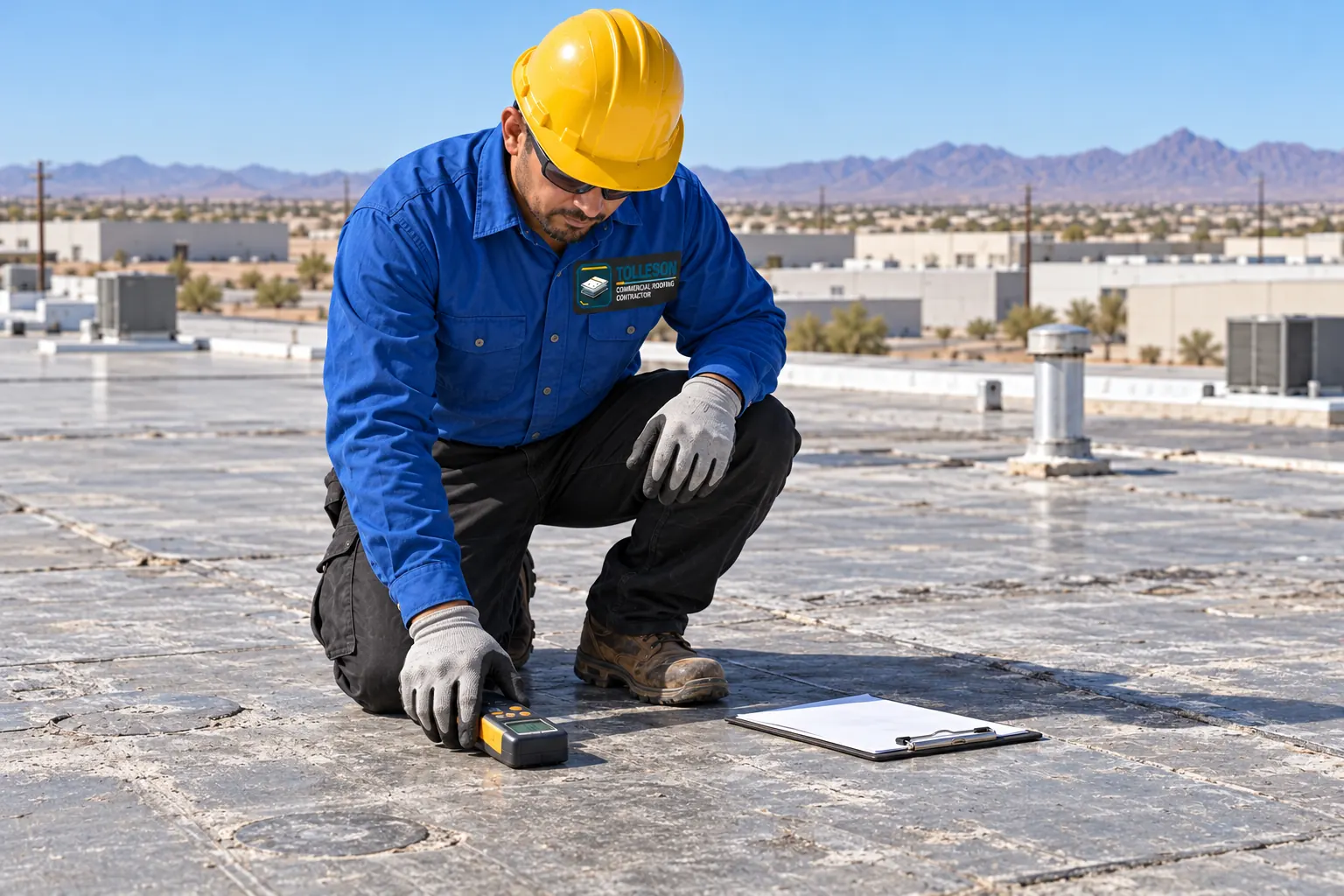
We core the roof in several spots, scan for wet insulation, and check the deck, drains, and every curb so the TPO plan matches what is under the old sheet.
Wet boards come out, damaged deck gets repaired, and tapered insulation goes in where water used to sit near drains and along parapets.
White TPO rolls out over cover board and is fastened or adhered to suit the deck, with laps lined up so each weld runs straight.
Hot-air welders close every lap, then curbs, pipes, drains, and walls get membrane flashing welded to the field sheet and probed.
Each weld is probed, drains are cleared, and you get photos of the laps and flashings along with care notes for the units above your space.
Two services that often come up alongside a TPO roof.
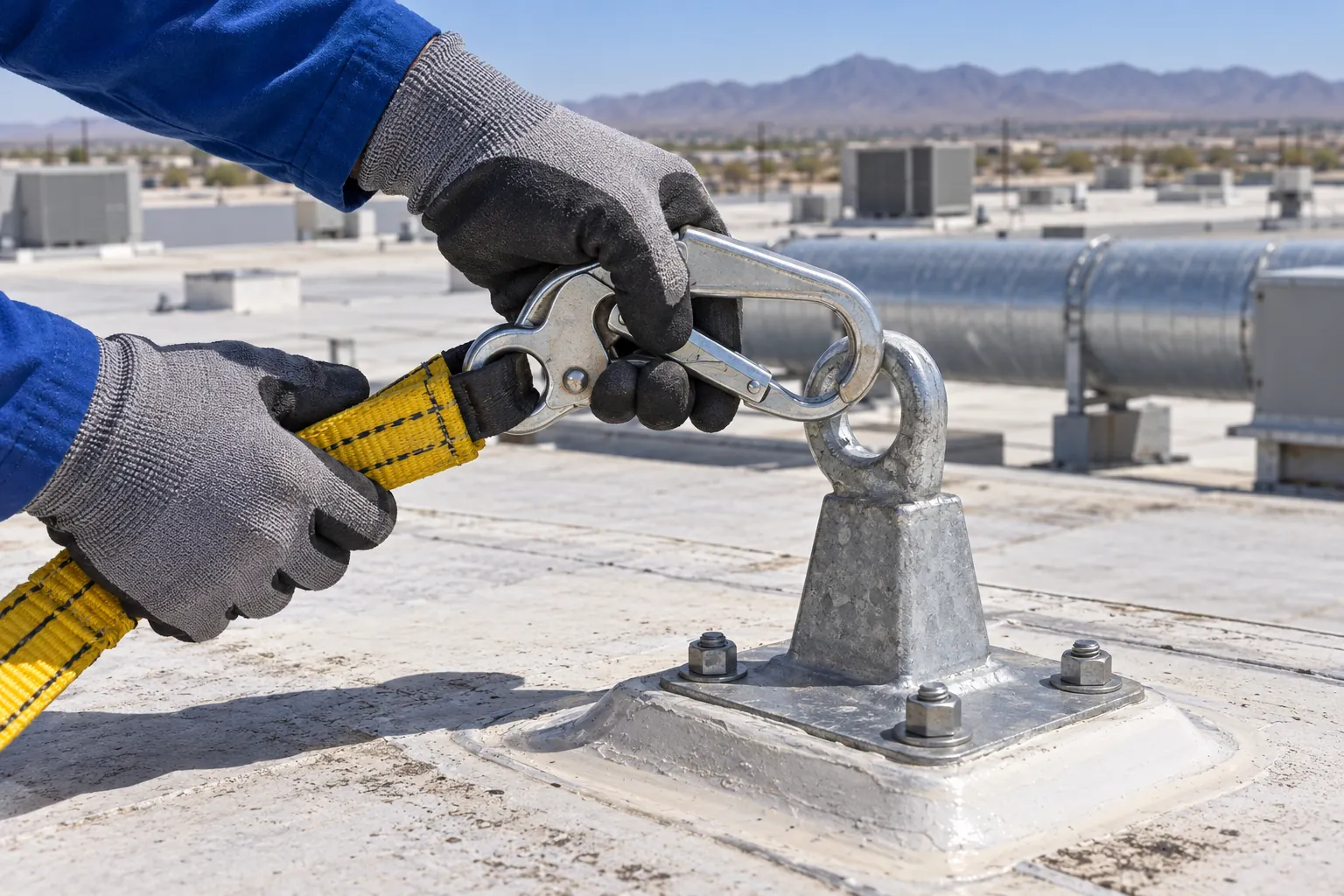
When the TPO roof sits over a plant or distribution center, the work adds walkway pads, lockout planning, and phased zones.
Industrial roofing in Tolleson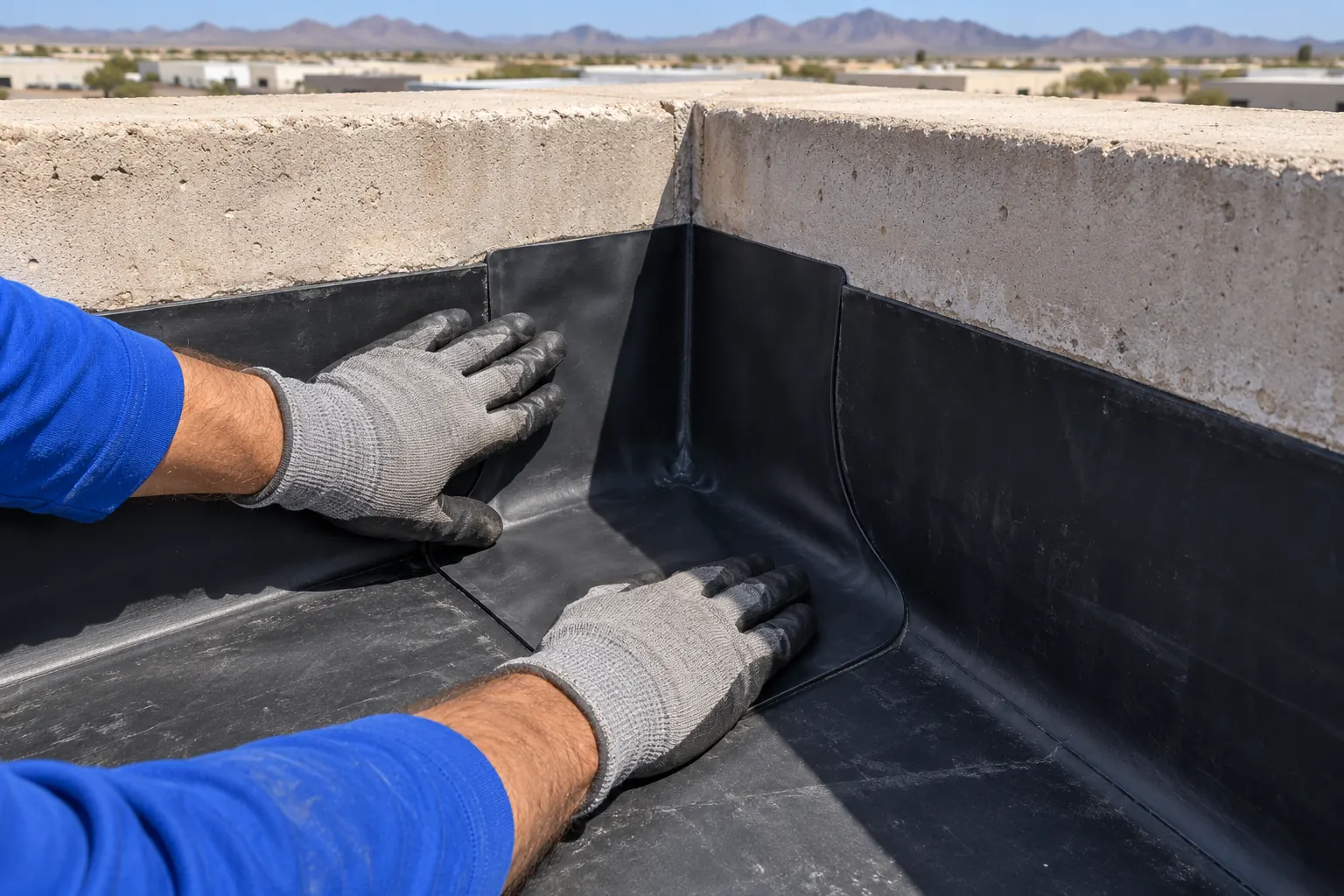
Older buildings crowded with pipes and curbs sometimes take EPDM better than TPO, since the rubber sheet flexes with a moving deck.
EPDM roofing in TollesonIn most cases, yes. White TPO reflects much of the summer sun, and its welded seams handle the long, flat runs on West Valley distribution buildings. Pair it with thicker insulation over refrigerated space, and match the membrane thickness and attachment to roof traffic and the deck below.
That choice follows how the roof gets used. A roof with frequent service traffic to rooftop units gets a thicker sheet and walkway pads, while a quiet storage roof with few units needs less. We name the thickness in the estimate so you can compare it against other bids.
Mechanically attached TPO suits big steel-deck warehouses and goes down quickly. Adhered sheet fits decks that hold fasteners poorly, or areas where plates under heavy foot traffic are a concern. The deck pull-out test during the inspection decides which one we recommend.
Sometimes. If cores show dry insulation and the building has a single roof layer, a recover with cover board and new TPO stays within code. Wet areas still come out first, so the new sheet never traps water above the deck.
Hot-air welders are set for the sheet and air temperature, and we run test welds each morning and again after midday to confirm settings as the deck heats up. Summer work starts early to keep people and fresh sheet out of the worst afternoon heat.
A light-colored sheet can lower rooftop surface temperatures on triple-digit afternoons. How much that changes the cooling bill depends on the insulation, the units, and what the building stores, so we avoid promising a number and price the options side by side.
Send the roof size and leak history, and we'll plan the inspection around your docks and coolers.
Leave a name and number and we will call you back about the roof.
Or call now: (623) 310-0160