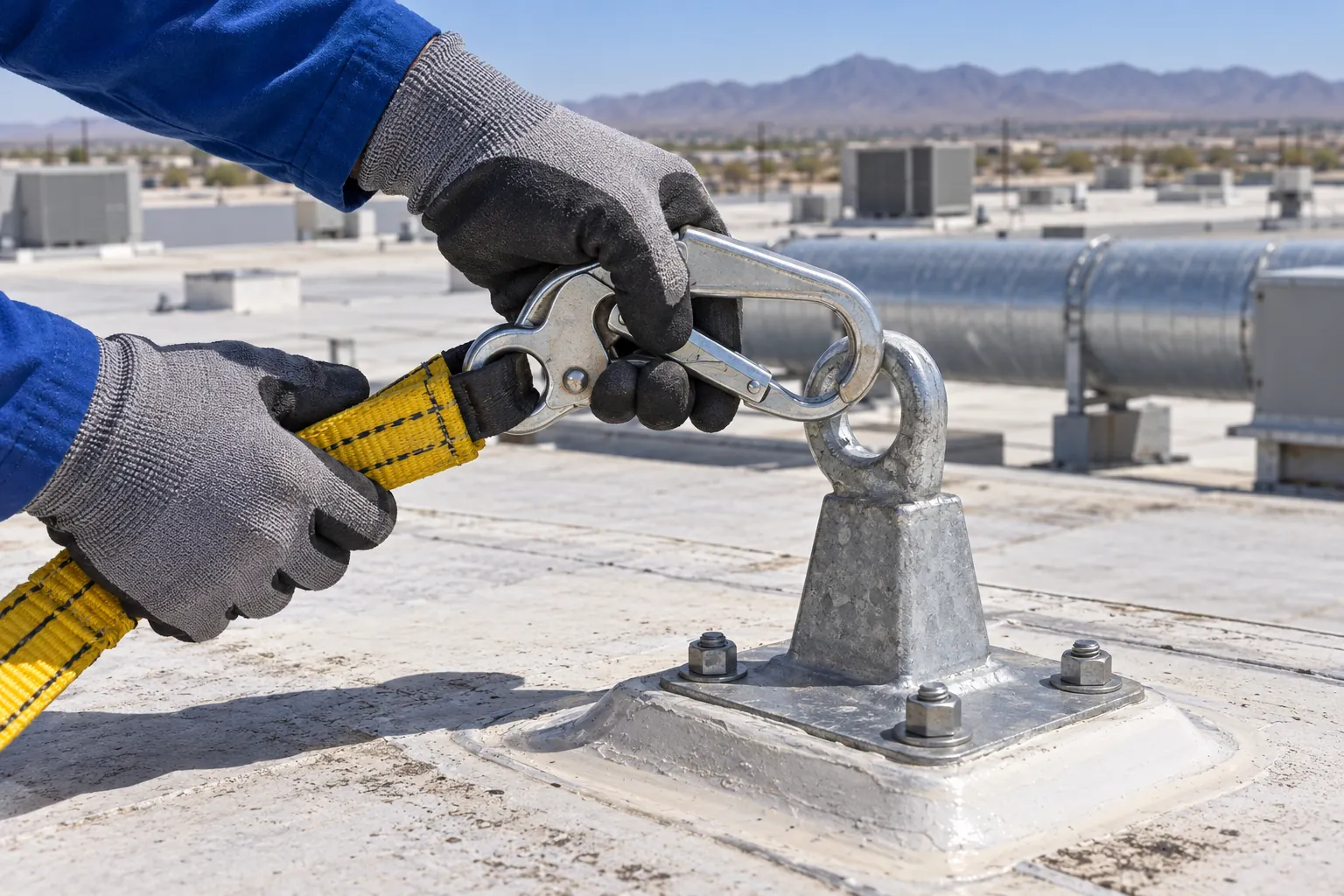
Fall Protection And Access
Anchors, guardrails, and skylight screens go into the plan before work starts, along with walkway routes for your service techs.

As an industrial roofing contractor in Tolleson, we repair and replace roofs on plants and distribution centers, phasing work around production, shipping, and food-safety rules.
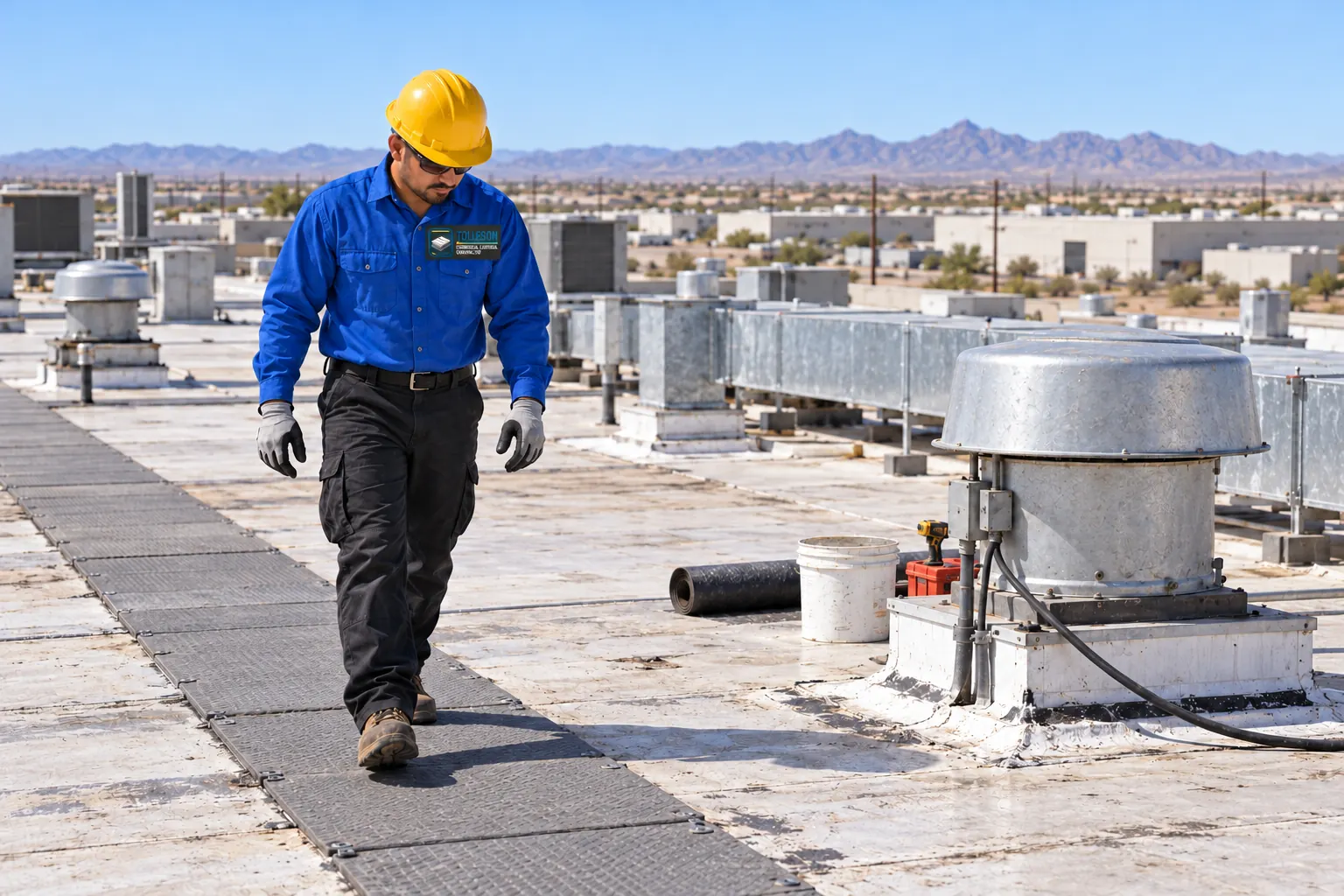
Large industrial roofs need a few things settled before any sheet comes off.
Industrial roofs fail around the equipment that makes them industrial. These five spots deserve the closest look.
Grease or condensate from process vents softening the sheet around the curb.
Replace the damaged area, raise the curb flashing, and add a protective layer where discharge lands.
Technicians walking the same route to rooftop units without walkway pads.
Patch the tears and weld walkway pads along each serviced route.
Curb flashing that cracked as old skylight frames moved in the heat.
Reflash the curbs, reseal the frames, and add screens where fall protection calls for them.
Deflection in long steel joist spans, or drains set above the low points.
Map the low areas, add tapered crickets, and confirm drains and overflow scuppers sit where water collects.
Years of quick fixes layered over one problem area without finding the source.
Cut out the stacked patches, find the wet insulation, and repair the area as one section.
Four pieces of industrial roof work we plan into a job.
Anchors, guardrails, and skylight screens go into the plan before work starts, along with walkway routes for your service techs.
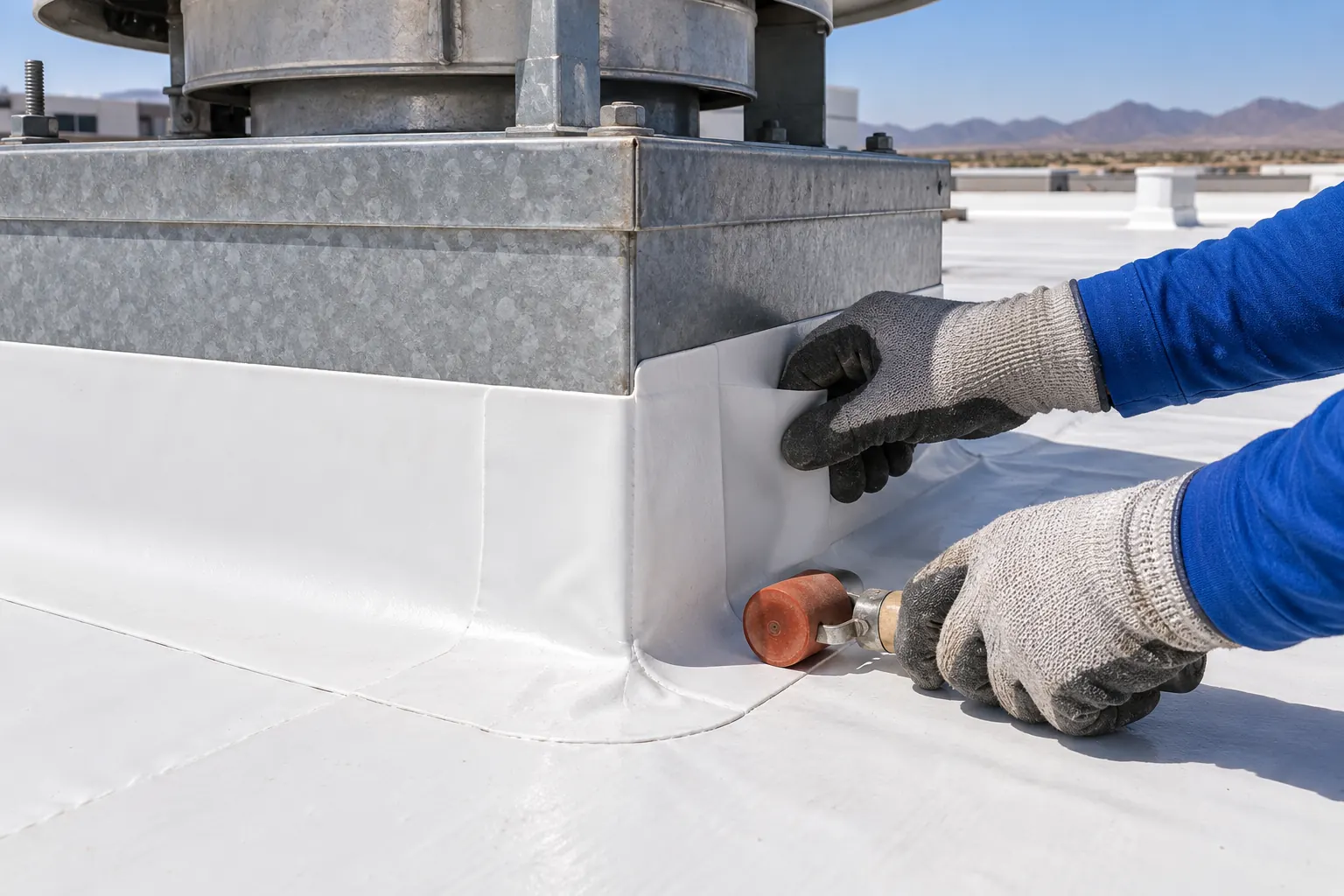
Exhaust fans, ducts, and process vents get raised curbs and fresh flashing so heat, steam, and grease stay off the field sheet.
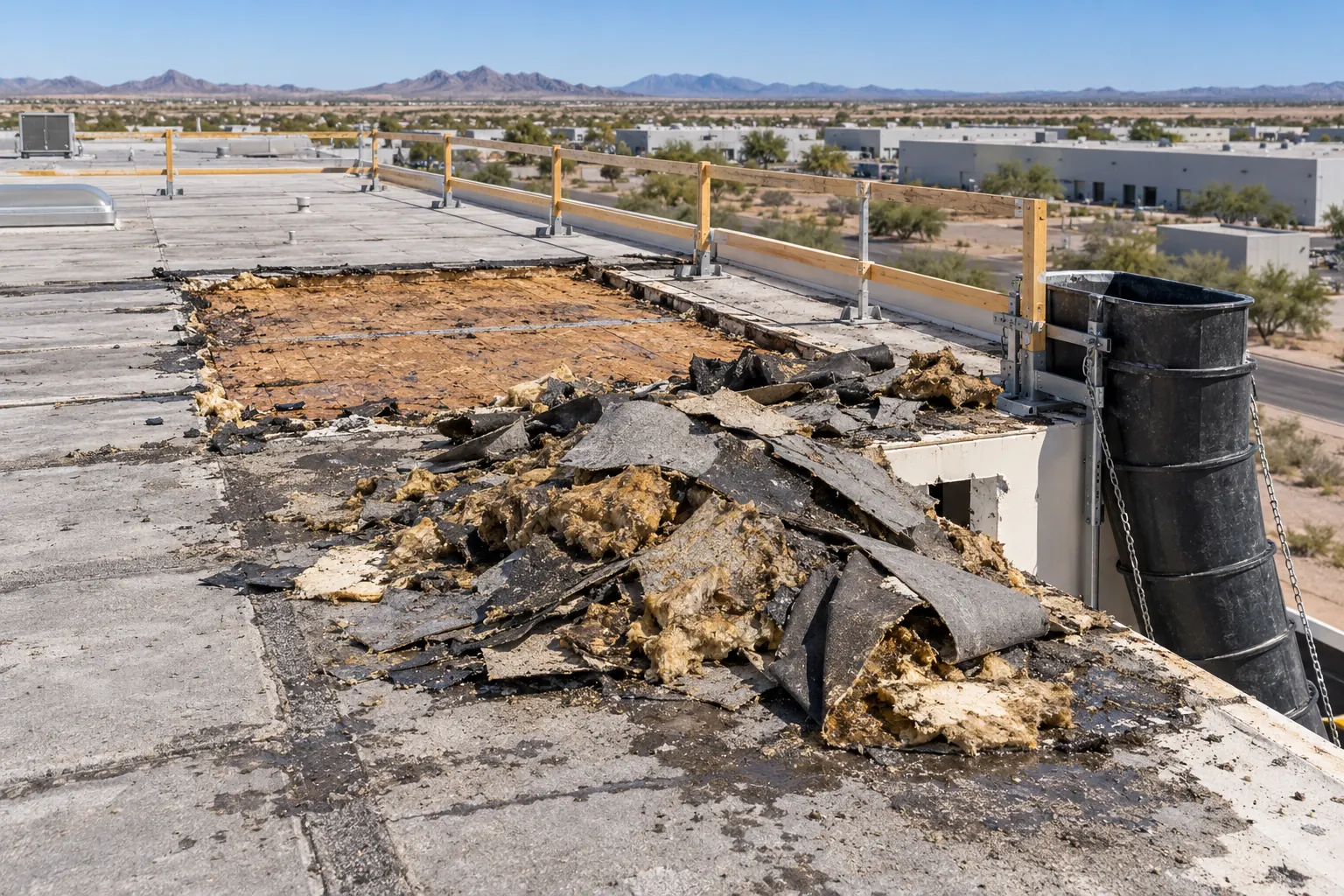
Old membrane and insulation come off one zone at a time, scheduled around production runs and dock traffic, and each zone is dried in before shift change.
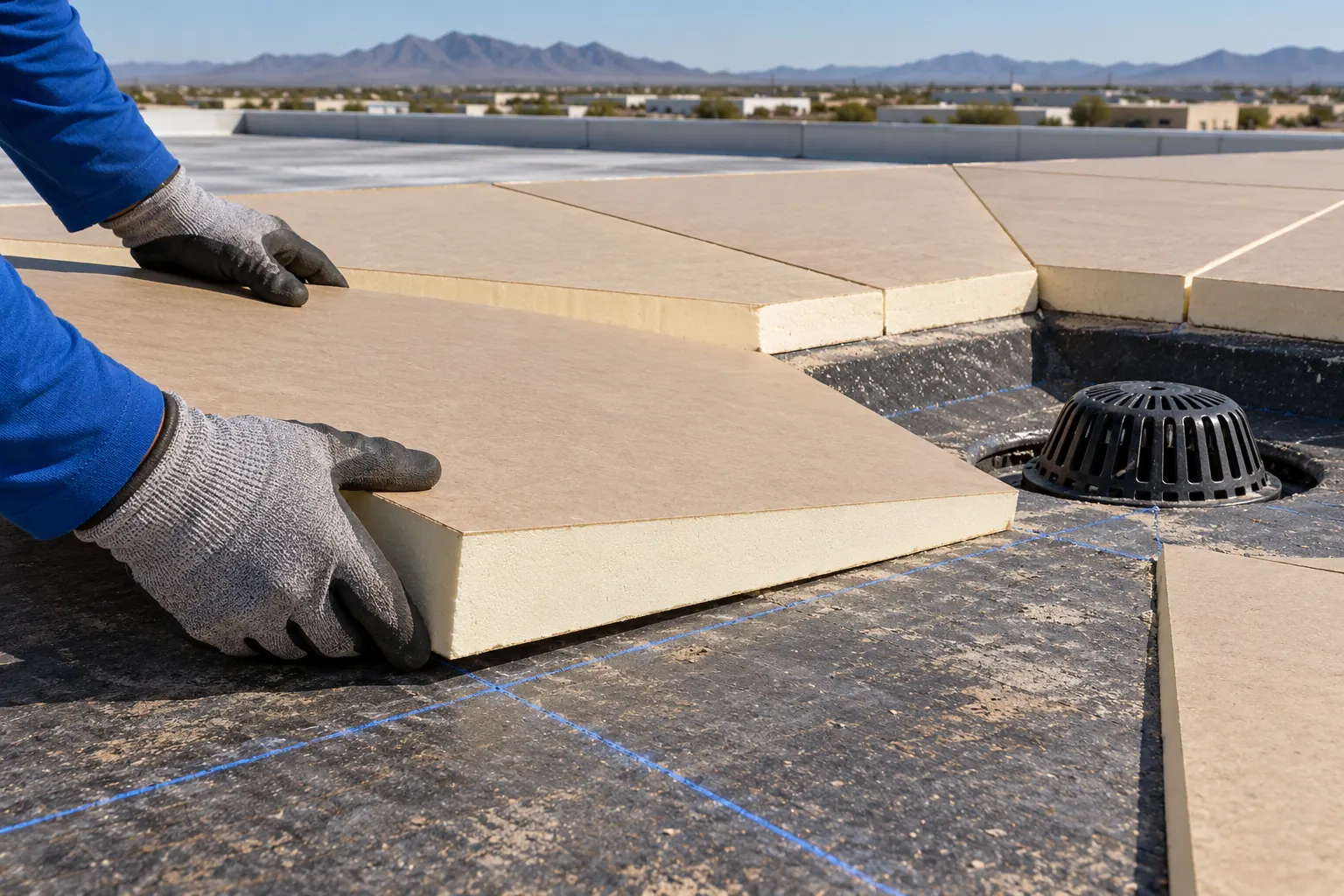
Crickets and tapered boards built during the reroof move water off long joist spans toward drains that keep up with monsoon rain.
Six questions that sort a plant roof into repair or replacement.
| Roof Factor | Repair The Roof | New Roof System |
|---|---|---|
| Problem area | Around a few units or paths | Across whole bays |
| Insulation | Dry outside the trouble spots | Wet in several bays |
| Equipment changes | Same units staying | New or relocated units coming |
| Drainage | Drains work after clearing | Low bays that need crickets |
| Production impact | A short visit in one zone | A phased plan over many zones |
| Roof age | Years of life left | Near the end of its service life |
Share your shift schedule and shipping windows, and we'll plan roof zones that keep lines and docks running.
Five steps, each one coordinated with the people who run your building.
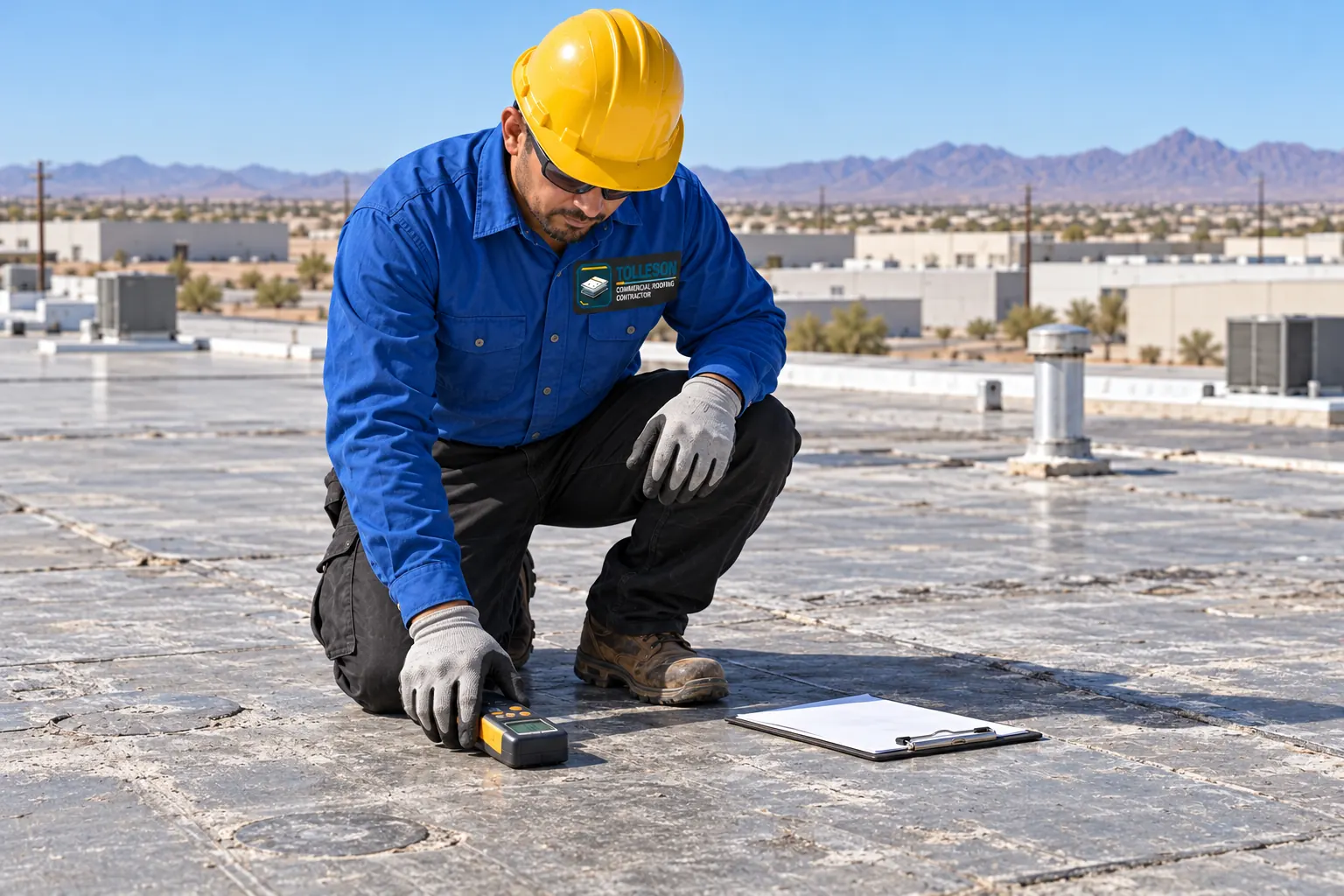
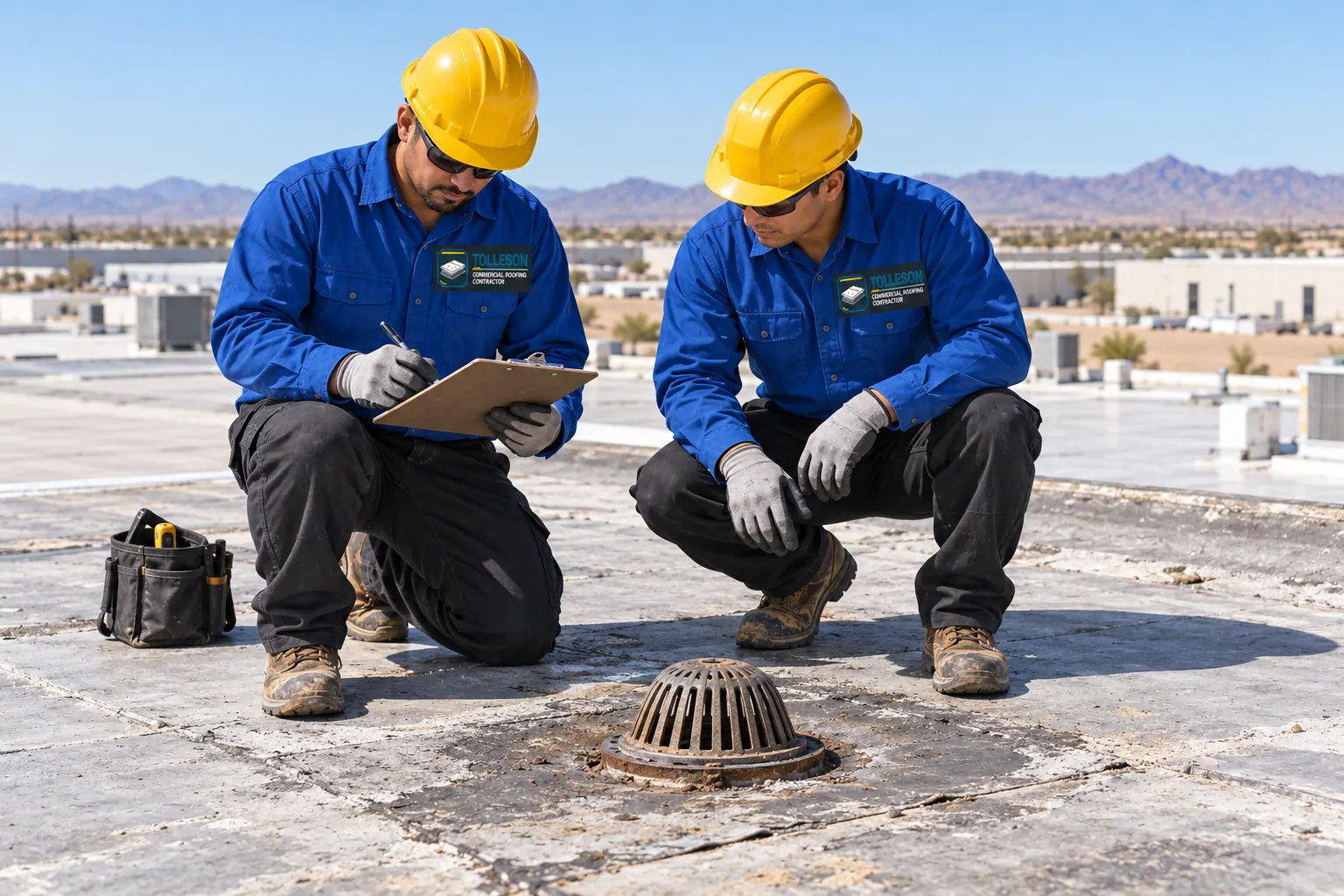
We walk every bay, core suspect areas, and map units, vents, skylights, and drains so the plan reflects the roof as it sits today.
Rooftop lockout points, fall-protection rules, food-safety limits, and hot-work permits get agreed with your safety manager before anyone goes up.
Roof zones are matched to production and shipping, with material lifts and dumpsters placed away from truck lanes and building entrances.
Each zone is torn off or repaired, insulated, covered, and flashed, then sealed watertight before the crew moves on or leaves for the day.
You receive zone-by-zone photos, a map of new walkway pads and flashings, and maintenance notes for your facility team.
Most plant roofs end up in one of these two systems.
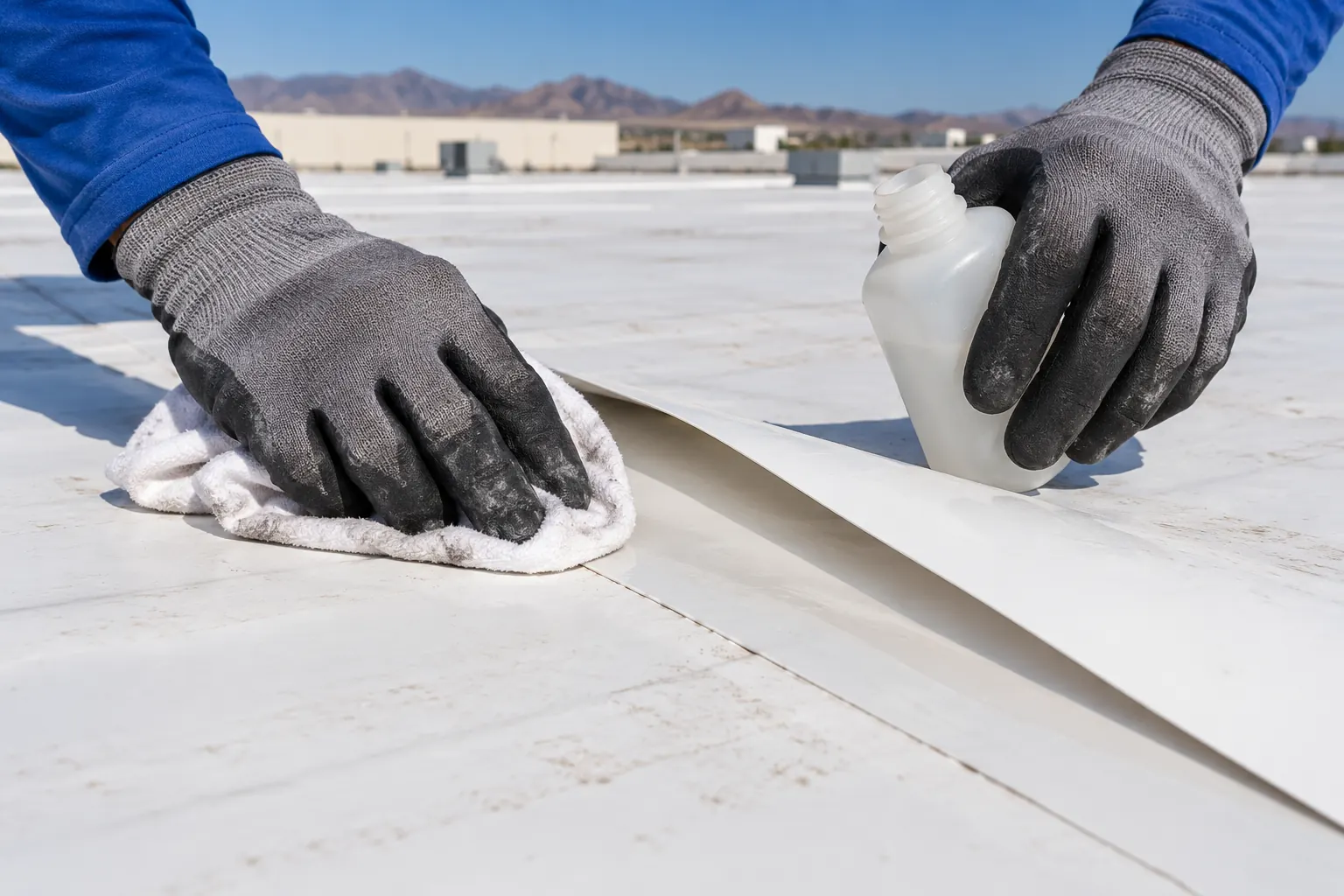
Many plant roofs go to white TPO, which handles long runs and holds cooler interior temperatures over thicker insulation.
TPO roofing in Tolleson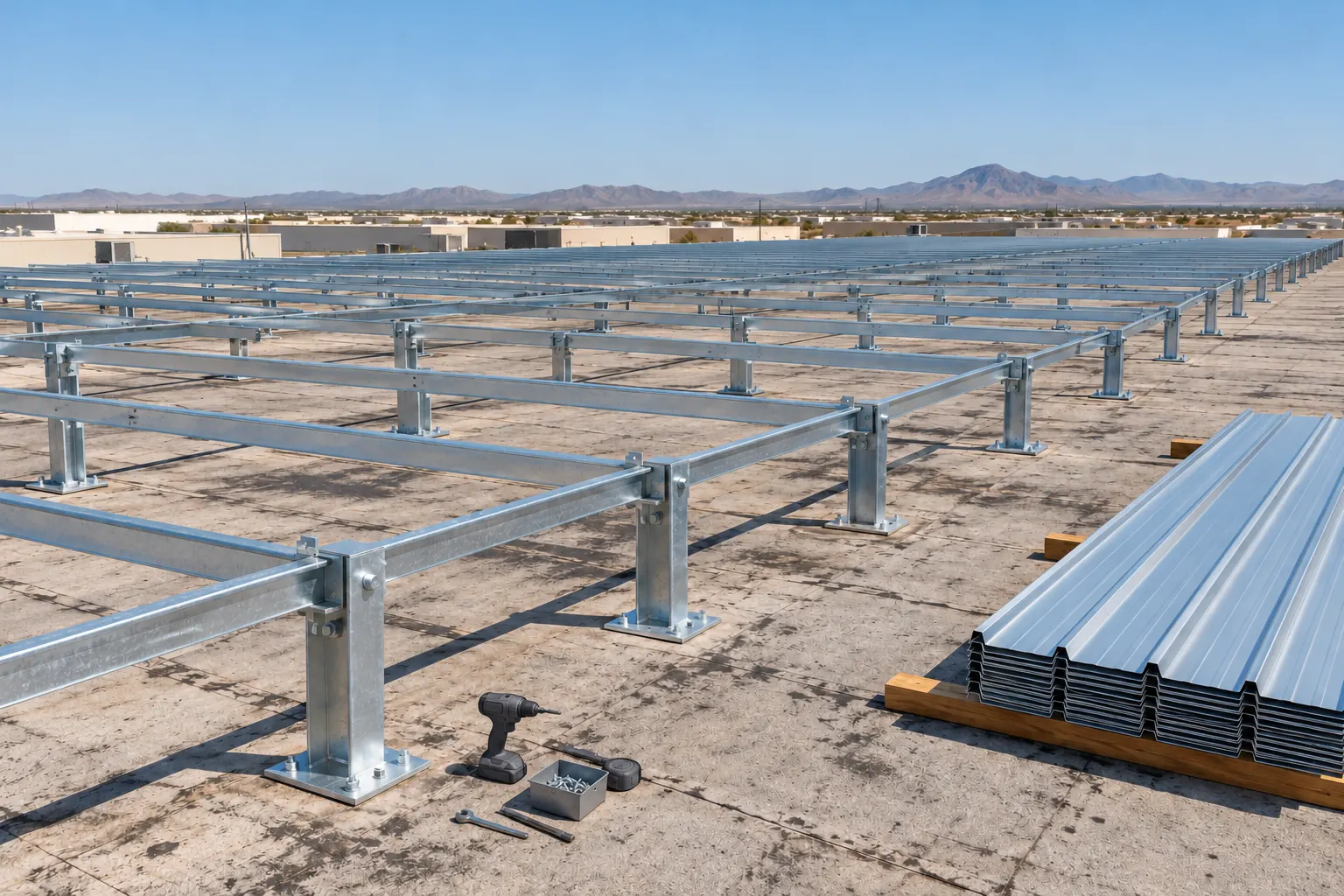
Shop and warehouse buildings with sloped roofs take standing-seam or through-fastened metal, and flat roofs can be framed for it.
Commercial metal roofing in TollesonYes. Plant and distribution roofs near the I-10 and Loop 101 corridor can cover hundreds of thousands of square feet, with fans, process equipment, and skylights spread across them. That calls for phased work zones, walkway pads to serviced units, safety coordination, and careful detailing at vents that discharge heat, steam, or grease.
In most plants, yes. Work moves zone by zone, noisy tear-off can be timed around shift changes, and openings over production areas are kept small and closed before the crew leaves. Your safety and food-safety rules set the limits we plan within.
Before a zone opens, we confirm what sits under it and cover or move what we can. Only the area that can be dried in during that shift gets opened, and tarps and catch sheets go under open decks over sensitive areas.
Pads go along every route technicians use to reach rooftop units, filters, and fans. They protect the sheet from boots and dropped tools, and they show service crews where to walk.
Food plants add rules on odors, dust, and adhesives. We pick low-odor attachment methods where needed, protect air intakes, and plan work with your sanitation and safety leads so production areas stay clean.
Fall protection for the roof crew is part of our work plan: anchors, guardrails at open edges, and screens or covers over skylights in the work zone. Permanent anchors for your own technicians can be added during the reroof.
Tell us the building type, roof size, and production schedule. We'll set up an inspection with your safety lead.
Leave a name and number and we will call you back about the roof.
Or call now: (623) 310-0160