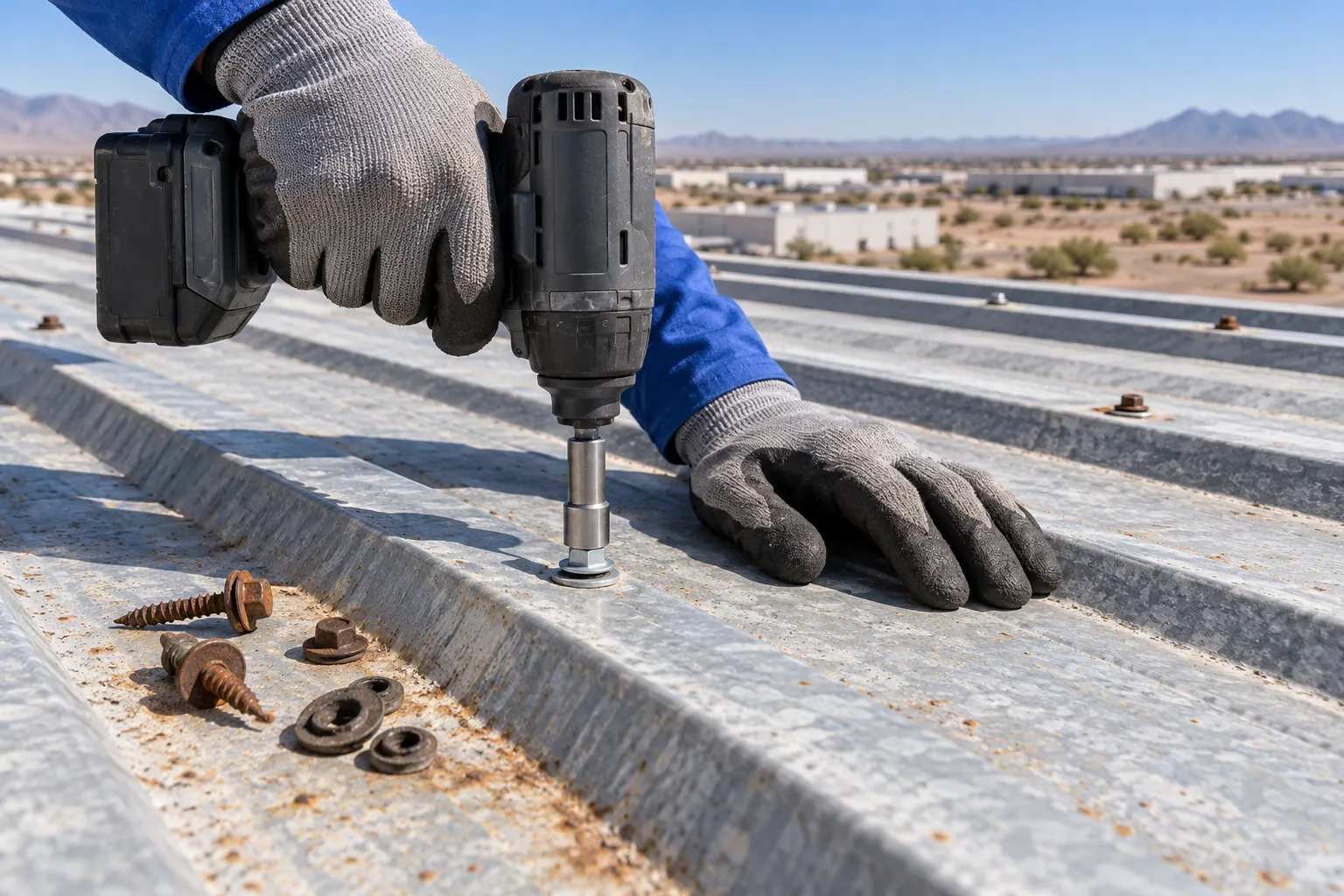
Refasten And Reseal
Backed-out fasteners get replaced with oversized screws and new washers, and side laps get fresh butyl tape.

As a commercial metal roofing contractor in Tolleson, we refasten, repair, and replace standing-seam and through-fastened roofs, and convert leaking flat roofs with retrofit framing.
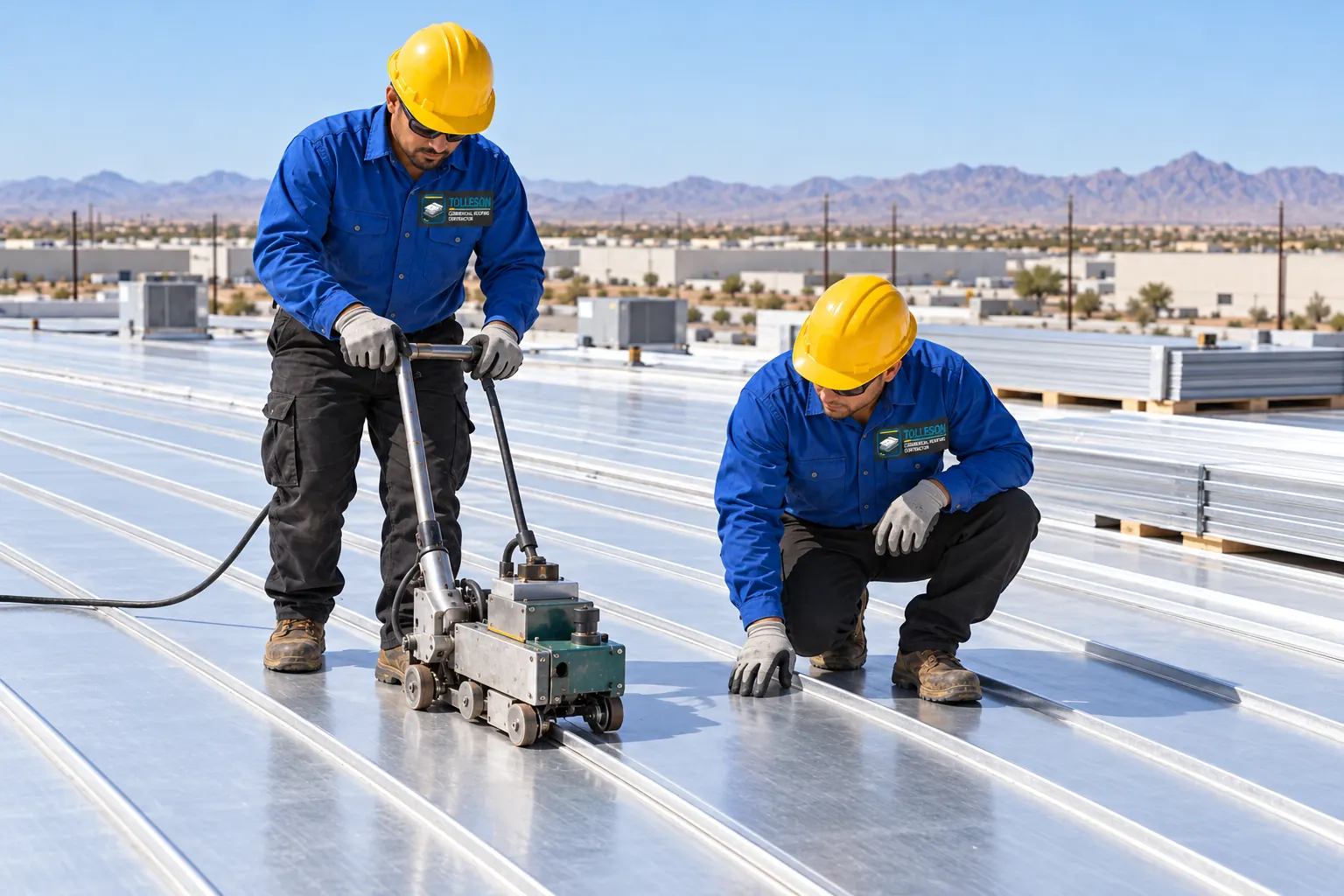
Metal works on sloped roofs and on flat roofs converted with retrofit framing. Check these points first.
Desert heat moves metal panels every day. These five spots show it first.
Fasteners backed out by daily expansion, with washers that dried and cracked.
Replace with oversized fasteners and new washers, and check the purlin bite at each one.
Lap sealant or butyl tape that hardened and lost its seal.
Open the lap, clean it, install new butyl, and refasten through the lap.
Factory finish worn thin where water sits at end laps and gutters.
Wire-brush and prime the rust, replace perforated panels, and seal the end laps.
Flat curb flashings on a sloped metal roof that dam water on the high side.
Install a properly sized curb with a diverter on the high side so water runs around it.
Gutters and downspouts too small, or packed with dust and debris.
Clear and reseal the gutters, and size larger gutters or added downspouts where the roof area calls for it.
Three kinds of metal roof work, matched to what the panels and framing show.
Backed-out fasteners get replaced with oversized screws and new washers, and side laps get fresh butyl tape.
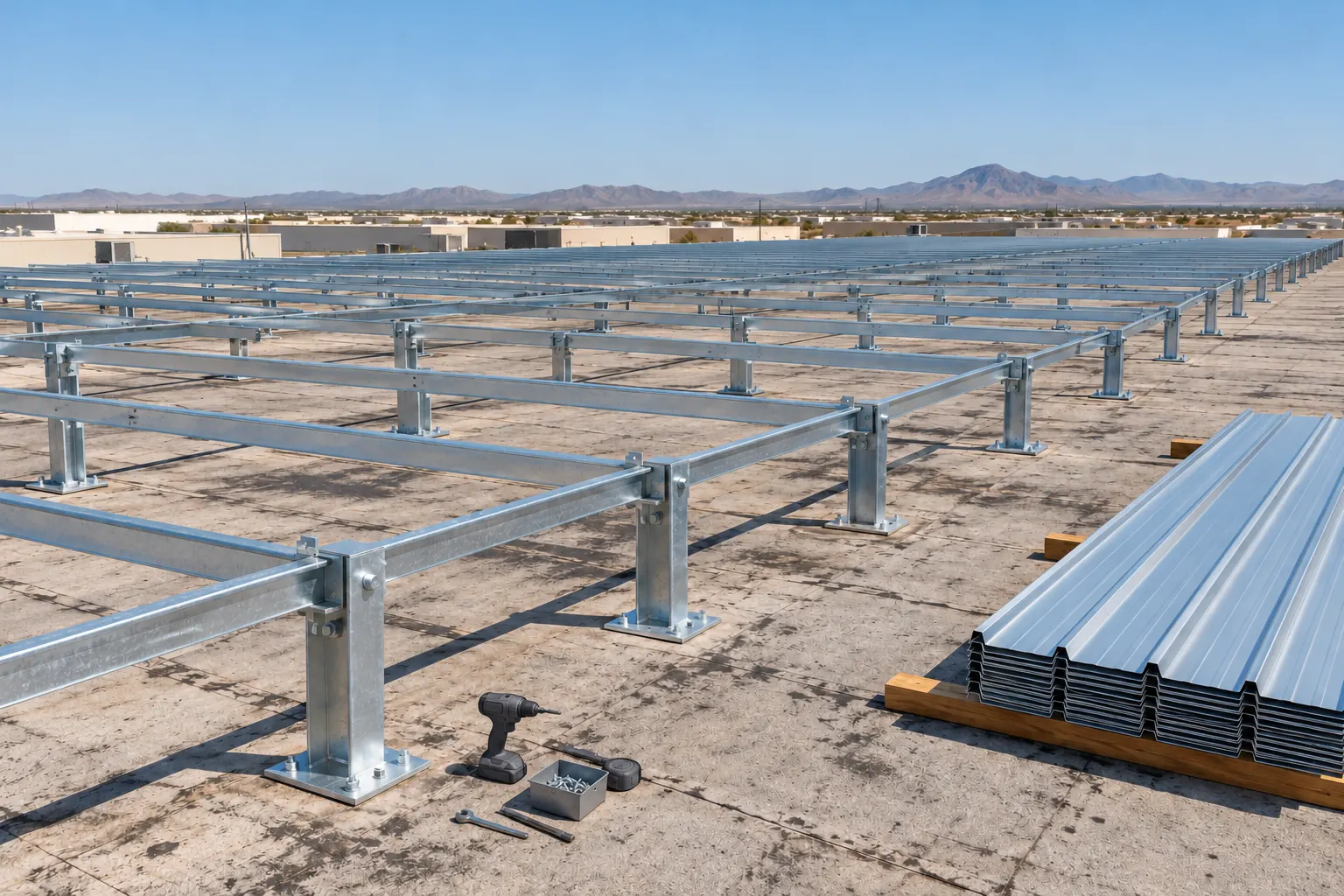
Framing is fastened through the old roof into the structure, creating slope for new metal panels without a tear-off.
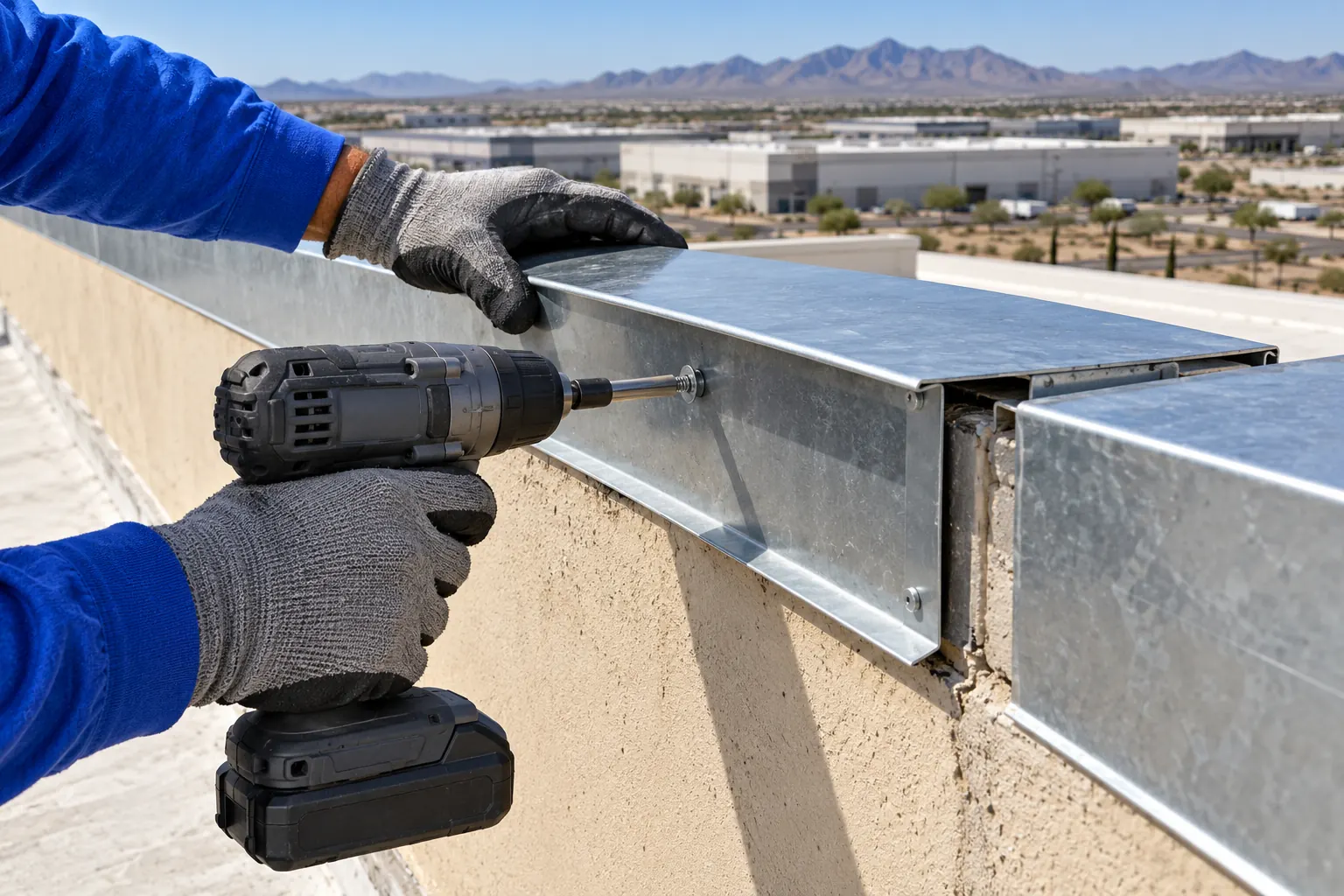
Gutters, rake trim, and coping get resized or replaced so monsoon downpours leave the roof instead of backing up.
Check your panels and framing against both columns.
| Roof Factor | Repair The Metal | New Metal Roof |
|---|---|---|
| Rust | Surface rust that brushes off | Holes through panels or laps |
| Fasteners | Some backed out | Loose across the roof |
| Panel shape | Flat and straight | Bent, dented, or mixed profiles |
| Framing | Purlins straight and tight | Framing damage that needs repair |
| Leaks | A few laps or curbs | Many laps and penetrations |
| Roof age | Well short of 40 years | Past its service life |
Photos of the fasteners and laps from the roof or a ladder help us size the job before the inspection.
From the first fastener check to the last trim piece, the work follows five steps.
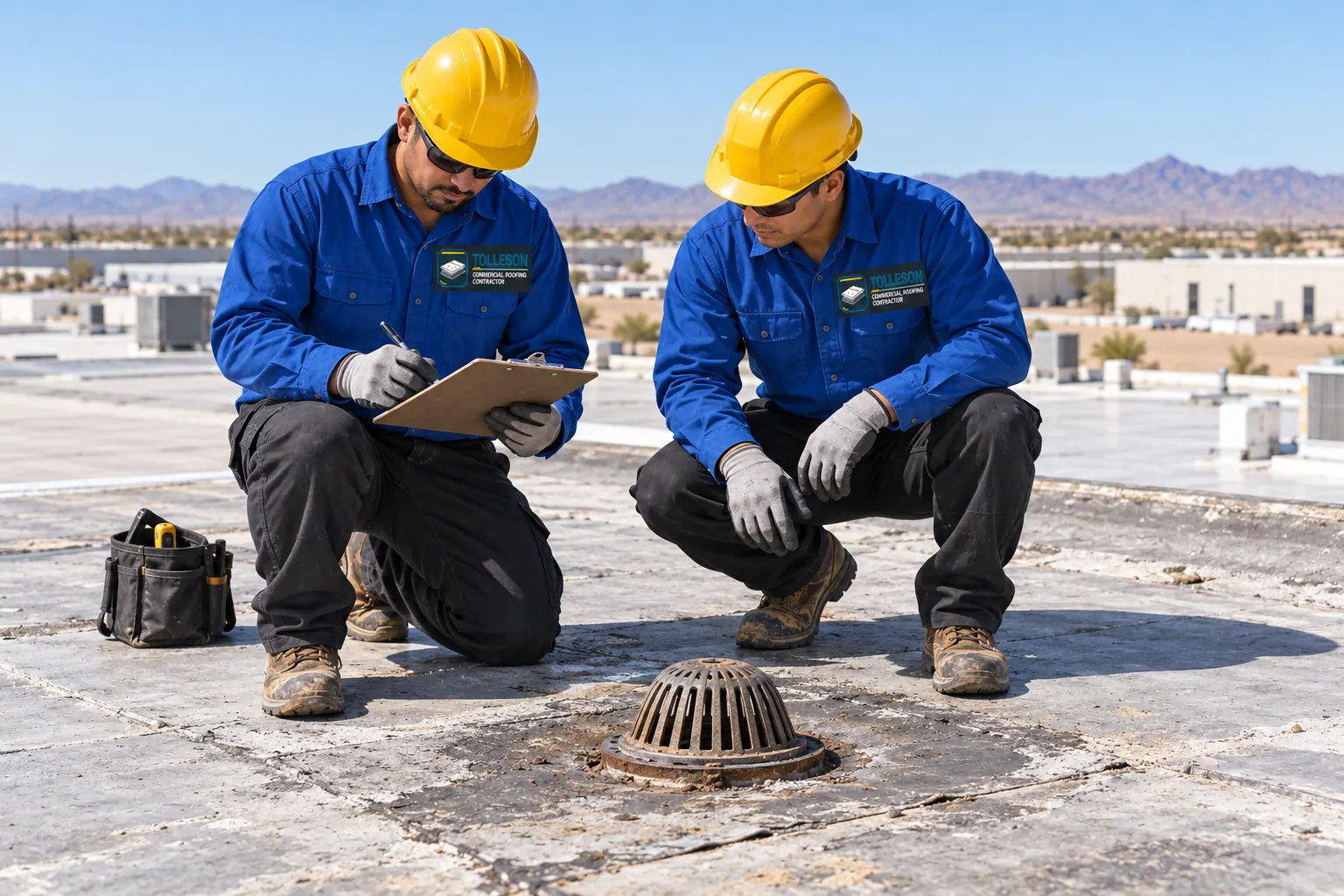
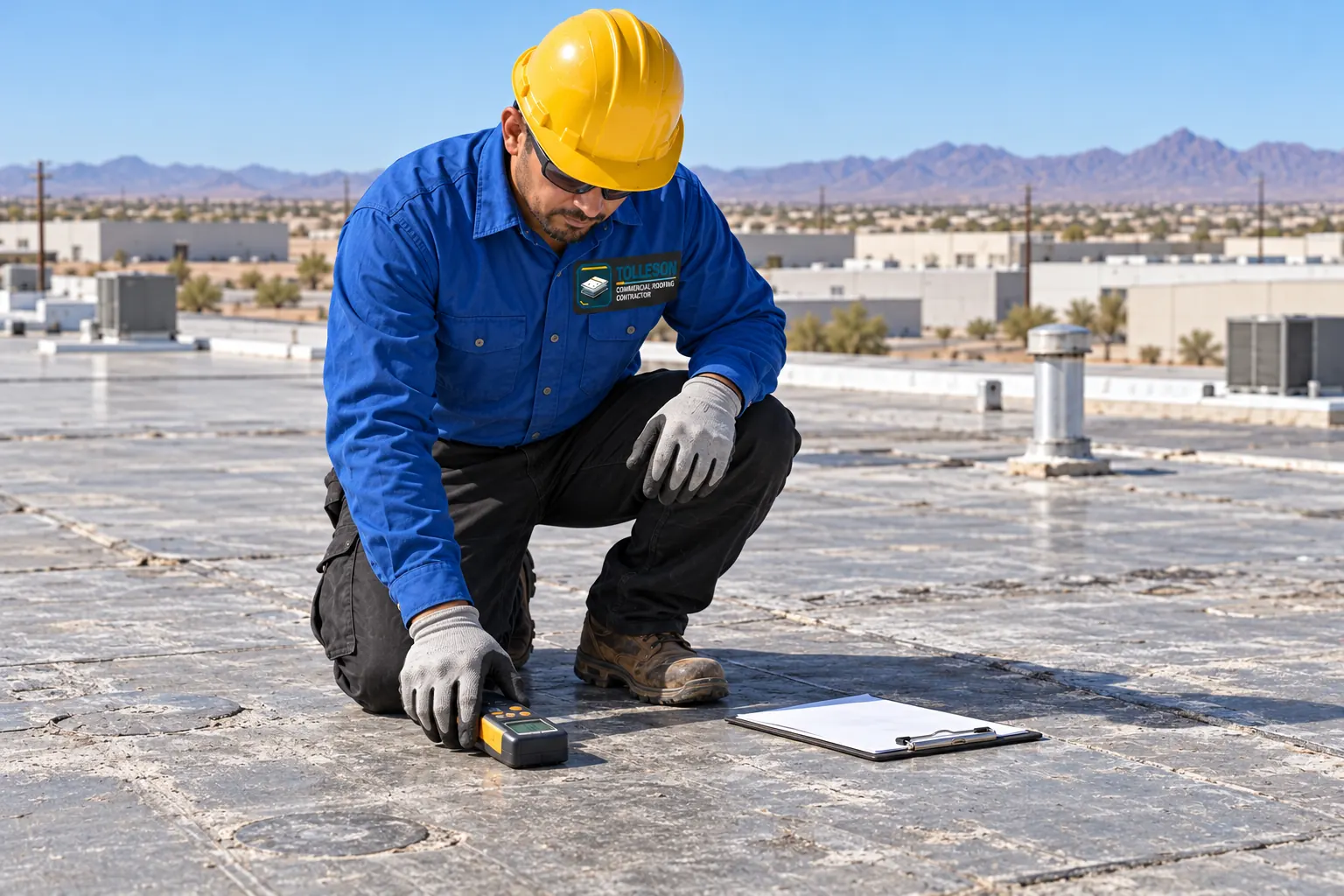
We check fasteners, laps, panel ends, gutters, and the framing underneath, and core any flat roof slated for a retrofit to see what sits under it.
Surface rust and loose screws point to refastening and resealing, while perforated panels and bent framing point to new panels or a retrofit.
Damaged purlins get repaired, and on a retrofit, framing is laid out and fastened through the old roof into the building structure.
Panels go on with clips or fasteners matched to the profile, followed by ridge, rake, gutter, and curb trim sealed at every lap.
Gutters are flushed, laps and curbs get a water check, and you receive photos and notes on fastener and sealant upkeep.
Metal buildings often need one of these alongside the panels.
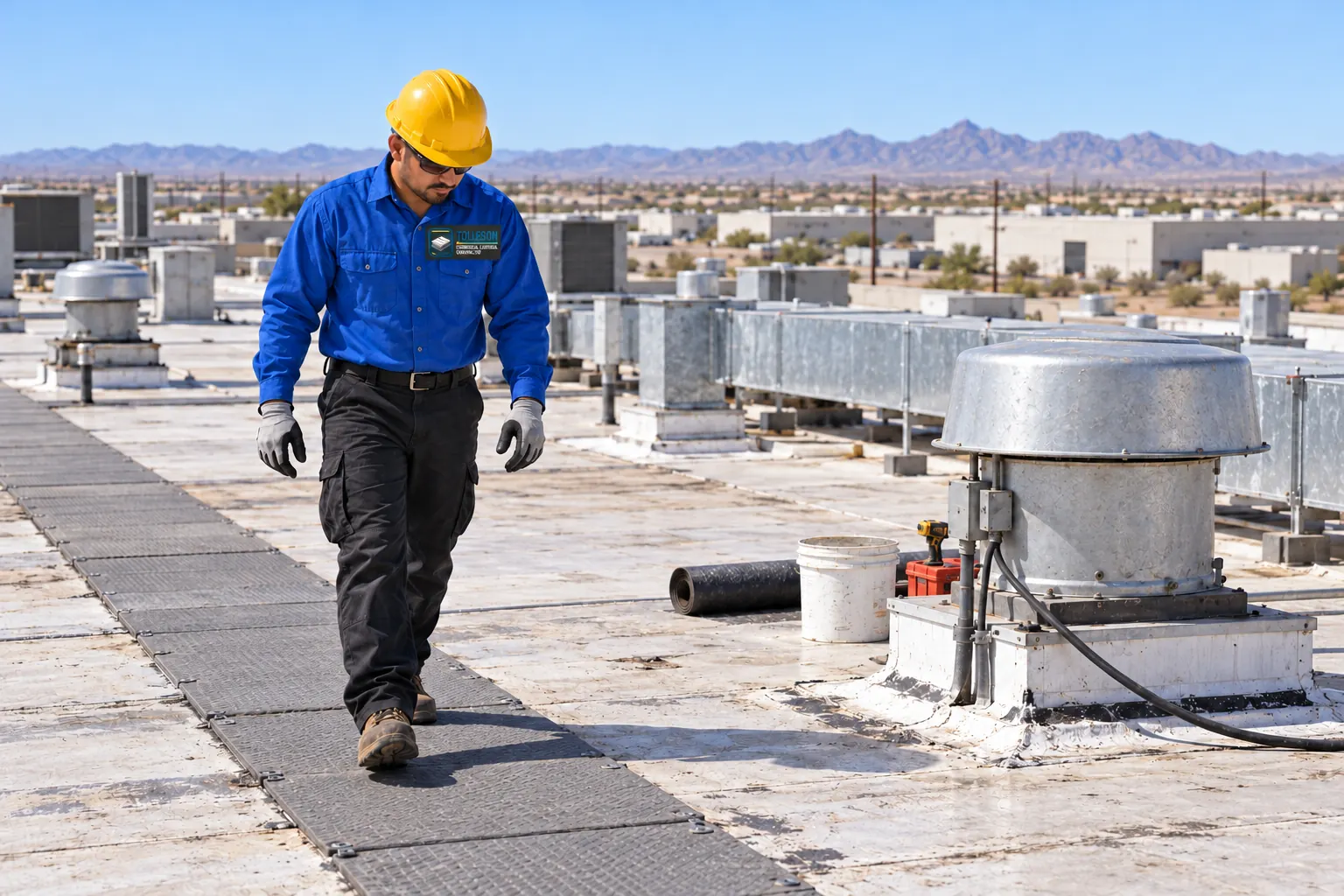
Metal roofs over plants carry exhaust fans and process vents that need phased zones and fall protection.
Industrial roofing in Tolleson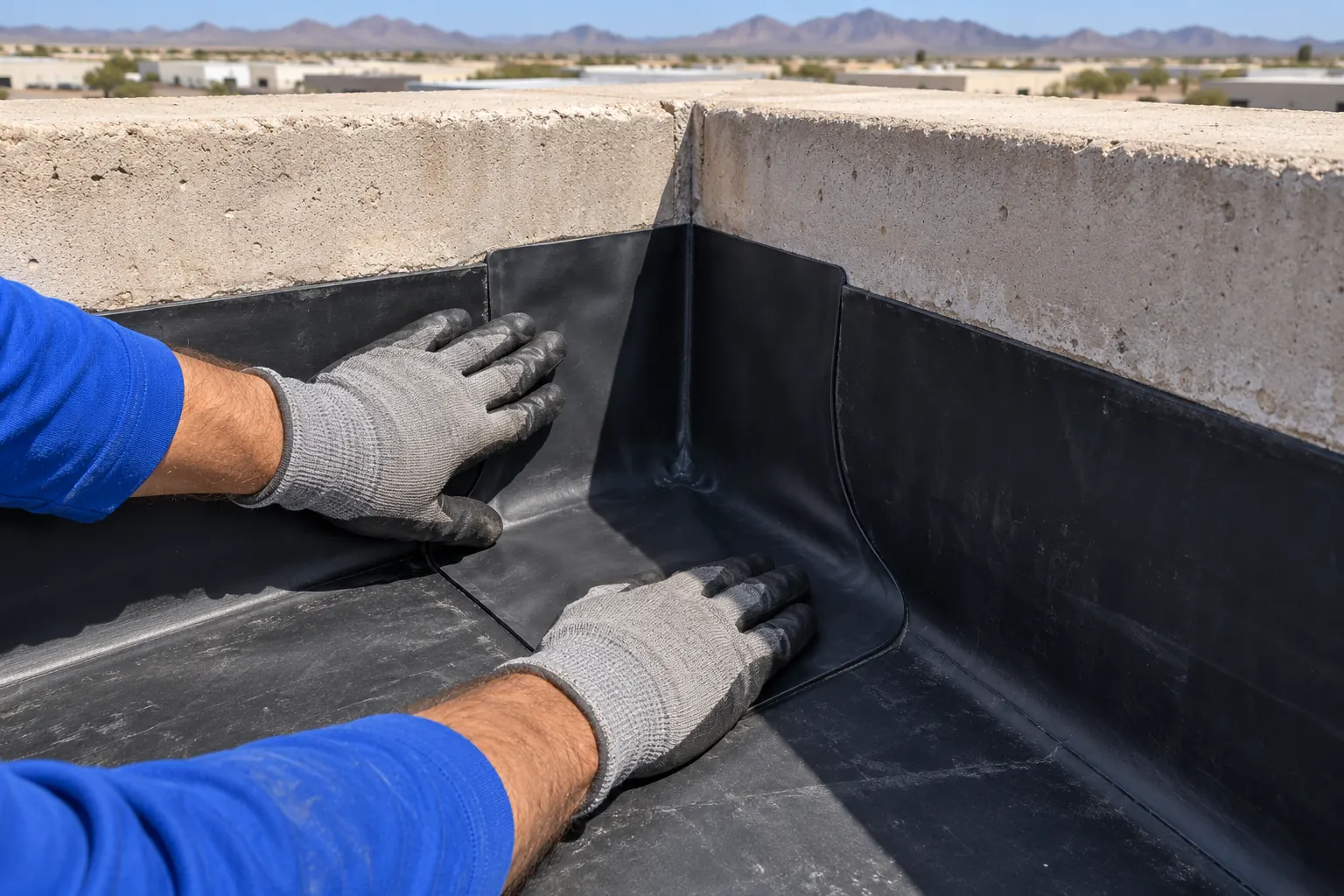
Flat office additions tied into a metal building often carry EPDM that needs matching flashing at the junction.
EPDM roofing in TollesonYes. We work on standing-seam and through-fastened metal on shop buildings, older ag-related structures, and newer pre-engineered warehouses. The usual desert problems are backed-out fasteners, failed lap sealant, and rust where coatings wore off, and the fix ranges from refastening and resealing to a coating system, new panels, or retrofit framing over a leaking flat roof.
Forty years or more is a common range with good installation and upkeep. Fastener checks, sealant renewal at laps, and rust treatment at panel ends keep a metal roof on the long end of that range.
Light-gauge framing is fastened through an old flat roof into the structure, then new metal panels go over it with built-in slope. The old roof stays in place, and an engineer confirms the framing and loads where the scope requires it.
Replaced, in most cases. A backed-out screw has usually enlarged its hole, so an oversized fastener with a new washer seals better than retightening the old one.
A coating system is one option for metal with surface rust and tight laps. Fasteners and laps get repaired first, rust gets primed, and the coating goes over that prepared surface.
It can. Standing-seam roofs take clamps that grip the seams without holes, and through-fastened panels take brackets screwed into the purlins with sealed bases. Fasteners and laps under the array get checked first, since they are harder to reach once panels are on.
Bare metal in full sun gets hot. A light finish, insulation under the panels, and ventilation where the building allows all cut the heat that reaches the space below.
Send photos of the fasteners and laps, and we'll inspect the panels, framing, and gutters on your building.
Leave a name and number and we will call you back about the roof.
Or call now: (623) 310-0160