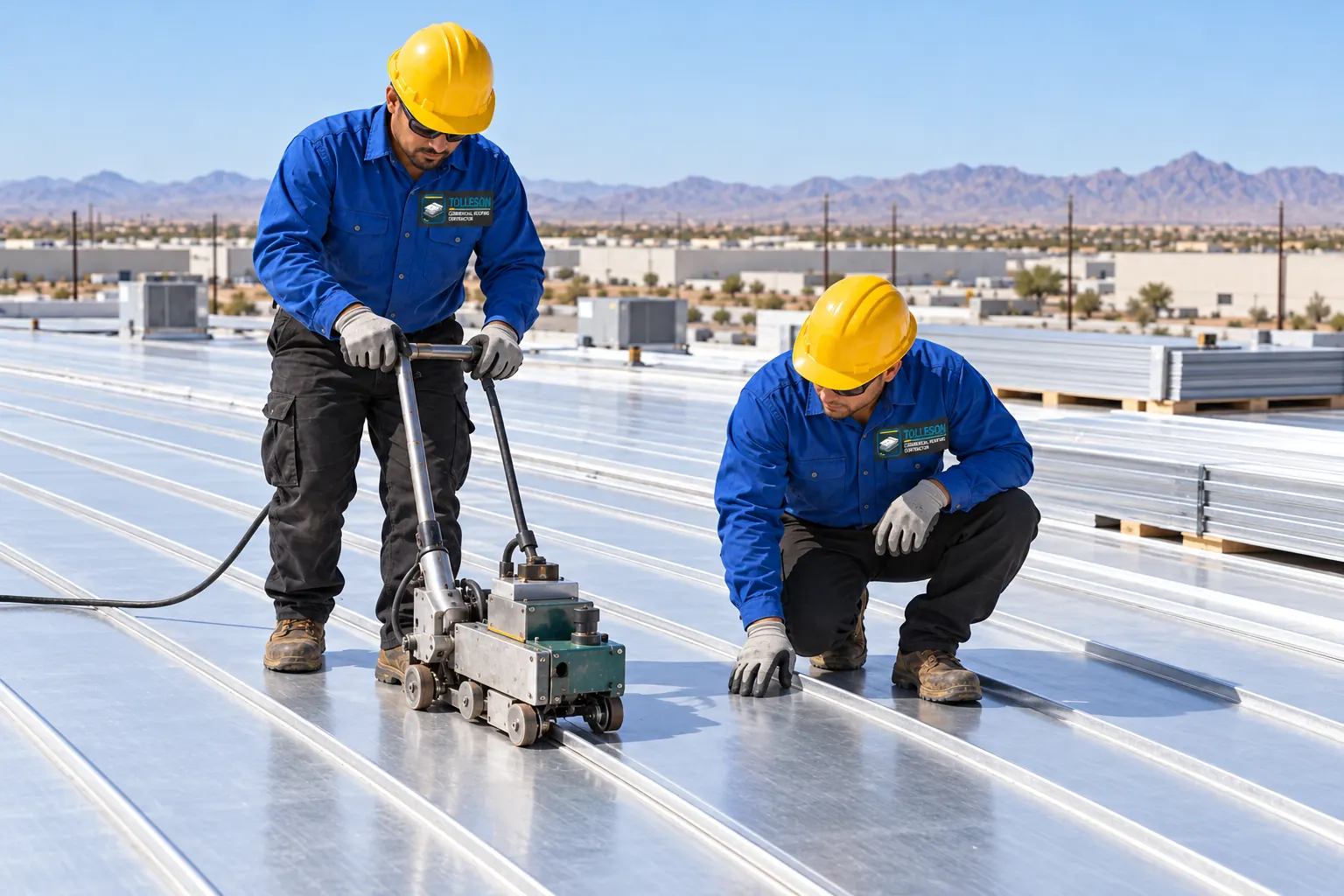
Commercial Metal Roofing
Standing-seam panels on clips, with continuous edge trim, suit shops and sloped buildings that take full wind exposure.
Commercial Metal Roofing service
Commercial roofing in Buckeye, Arizona's largest city by land area, where buildings on open sites along I-10 and SR 85 take monsoon gusts at their edges.
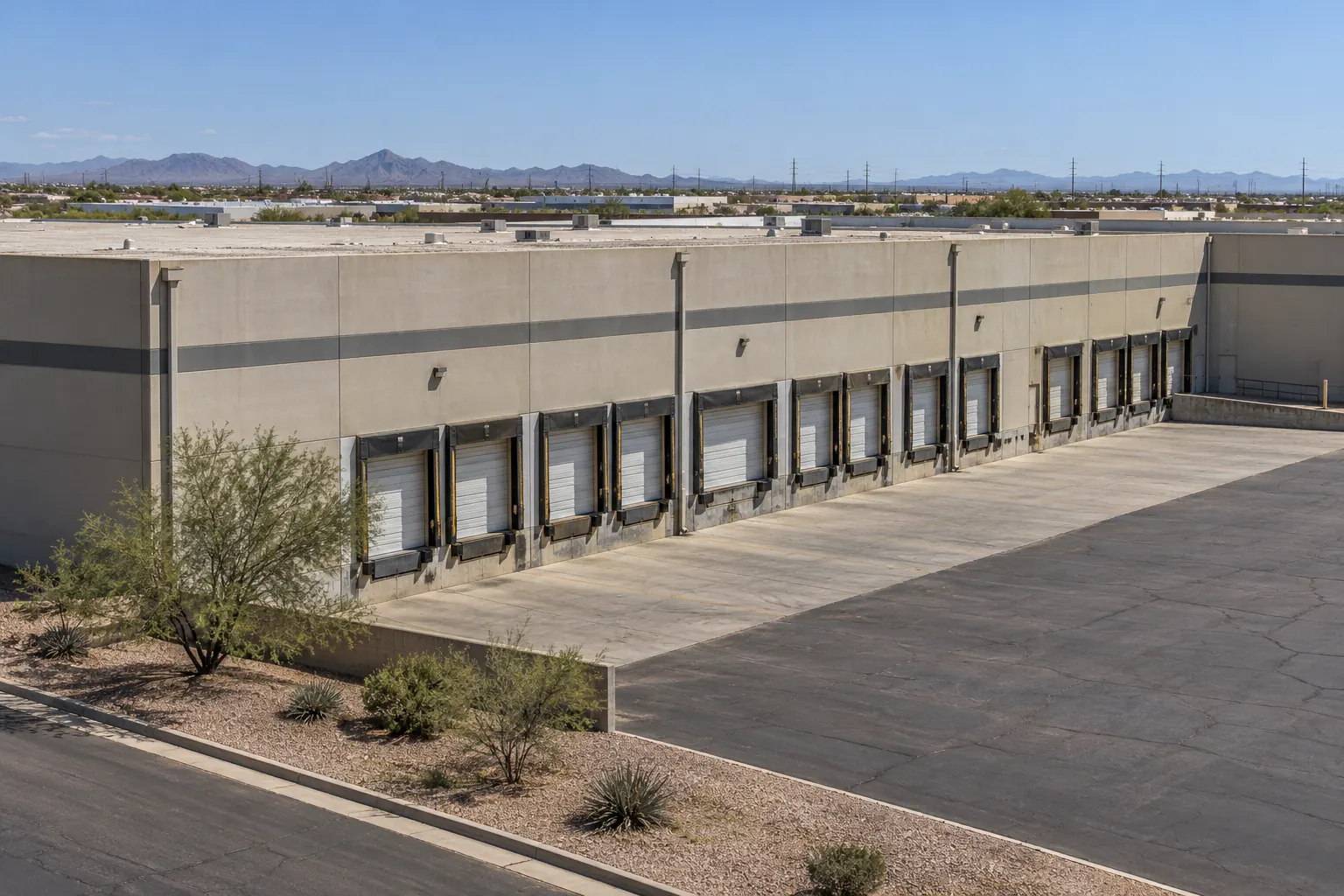
Buckeye has 16 miles of I-10 frontage and 26 miles of SR 85, with rail-served distribution buildings standing on wide, open lots.
With little around them to break the wind, these roofs fail first at the corners and edges, where uplift pulls hardest.
After a monsoon blow, these four signs show up first on open-site roofs.
Too few fasteners in the corner zone, where uplift is strongest.
Reattach the sheet, add fasteners or plates in the corner zone, and weld cover strips over them.
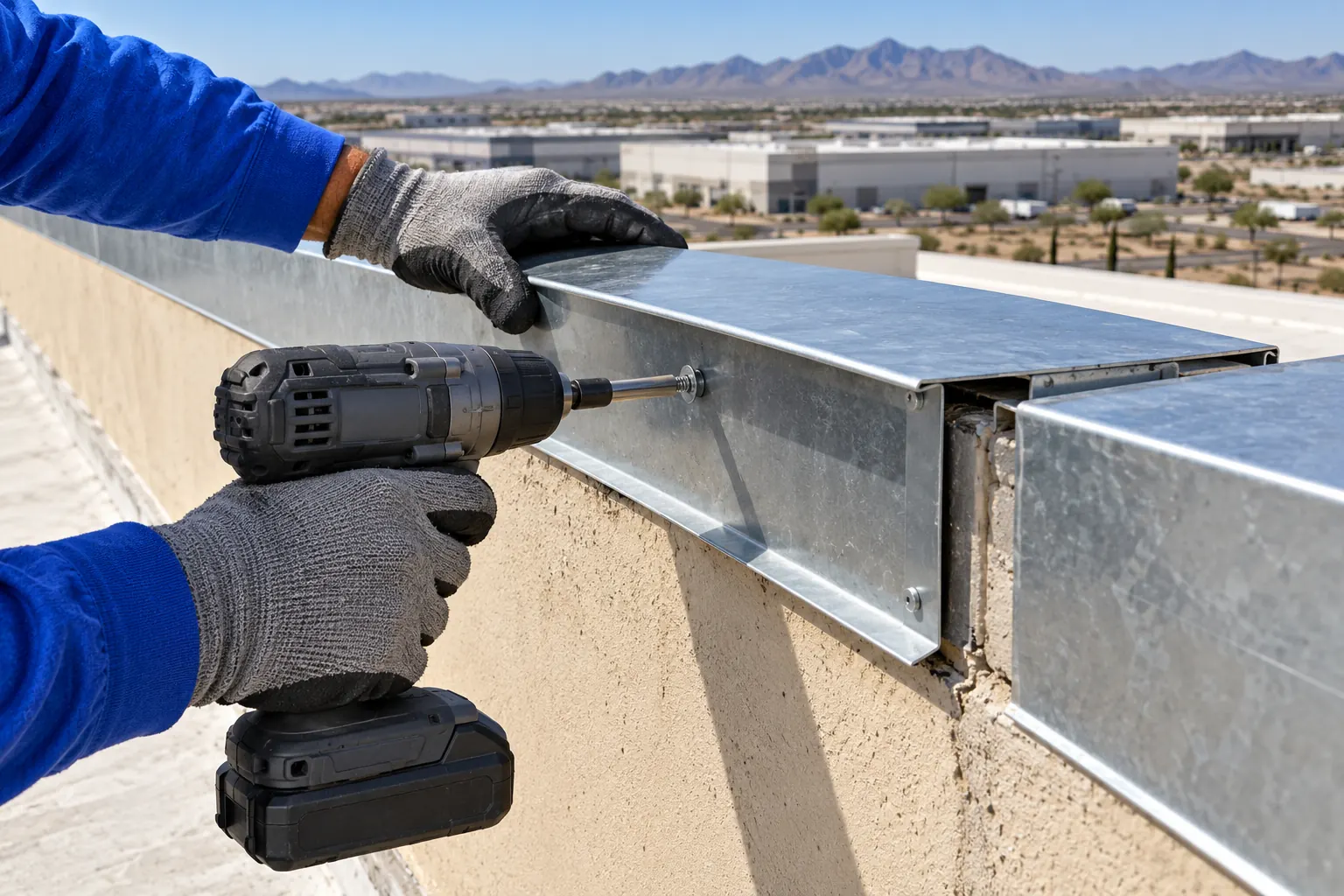
Coping held only by face screws without a continuous cleat.
Reinstall coping on a continuous cleat and seal the joints between sections.
Gravel stop or drip edge nailed into rotted wood blocking.
Replace the wood nailer, install new edge metal, and strip it into the membrane.
Blowing dust and debris from open ground packing drains and scuppers.
Clear and screen the drains, and add overflow scuppers where the roof has none.
Exposed fasteners loosened by daily heat cycles and gusts working the panels.
Replace backed-out screws with oversized fasteners and new washers, then reseal the side laps.
After wind damage, these factors decide between edge repairs and a new roof. Pulling a few fasteners and cutting a core behind the lift shows which column applies.
| Roof Factor | Repair Or Recover | Tear-Off And Replace |
|---|---|---|
| Damage location | Edges and corners only | Field sheet torn or lifted |
| Fastening | Add fasteners in corner zones | Re-fasten the whole roof |
| Edge metal | Replace damaged runs | New edge system on all sides |
| Insulation | Dry behind the lift | Soaked where sheet peeled back |
| Wood nailers | Sound wood at most edges | Rotted blocking around the perimeter |
| Roof age | Years of life left | Near the end of its life |
Two systems that hold up well on Buckeye open sites when the corners, perimeter, and edge metal are fastened for the exposure.
Standing-seam panels on clips, with continuous edge trim, suit shops and sloped buildings that take full wind exposure.
Commercial Metal Roofing service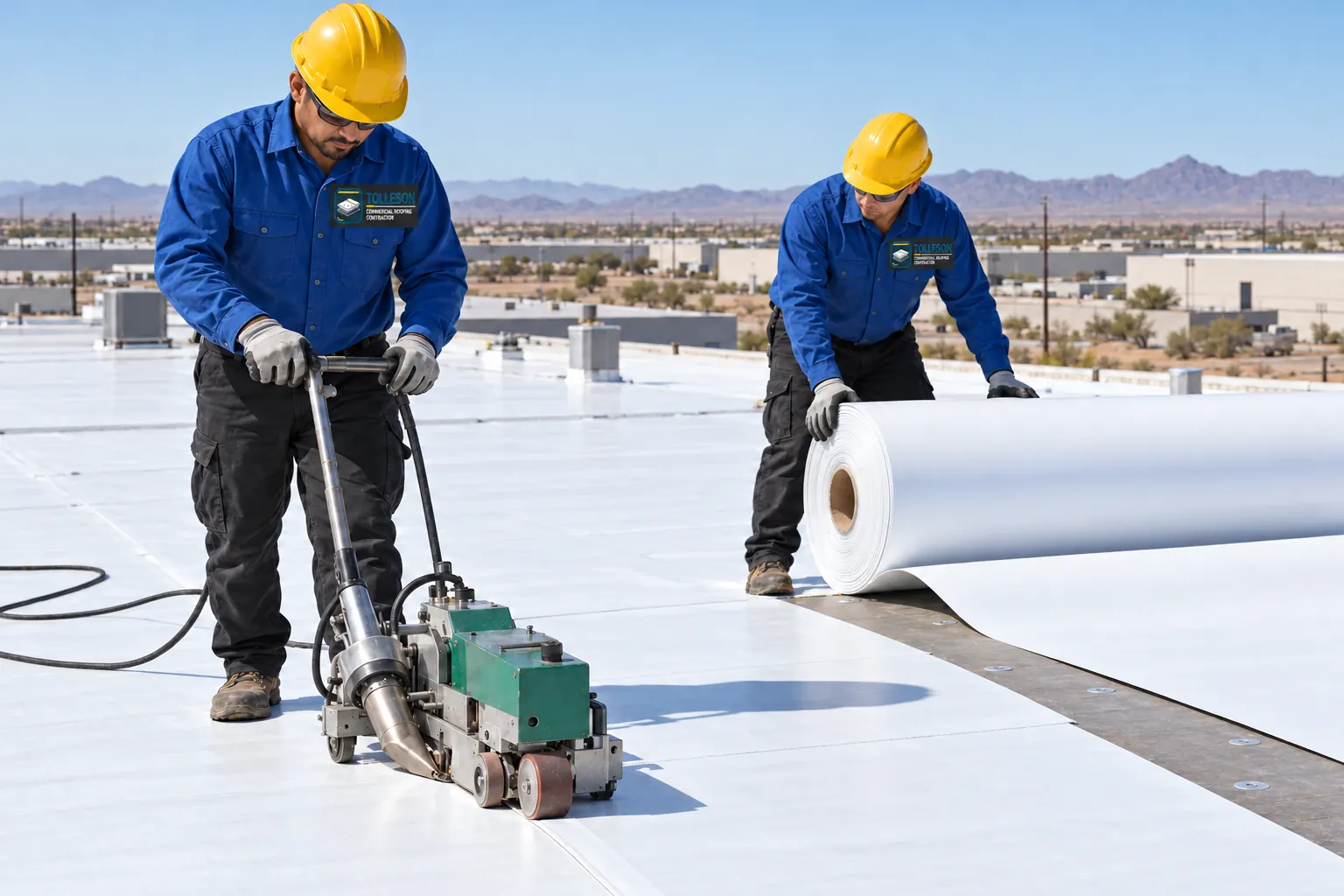
TPO on large distribution roofs gets tighter fastener spacing at corners and perimeters, plus welded strips over the plates.
TPO Roofing servicePhotos from the ground or a ladder help. Keep people clear of loose metal until we can secure it.
Five steps from the first walk to edges built to stay down.
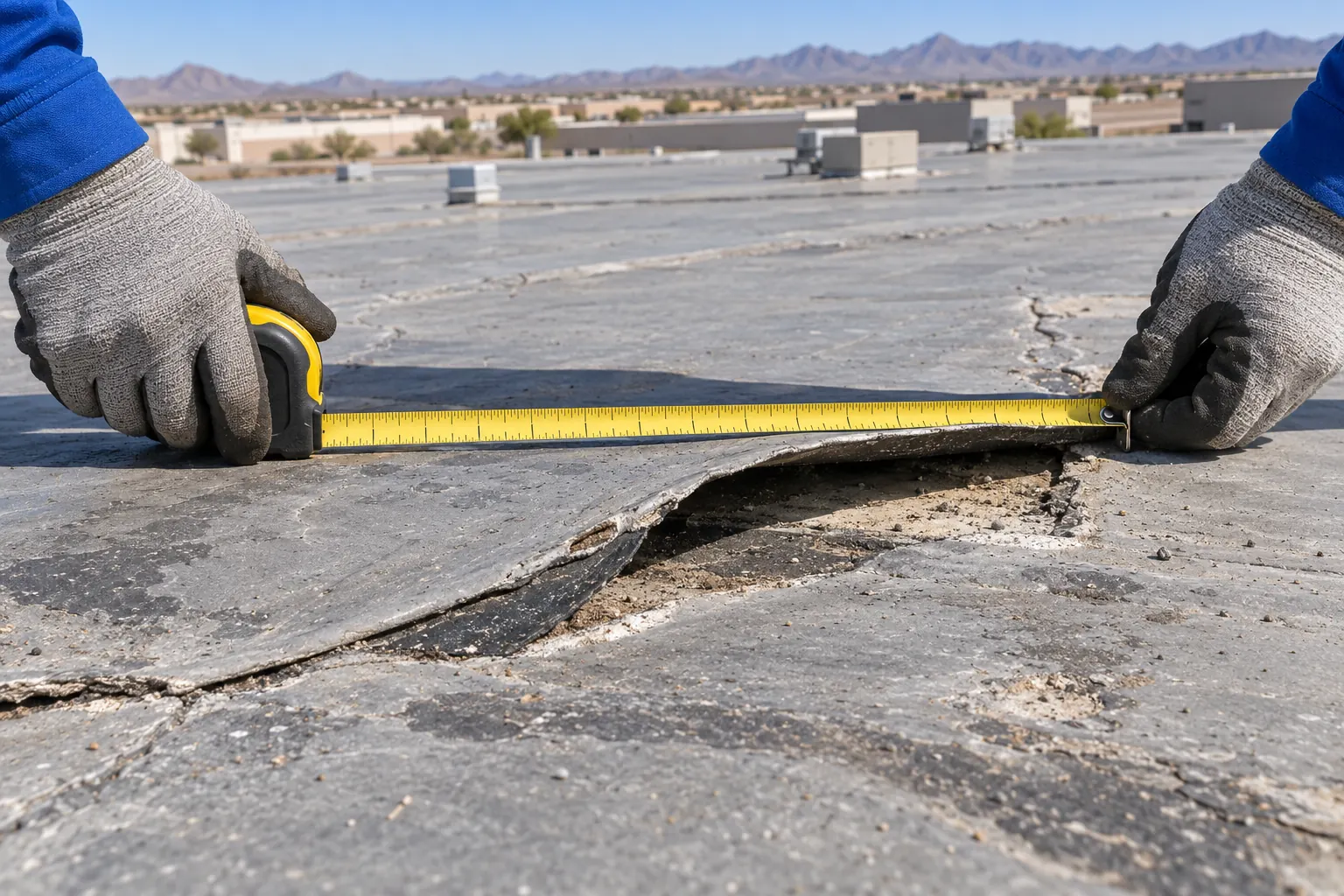
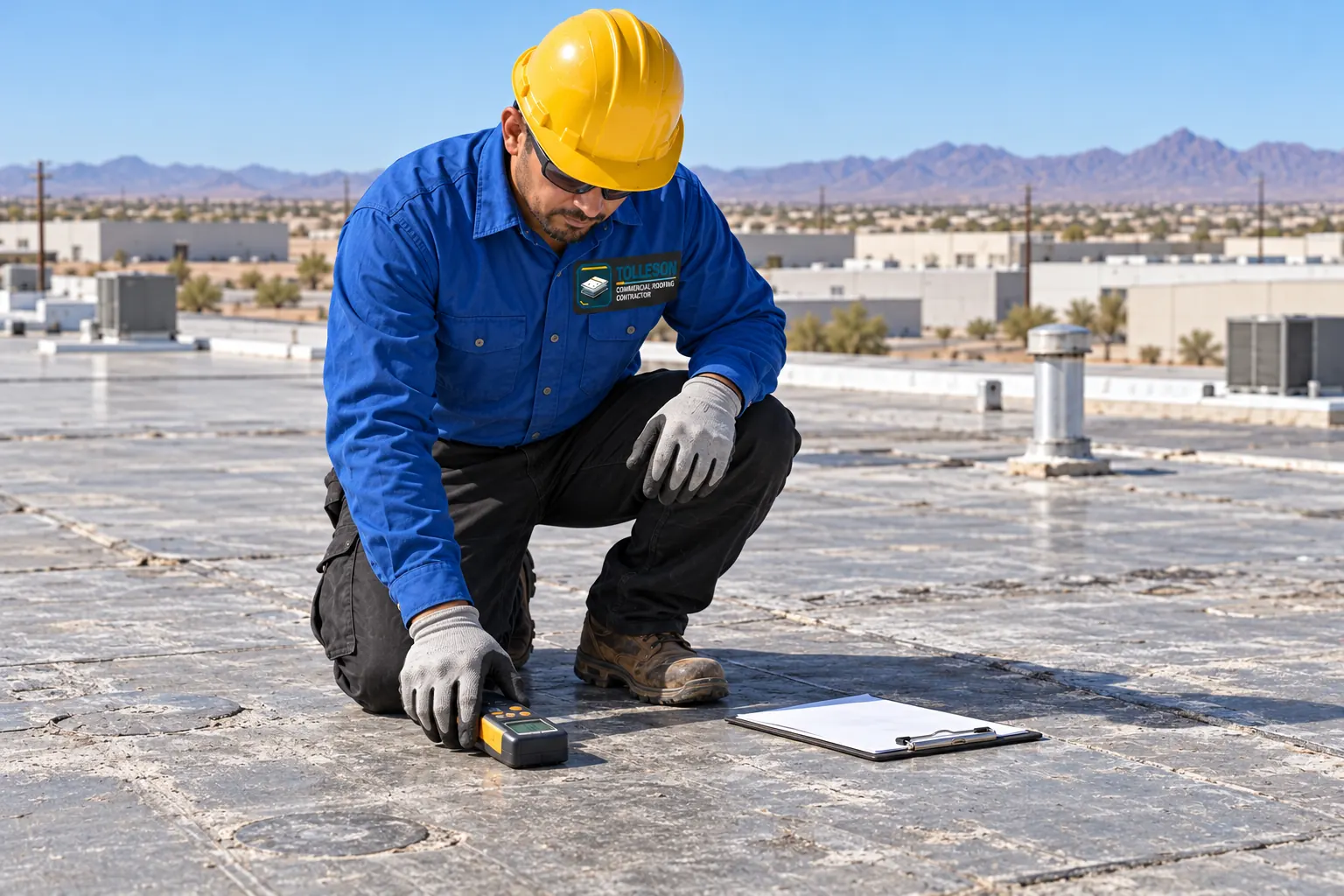
We walk the full perimeter, measure every lifted section, pull a few fasteners to check how they hold, and look for wet insulation behind each lift.
Flapping sheet and loose coping get temporarily secured right away so the next gust does not carry them off the building or onto parked trucks.
Rotted nailers come out, new wood goes in, and edge metal and coping go back on continuous cleats tied into the membrane.
Corner and perimeter zones get extra fasteners and plates, then welded or taped cover strips to seal them.
Drains and scuppers are cleared of dust, and you get photos and a marked plan of every edge and corner repair.
Areas east of Buckeye along the I-10 corridor.
The next city east, where warehouse roofs carry long rows of skylights and smoke vents.
Closer to Tolleson on I-10, where many roofs hold solar racks and crowded units.
Northeast of Buckeye, a small city where roof work is scheduled around guests.
Wind pressure peaks at corners and along the perimeter, so those zones need more fasteners than the middle of the roof. Roofs built with even spacing everywhere tend to lift at the corners first.
Twice a year makes a good baseline: once in spring before monsoon season and once in fall after it, plus a check after any big wind or dust storm. A visit covers clearing drains and scuppers, resealing open seams and flashing, looking for punctures near units, and noting ponding.
When we inspect storm damage, loose metal and flapping sheet get temporarily secured so they stay on the building until the permanent repair is scheduled.
Buckeye's Permit Center lists re-roofs as permitted work. Small repairs can differ, so we check the scope with the city before the work starts.
Yes, when the membrane behind it is in good shape. New wood nailers, edge metal on continuous cleats, and fresh stripping go on without touching the rest of the roof.
Open ground around many Buckeye sites sends dust onto roofs during storms. Drain screens and an added overflow scupper keep water moving when the main drain clogs.
A standing-seam roof on properly spaced clips, with continuous edge trim, resists uplift well. Through-fastened panels hold when the fasteners are tight and replaced as they back out.
Most perimeter repairs on a single building take a few working days, set by the length of edge metal and the number of corners. Temporary securing happens on the first visit, and the permanent edge goes on once materials arrive.
Send photos of any lifted edge or loose coping, and we will schedule the inspection.
Leave a name and number and we will call you back about the roof.
Or call now: (623) 310-0160