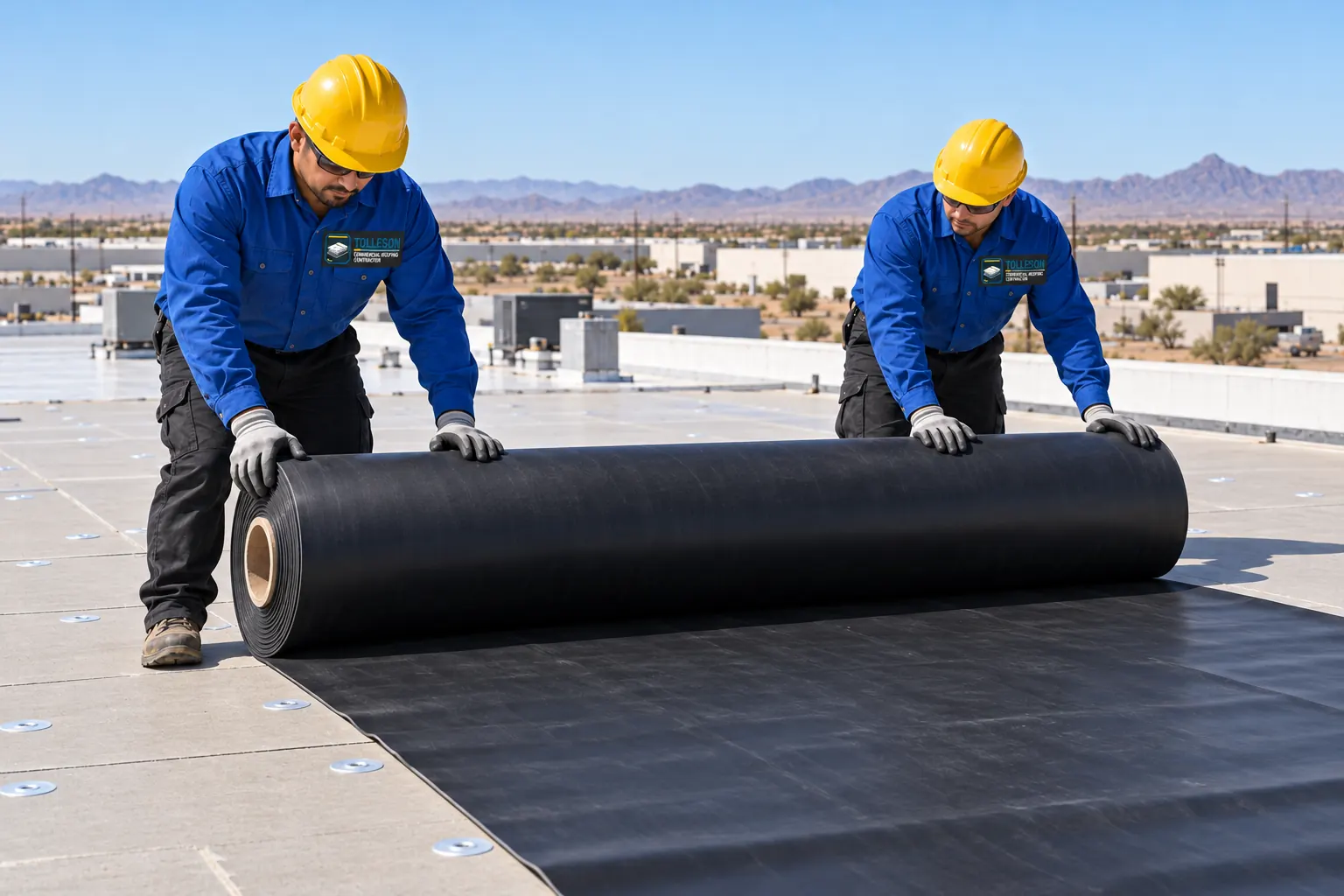
EPDM Roofing
Low-rise roofs crowded with units and pipes do well with EPDM, which takes repairs with primer and tape and little noise.
EPDM Roofing service
Commercial roofing in Litchfield Park for hospitality, office, and retail buildings, with roof work scheduled around guests, tenants, and quiet hours.
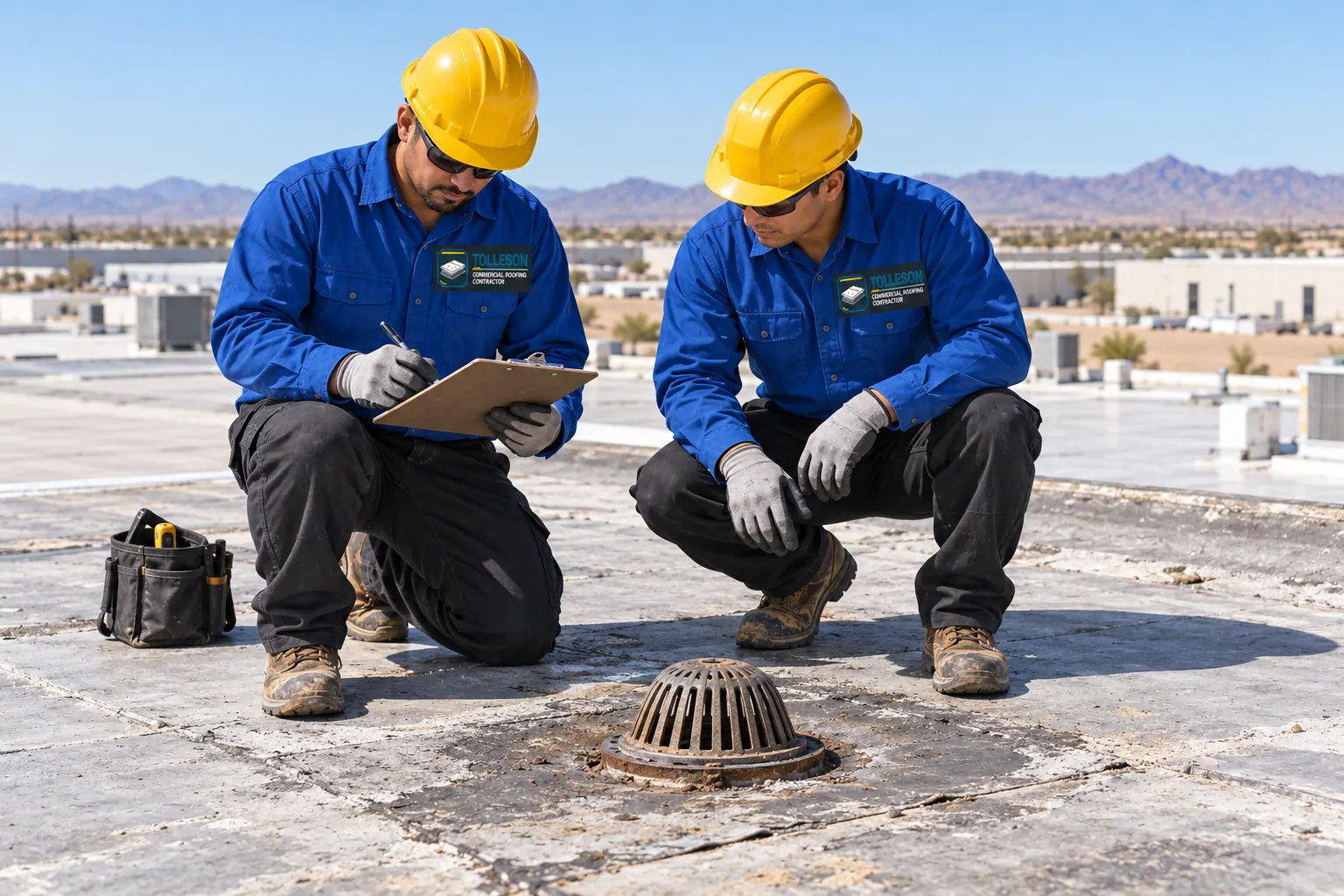
Litchfield Park is a 3.3-square-mile city 16 miles west of downtown Phoenix, and a resort is one of its major employers. Its commercial roofs sit over guest rooms, restaurants, offices, and shops.
Roofs over guest rooms, lobbies, and offices get worked in short, quiet windows, with fumes kept away from air intakes and staging kept out of sight lines.
Guests and tenants notice these four problems before anyone walks the roof.
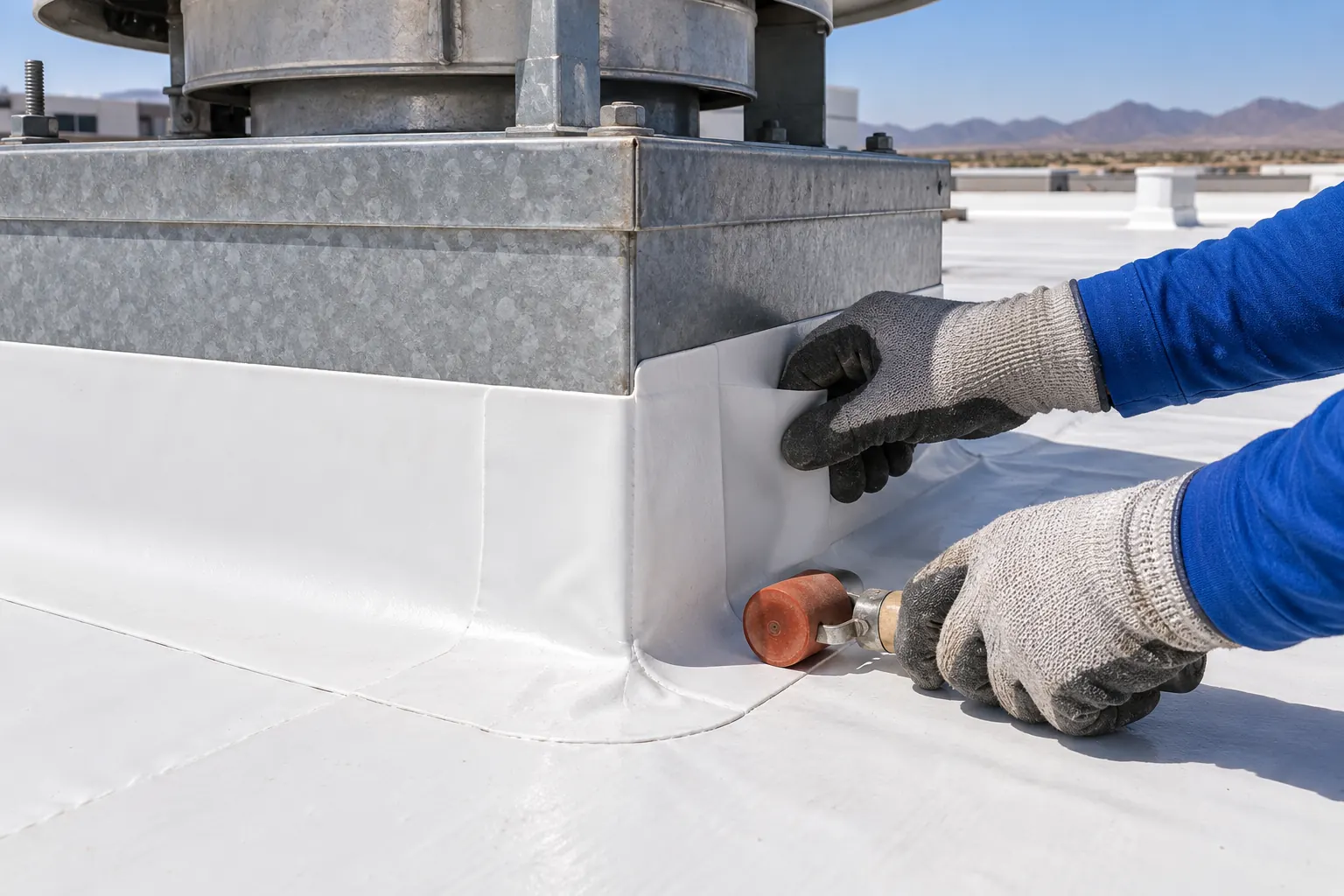
Flashing at a packaged rooftop unit that separated from its curb.
Reflash the curb and counterflashing, and check the unit condensate line while the curb is open.
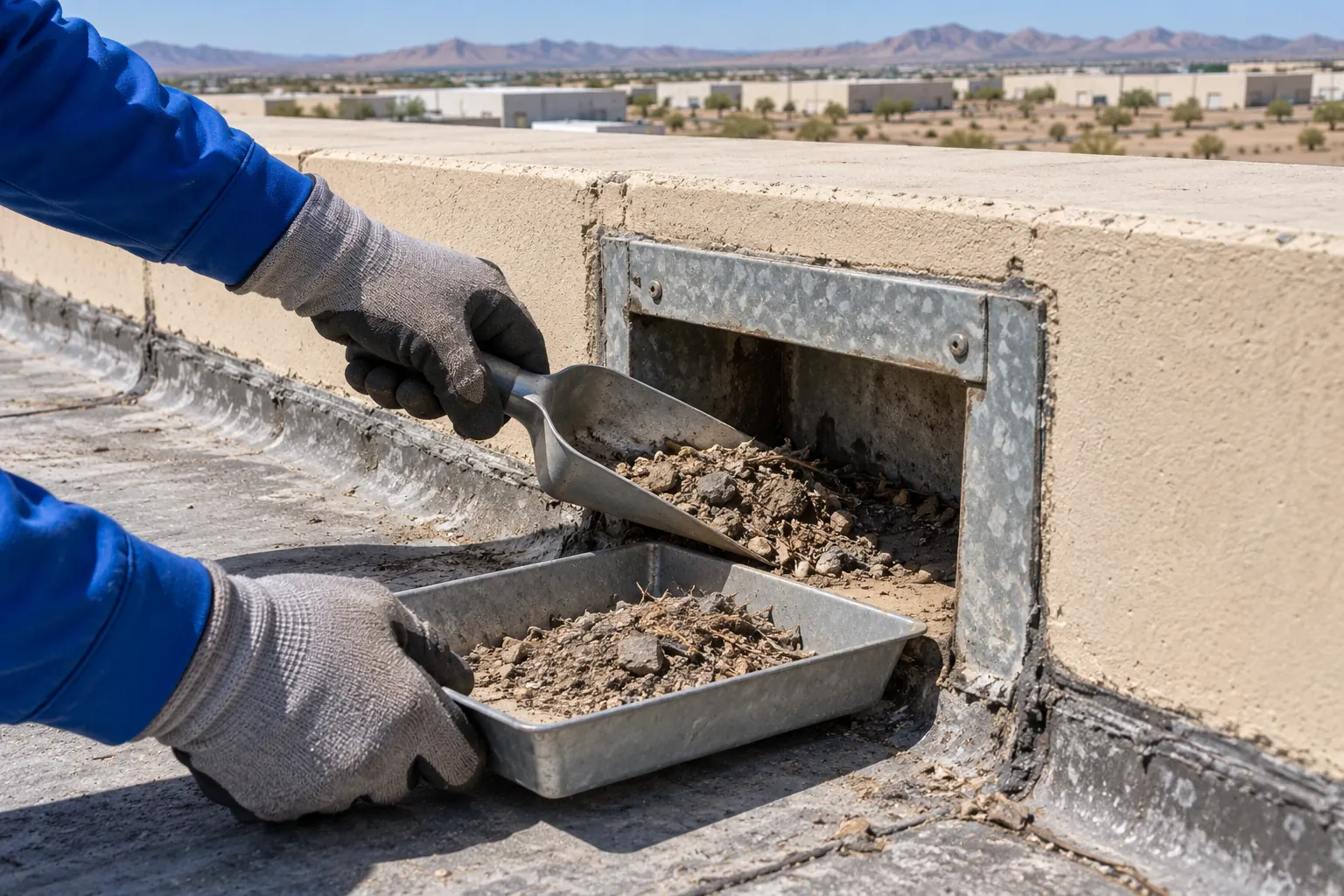
An overflow scupper blocked by leaves and landscape debris.
Clear and screen the scupper, and check the parapet flashing above the walkway.
An EPDM lap that released after years of heat on a low-rise roof.
Prime and tape the lap, then patch the end laps where water collects.
Coping joints open, letting water run behind the wall flashing.
Reseal or replace the coping and run new flashing up the inside of the parapet.
Grease from a restaurant or banquet kitchen hood softening the membrane around the fan.
Cut out the softened sheet, install a grease-resistant section, and add a containment box at the fan.
For occupied buildings, the disruption of each option matters as much as the roof itself. Guest rooms, lobbies, and kitchens below shape which path makes sense.
| Roof Factor | Repair Or Recover | Tear-Off And Replace |
|---|---|---|
| Guest impact | Short visits over one area | A phased plan by wing or building |
| Noise | Hand tools and small patches | Tear-off timed to agreed hours |
| Odors | Primers and tape near intakes, shielded | Low-odor attachment chosen for the field |
| Membrane | Flexible with a few failed laps | Brittle or shrinking across the roof |
| Insulation | Dry at core cuts | Wet over rooms or lobbies |
| Roof age | Years of life left | Near the end of its life |
Low-rise hotel, office, and retail roofs here usually take one of these two. Each can be repaired in short sections with little noise over occupied rooms.
Low-rise roofs crowded with units and pipes do well with EPDM, which takes repairs with primer and tape and little noise.
EPDM Roofing service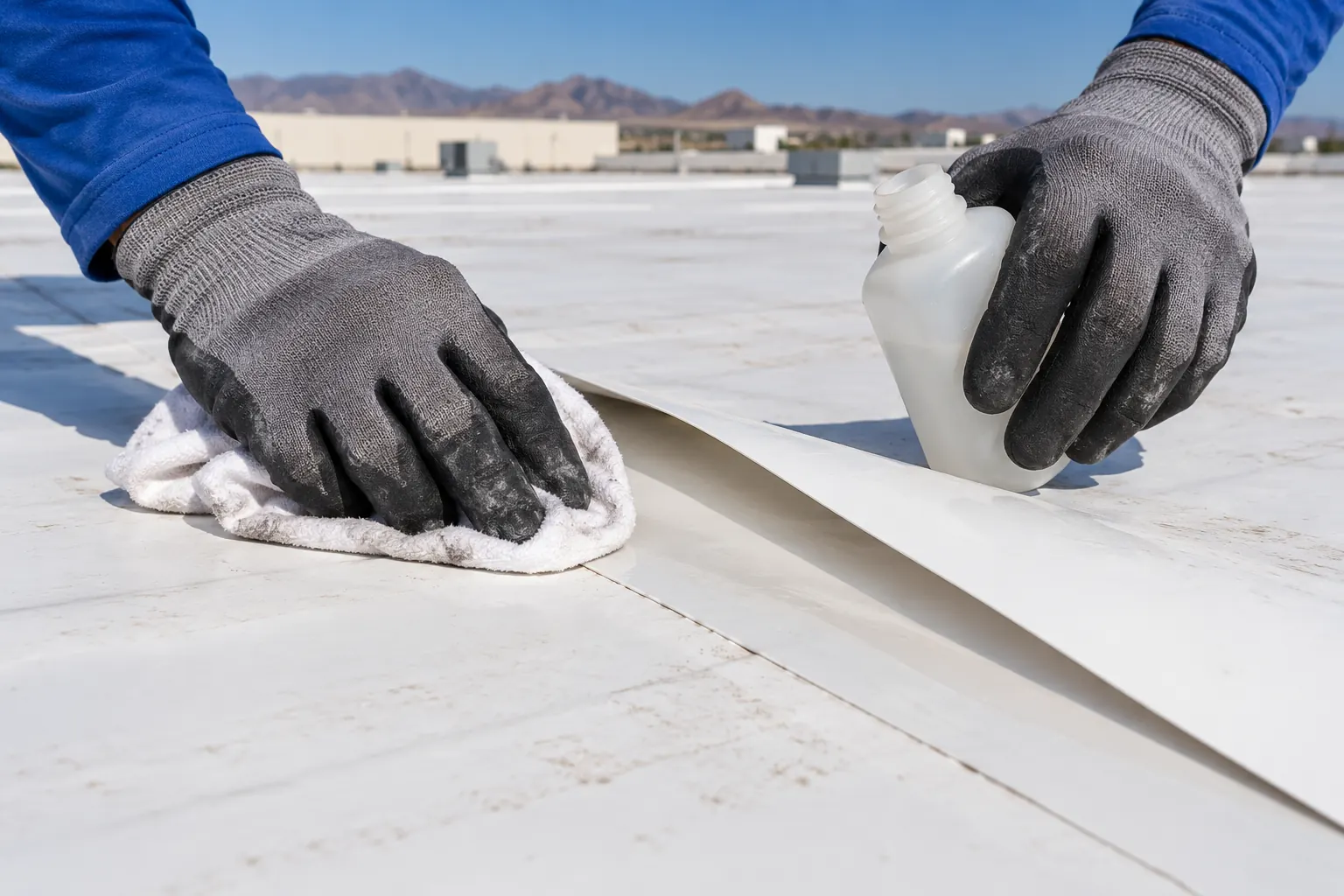
White TPO keeps roofs over guest rooms cooler, and welding with hot air gives off less odor than adhesive-heavy work.
TPO Roofing serviceTell us which rooms or suites are affected and when they are occupied, so we plan around them.
Five steps built around the people under the roof.
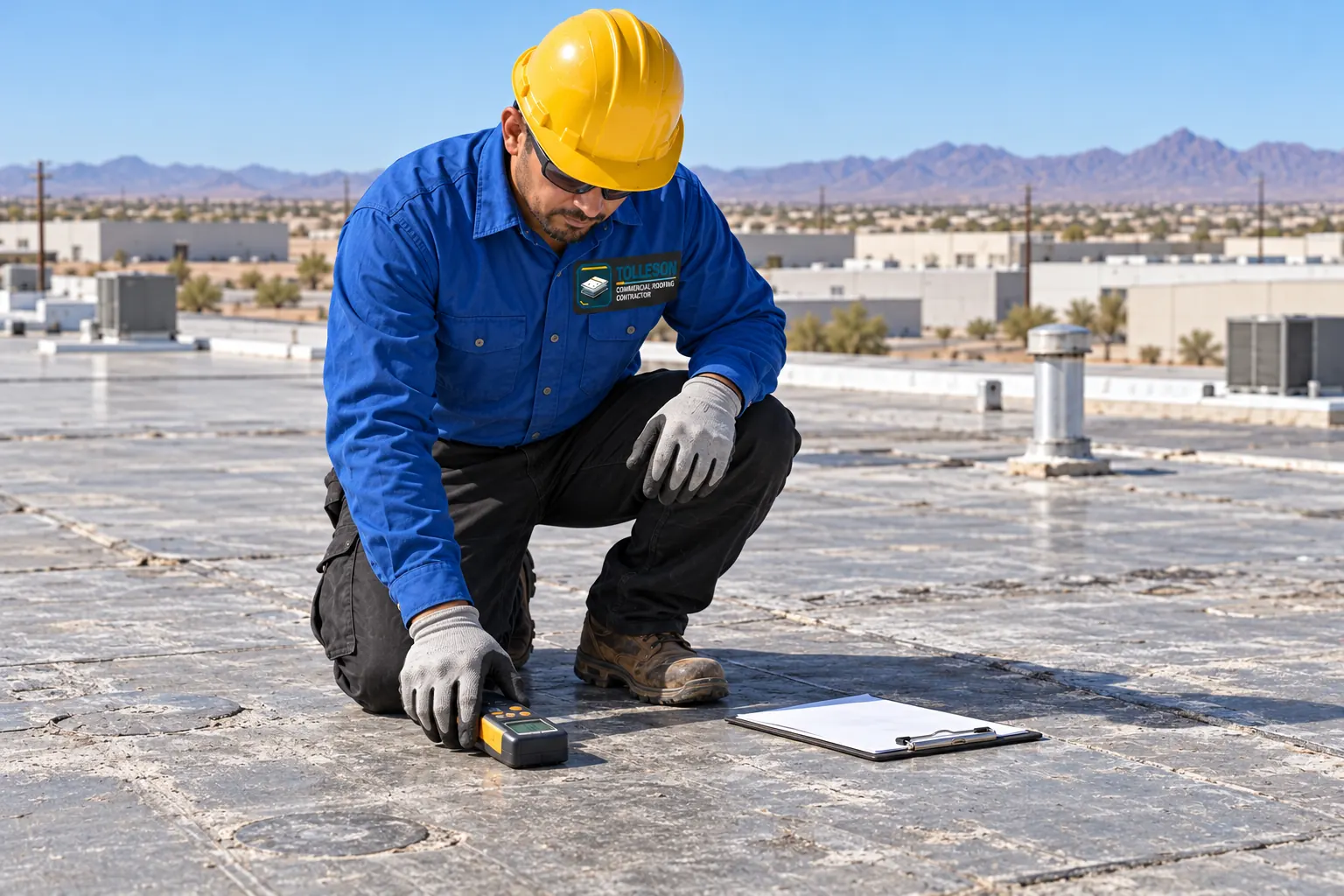
We inspect during quiet hours, mark each leak against the rooms or suites below, and core the field to see whether the insulation is dry.
Noisy hours, event days, and rooms to avoid are set with your manager before the schedule is final.
Air intakes on rooftop units near the work get covered, and lifts and dumpsters go to service areas, away from guest paths and lobby doors.
Each roof section is opened, repaired, and sealed in one window, so no membrane or flashing stays open above rooms overnight.
You receive photos and notes for each repaired roof area, tied to the rooms or suites below it, so housekeeping and maintenance know which ceilings to watch.
Neighboring areas south and east of Litchfield Park, each with a different kind of roof work.
Just southwest, where warehouse roofs need skylight screens and anchors before any work.
South toward I-10, with roofs that carry solar racks over rows of rooftop units.
East across Loop 101, where older flat roofs often need new drains and taper.
The property owner or a licensed contractor applies with the City of Litchfield Park Building Department. Arizona contractors are licensed through the Arizona Registrar of Contractors, and any owner can check a license there before hiring.
Much of it can. Inspections, seam repairs, and flashing work use hand tools. Tear-off is the loud part, so it gets scheduled into hours your manager agrees to.
Air intakes near the work get covered or the units shut down for short periods, and we choose low-odor attachment methods where rooms sit close by.
Yes. Share the calendar, and we will place the work on open dates and keep the roof sealed and quiet around busy days.
Landscaped grounds drop leaves onto low-rise roofs. Drain screens and seasonal clearing keep scuppers open, especially before monsoon storms.
Where staff or technicians walk to units often, yes. Pads protect the membrane from boots and dropped tools and keep foot traffic on a marked path to each unit.
We identify the existing sheet first, then use compatible materials: EPDM primer and tape on rubber, welded patches on TPO.
Kitchen exhaust carries grease that softens many membranes over time. The area around each hood fan gets a grease-resistant section and a containment box, and we check it at every maintenance visit along with the drains nearby.
Tell us about the building and the guests or tenants below, and we will plan the inspection around them.
Leave a name and number and we will call you back about the roof.
Or call now: (623) 310-0160