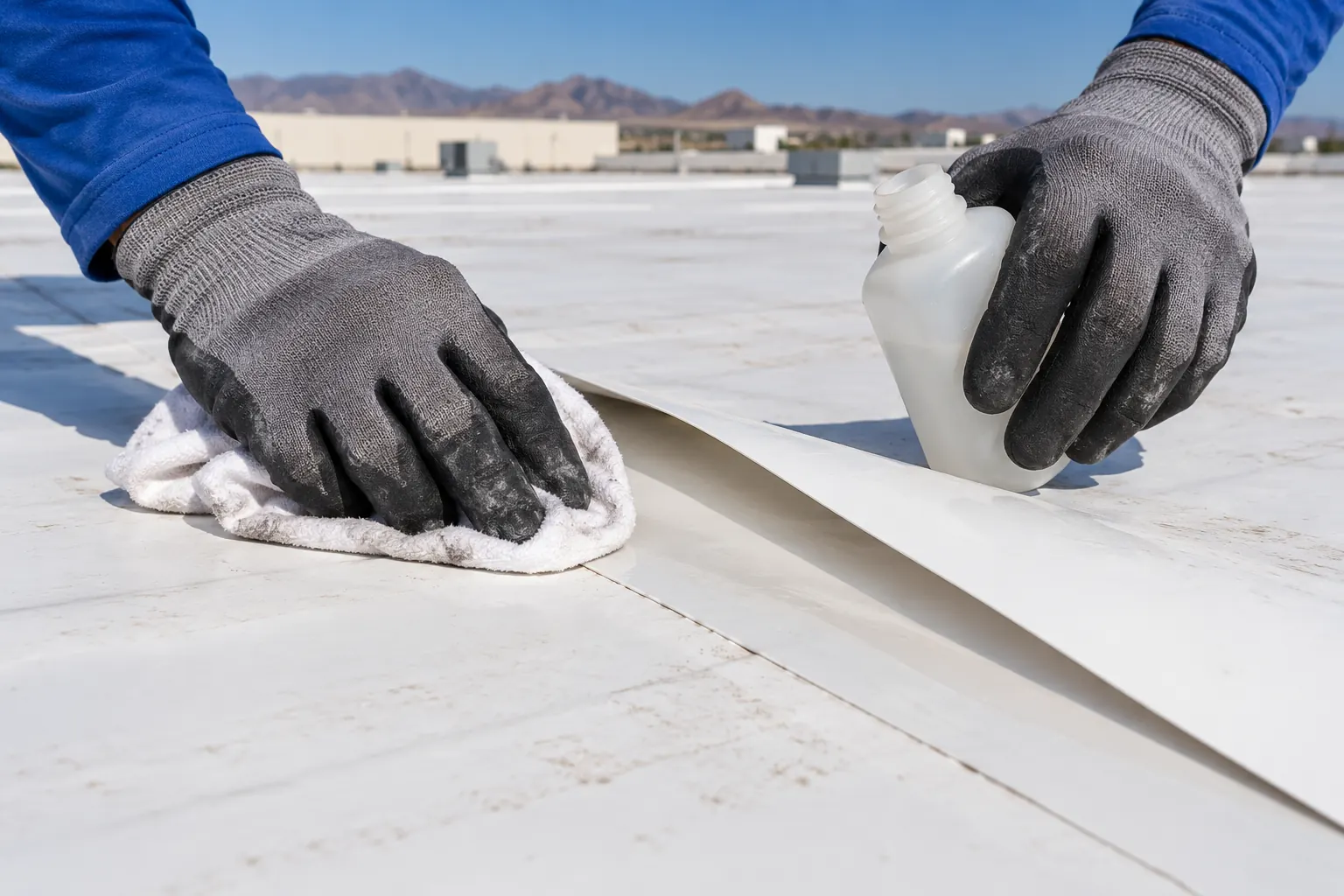
TPO Roofing
White TPO under an array welds cleanly to new rack flashings and pairs well with panels that run cooler on a reflective roof.
TPO Roofing service
Commercial roofing in Avondale for buildings along I-10 and Loop 101, including roofs that carry solar racks or a crowd of rooftop units.
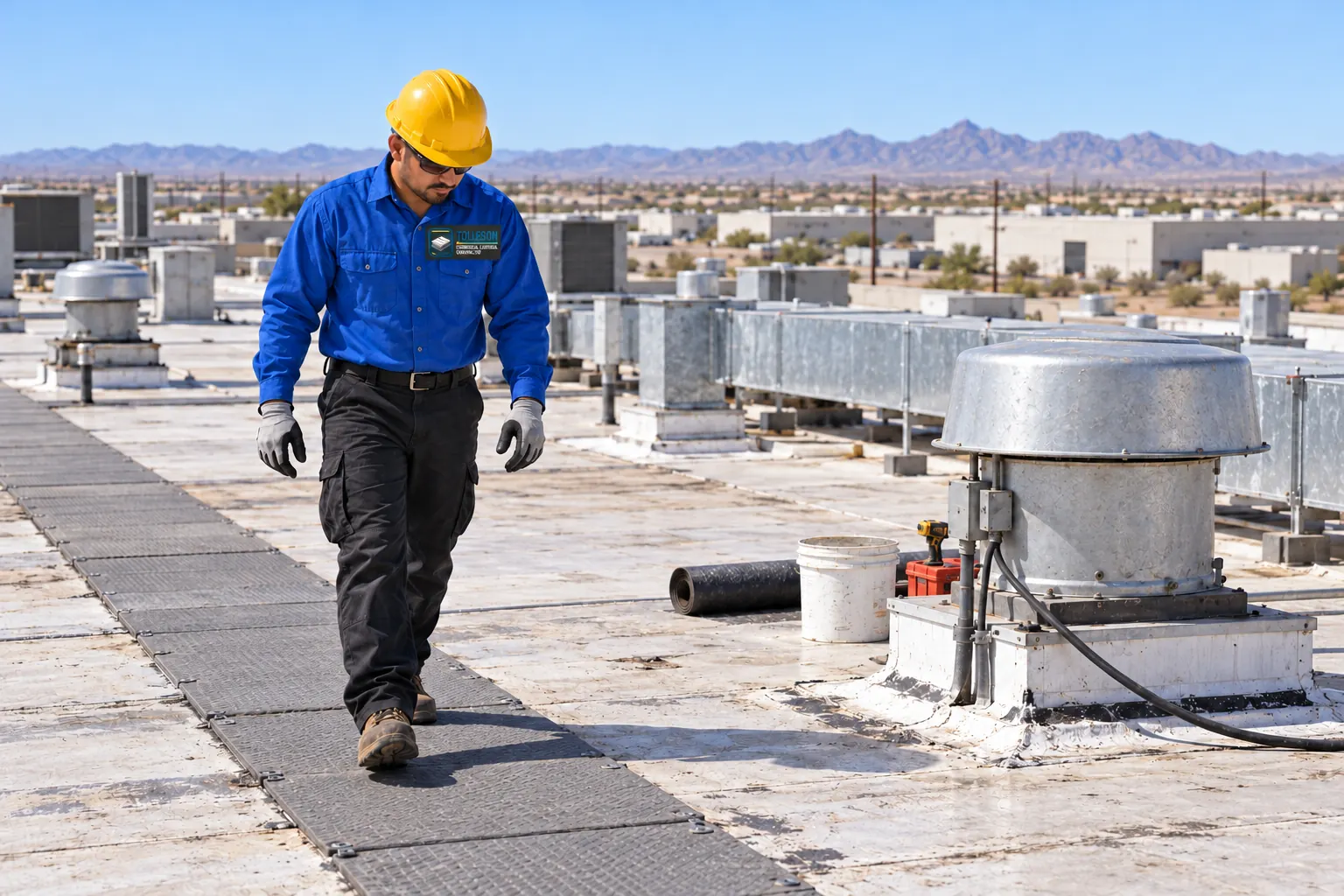
Avondale sits along I-10 and Loop 101 with several employment corridors. Many of its commercial roofs now hold solar racks, condensers, and exhaust fans on the same deck.
Every rack foot and curb is a hole in the membrane. The roof under an array has to outlast the panels, or the array comes off for a reroof later.
These four leak sources show up most on roofs that carry arrays or several units.
Rack feet set on blocks or glued pads that shifted, tearing the sheet beside them.
Lift the affected rack section, patch or replace the membrane, and flash new attachment points.
Conduit laid across the roof on wood blocks that rotted and cut into the surface.
Set conduit on proper supports, patch the abraded sheet, and boot each conduit that passes through the deck.
Equipment stands bolted through the roof with sealant only, now dried and split.
Flash each stand leg with a pipe boot or pitch pocket filled to the top.
Racking ballast and curbs blocking the path to the drains on a flat roof.
Clear a drainage path, add tapered crickets behind curbs, and reset ballast off the low lines.
Seams walked on and creased by installers carrying panels across the roof.
Probe the seams along the install paths, repair creased laps, and add walkway pads for future panel service.
Before an array goes up, or when one already sits on a tired roof, these six factors sort out the plan. Core cuts under the planned rows settle most of them.
| Roof Factor | Repair Or Recover | Tear-Off And Replace |
|---|---|---|
| Roof age under the array | Years left past the panel life | Near the end of its service life |
| Insulation | Dry at core cuts under the racks | Wet bays under or beside the array |
| Penetrations | A few failed rack feet or boots | Leaks at many feet and curbs |
| Array plan | Panels stay, repair around them | Panels lifted once for a full reroof |
| Drainage | Paths clear after reset | Low areas that need new taper |
| Units | Same equipment staying | Units moving or being replaced |
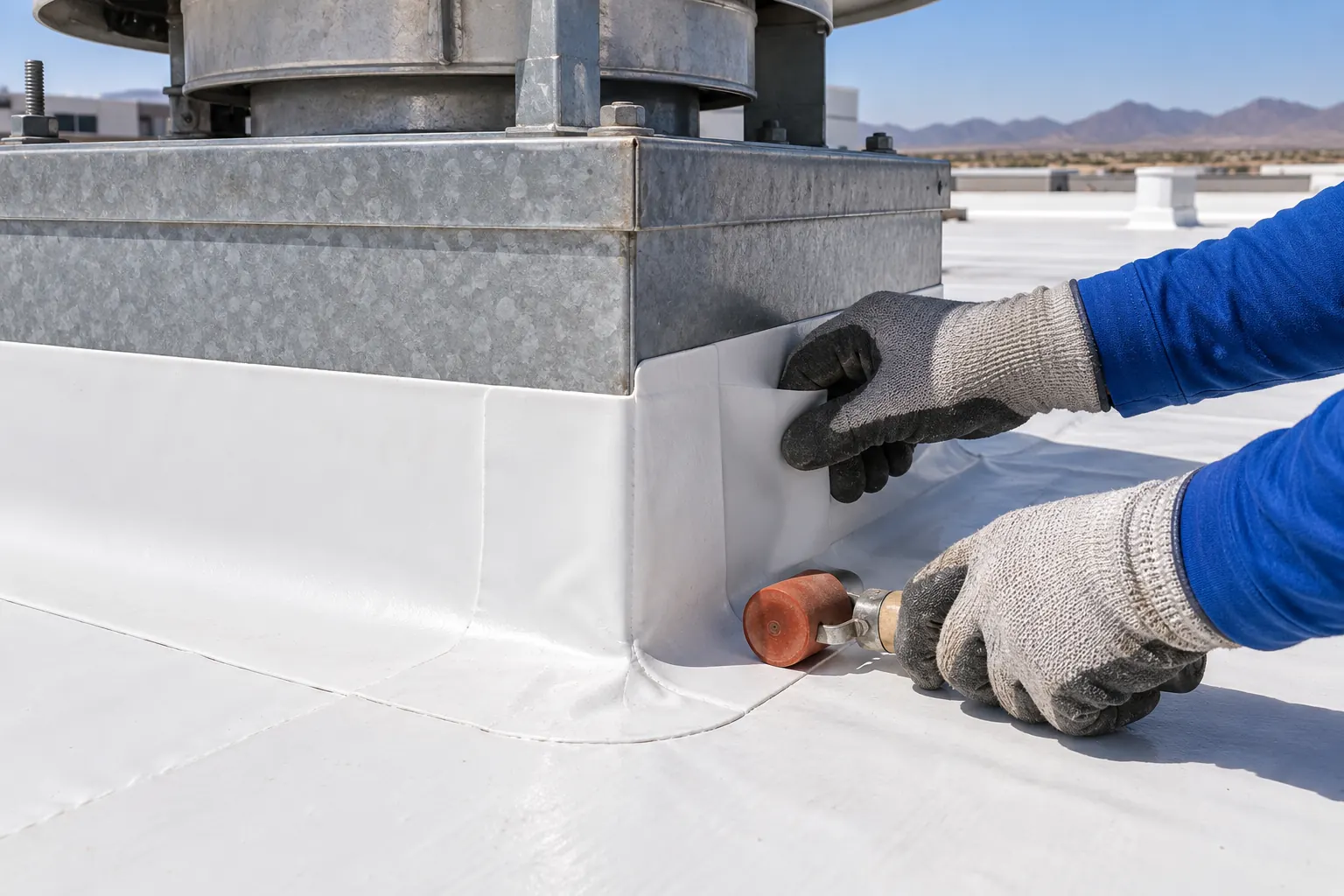
Two systems cover most Avondale roofs with arrays and heavy equipment. Both accept flashed rack feet and pipe boots made for that membrane.
White TPO under an array welds cleanly to new rack flashings and pairs well with panels that run cooler on a reflective roof.
TPO Roofing service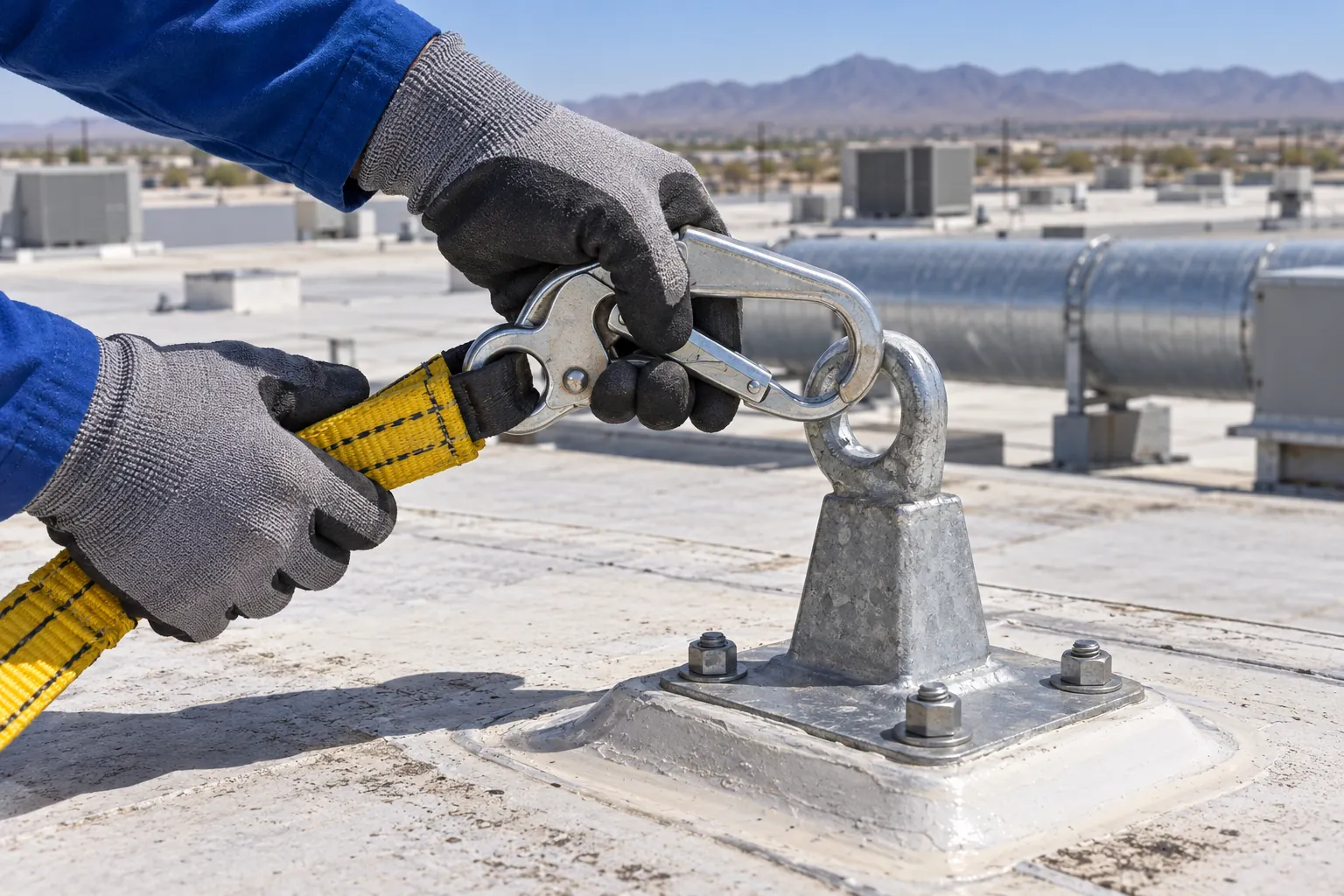
Larger plant and distribution roofs add anchors, walkway pads to inverters and units, and phased zones around busy bays.
Industrial Roofing serviceCheck the roof before the array goes up. A reroof under panels later means paying to lift and reset them.
Five steps that keep the roof and the solar work in the right order.
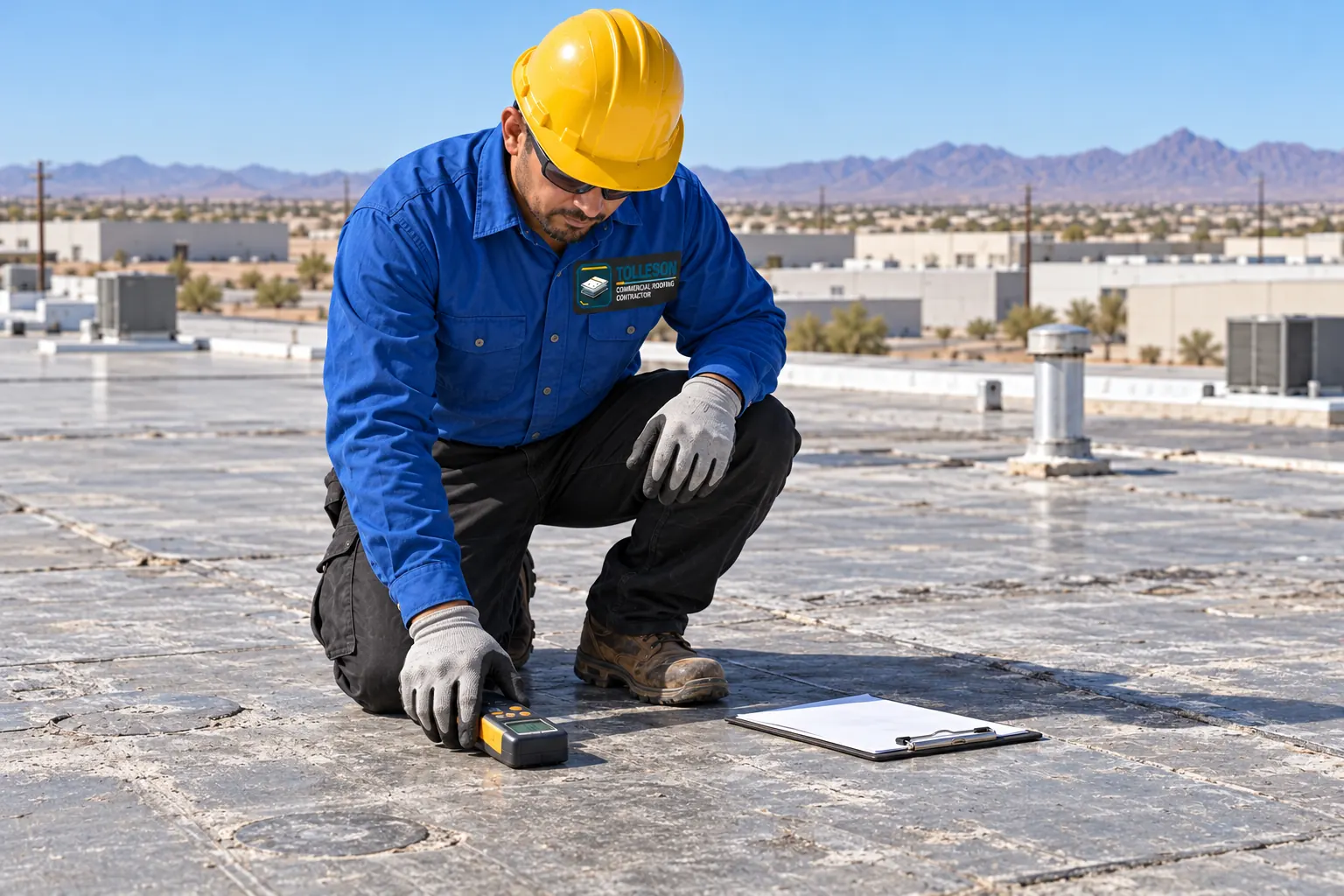
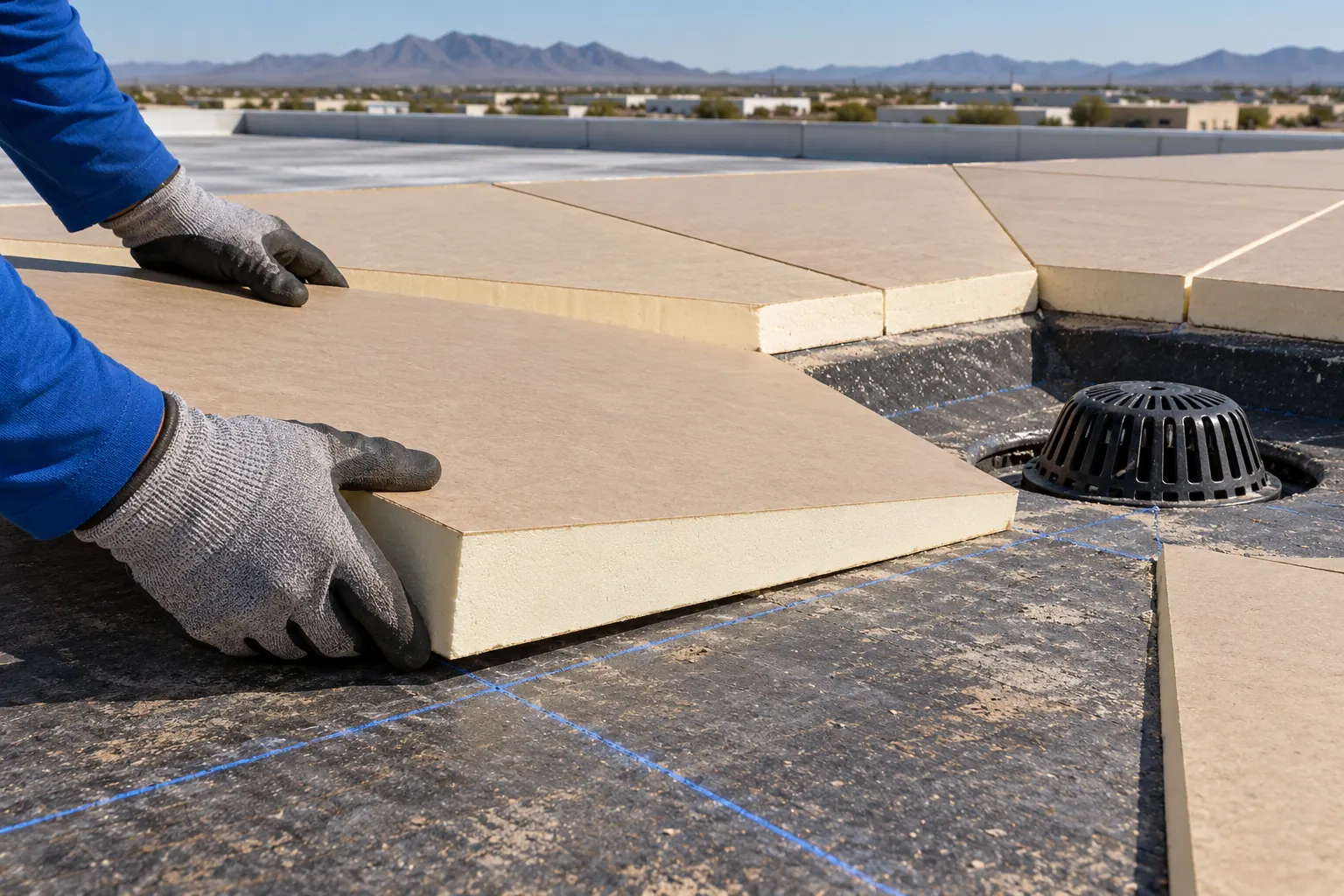
Cores near the planned rack rows, a moisture scan, and photos of every curb and conduit show whether the roof will outlast the panels going on it.
Rack layout, attachment type, and conduit routes are set with the solar installer so each foot lands on a flashable spot, clear of the drains.
Worn sections are repaired or replaced before panels arrive, and wet boards under future rows are cut out while access is still open.
Feet, stand legs, and conduit penetrations get manufacturer flashings or boots tied into the membrane, never sealant alone.
You receive a roof map marking every attachment and penetration, plus photos, so later service calls start from a record.
Three neighboring areas, each with its own roof work.
West along I-10, where wide warehouses carry rows of skylights that need screens before crews walk them.
East toward Phoenix, a village of commerce parks where one roof can cover several tenant bays.
North of Avondale, a small city where roof work is timed around guests and quiet hours.
If the roof has fewer years left than the panels, yes. Replacing it first avoids lifting the whole array later. A core cut and a look at the seams tell you how much life the roof has under the planned rows.
Yes, by lifting the panels over the leak, repairing the membrane, and resetting them. On larger repairs we coordinate with your solar contractor so the electrical work and the roof work happen in the right order.
Either ballasted on pads or mechanically attached through the deck. Attached feet need a flashing made for that rack, welded or sealed into the membrane, and ballasted systems need pads under every block.
In most cases, yes. We work one section at a time so loading areas and front doors stay usable, start early in summer to beat the heat, keep lifts and dumpsters off truck routes, and seal each section watertight before leaving for the day.
Plan on it. Avondale Development Services takes applications through the city portal, and the city adopted the 2024 building codes effective January 1, 2026, so a reroof follows that edition.
Units that stay get raised curbs or new flashing, and units due for replacement are best swapped while the roof is open. We coordinate lifts and disconnects with your mechanical contractor before tear-off begins.
Many were bolted straight through the roof and sealed with caulk that dried out. Each leg needs a proper boot or a filled pitch pocket, which we install during repairs.
Panels shade the membrane from direct sun, which slows surface aging under the rows. The trade-off is access: leaks under panels are harder to reach, and debris collects beneath the racks, so drains and seams there need checking on every visit.
Planning solar or chasing a leak near the units? Tell us the address and roof type to start.
Leave a name and number and we will call you back about the roof.
Or call now: (623) 310-0160