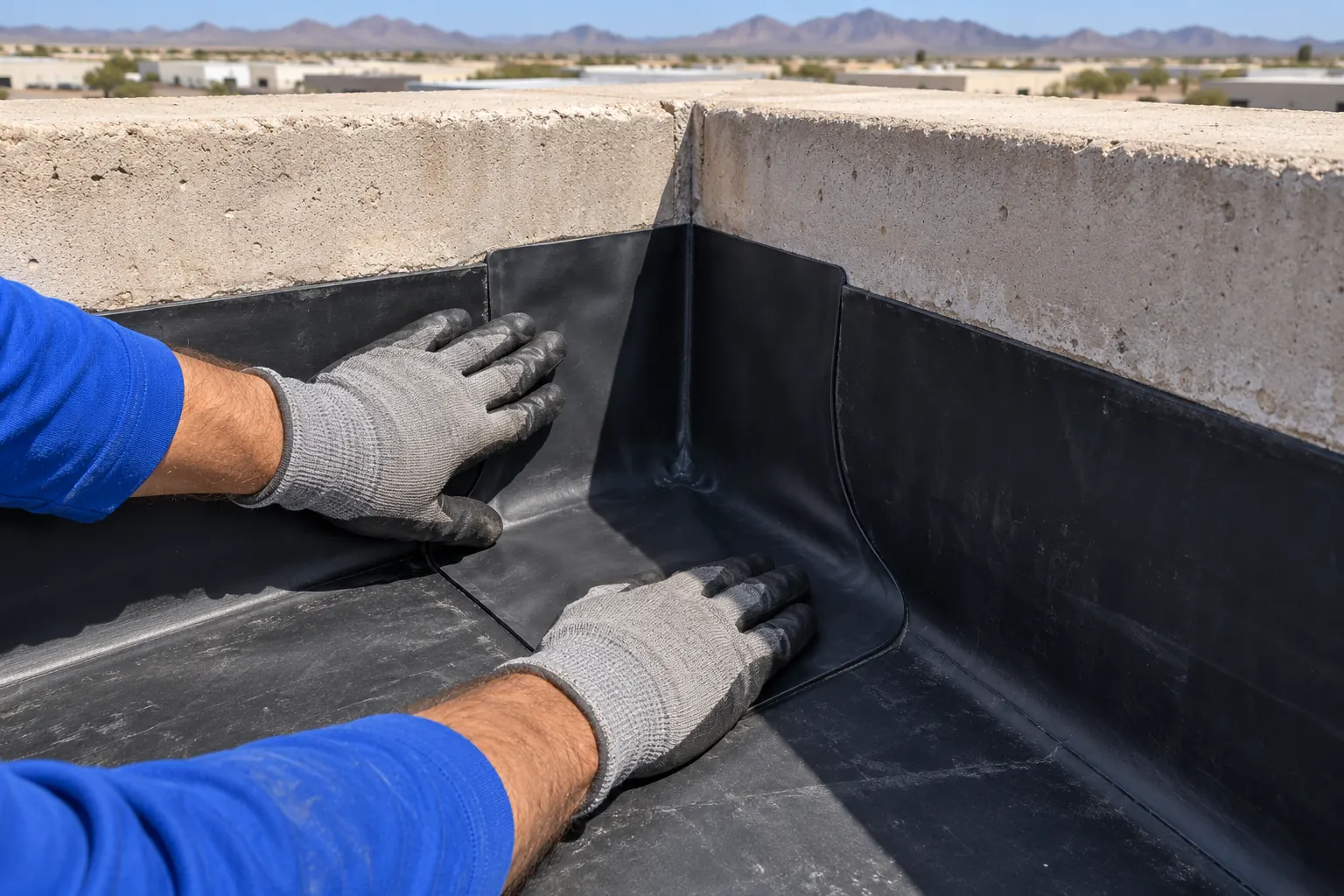
EPDM Roofing
EPDM fits older roofs with many pipes and curbs, and new tapered boards go under it to fix the slope.
EPDM Roofing service
Commercial roofing in Maryvale Village for older flat roofs along the I-10 and Loop 101 corridors, where water that sits for days marks a drainage problem.
Maryvale is a 38-square-mile Phoenix village of post-war planned neighborhoods, with employment corridors along I-10 and Loop 101.
Older flat roofs on its commercial buildings often hold water for days after a storm, which ages the membrane faster and loads the deck. Replacement is the time to build slope back in with tapered insulation, crickets, and new drains.
Each of these four signs points to water staying on the roof too long.
Low spots where water sat and evaporated, leaving dirt rings behind.
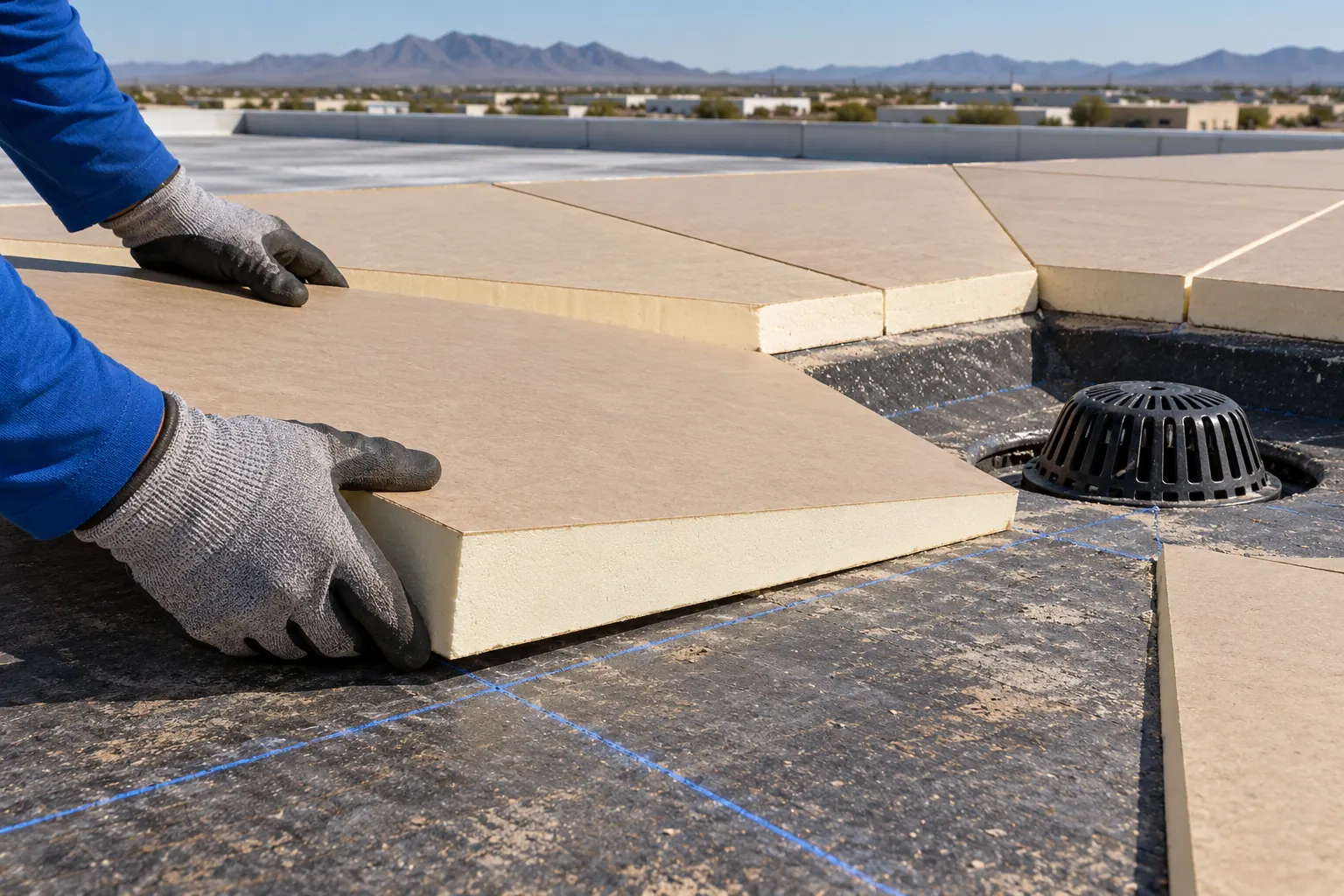
Map the low areas, then add tapered insulation or crickets so water moves to a drain.
A drain set higher than the roof around it after layers were added.
Lower the drain or reset its sump with tapered boards so water reaches it.
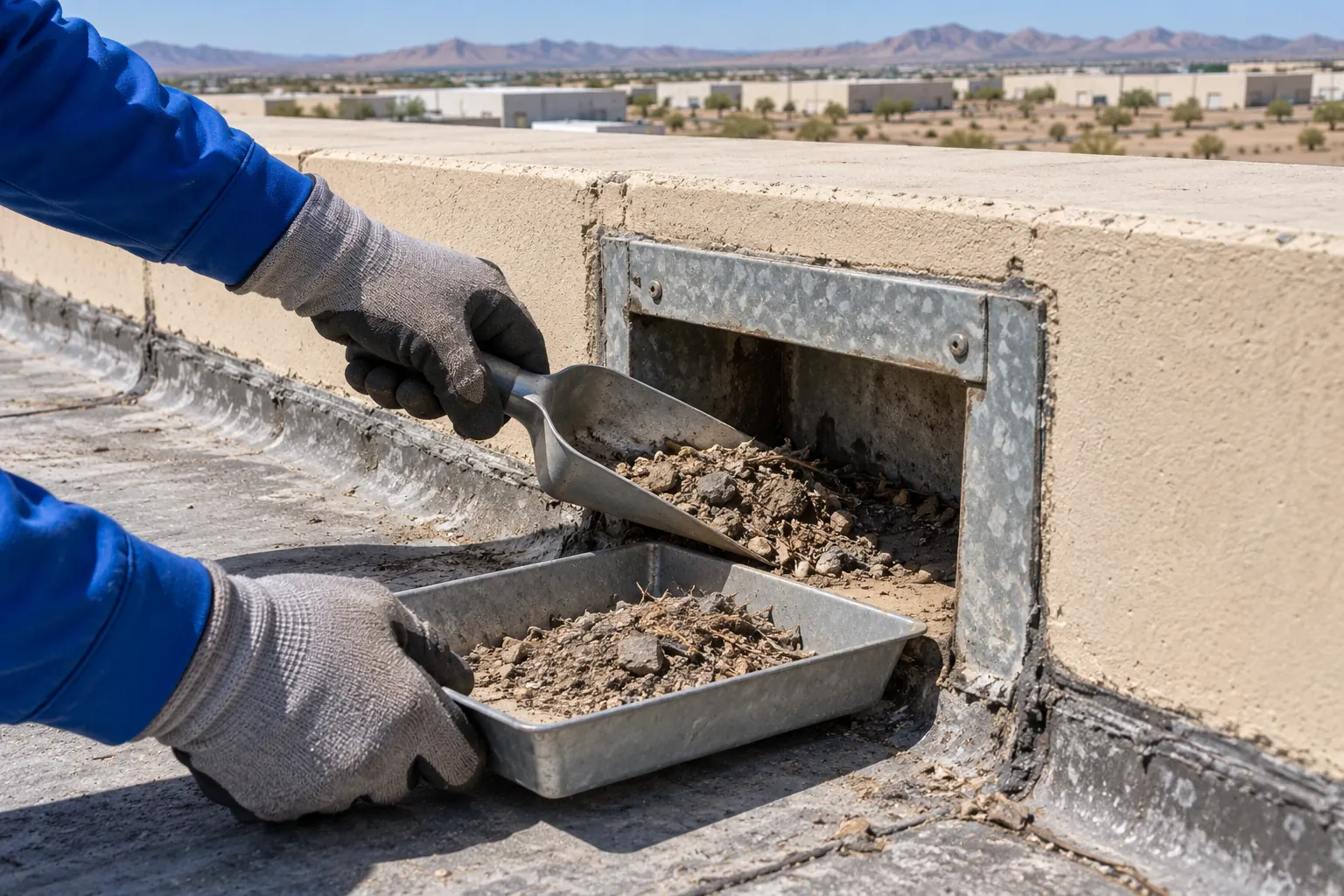
No scupper on a wall that collects runoff from the whole roof.
Cut in an overflow scupper with flashing tied to the membrane.
A wide curb damming water on its upslope side.
Build a cricket behind the curb to split the flow around it.
Membrane or old asphalt surface aging faster under standing water and daily sun.
Replace the damaged area and build slope under it so water no longer collects there.
Drainage problems decide much of this choice on older flat roofs. Where water sat for years, the membrane and the insulation under it often both need replacing.
| Roof Factor | Repair Or Recover | Tear-Off And Replace |
|---|---|---|
| Ponding | Small, near a drain | Wide areas across the roof |
| Drain height | Set right for the surface | Above the surrounding roof |
| Membrane | Flexible, with dried rings | Cracked where water sat |
| Insulation | Dry at core cuts | Wet under the low areas |
| Existing layers | Room for one recover layer | Layer limit already reached |
| Roof age | Years of life left | Near the end of its life |
Older flat roofs here usually move to one of these two systems, both installed over new tapered insulation that sends water to a drain.
EPDM fits older roofs with many pipes and curbs, and new tapered boards go under it to fix the slope.
EPDM Roofing service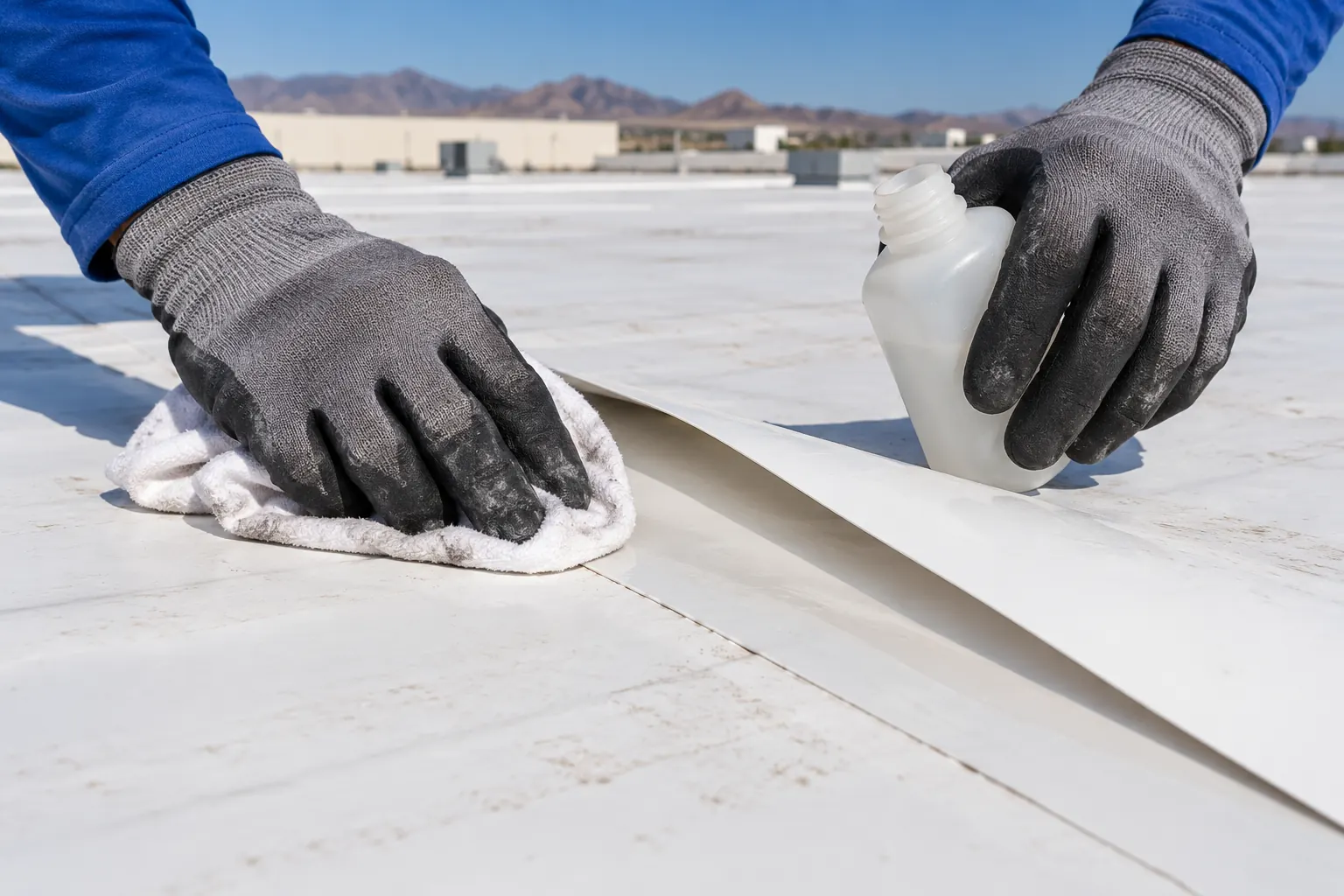
TPO over tapered insulation drains a retail or office roof and reflects summer heat off older buildings.
TPO Roofing servicePhotos taken a day or two after a storm show where water sits, which tells us where taper and drains are needed.
Five steps from mapping the water to a roof that drains.
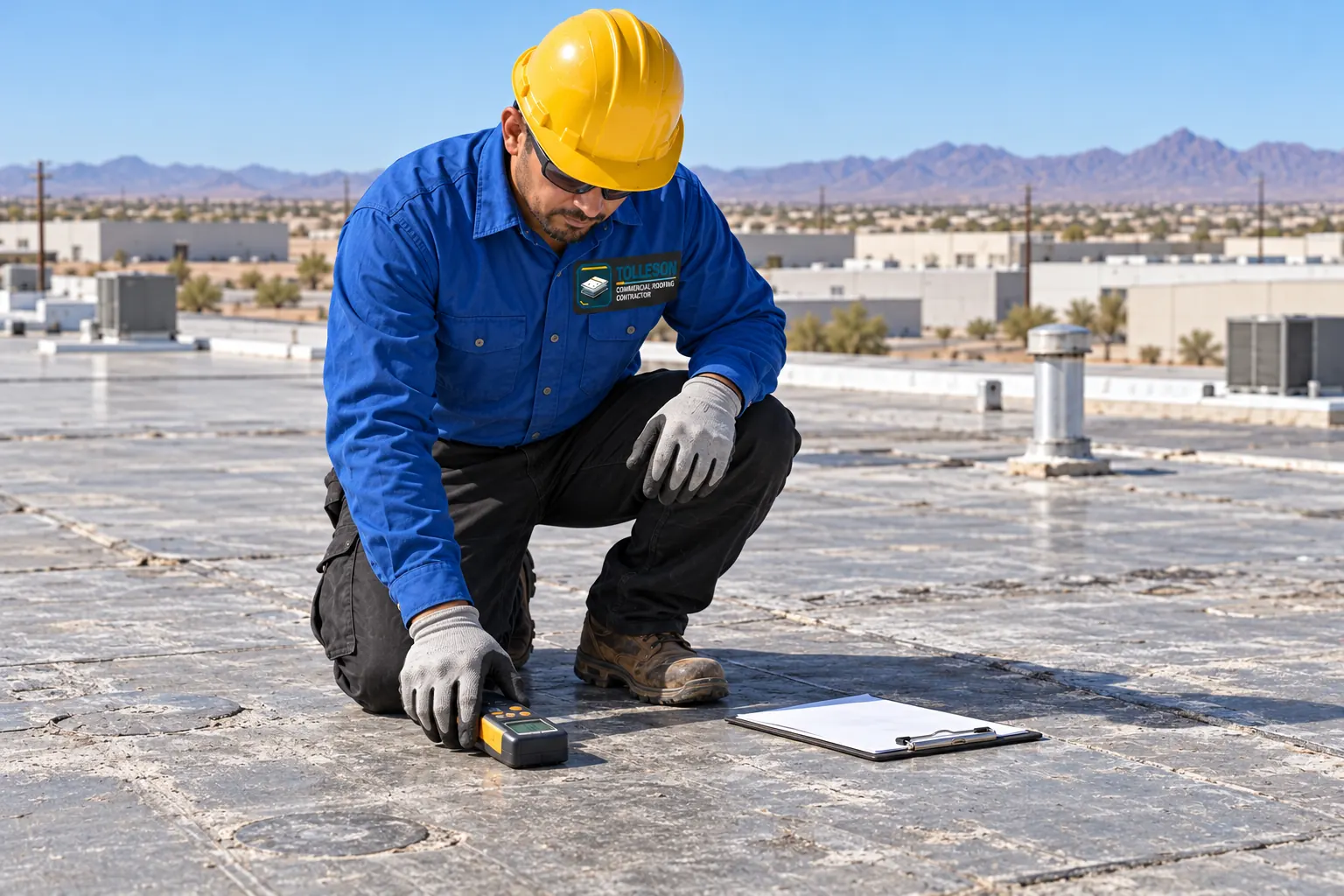
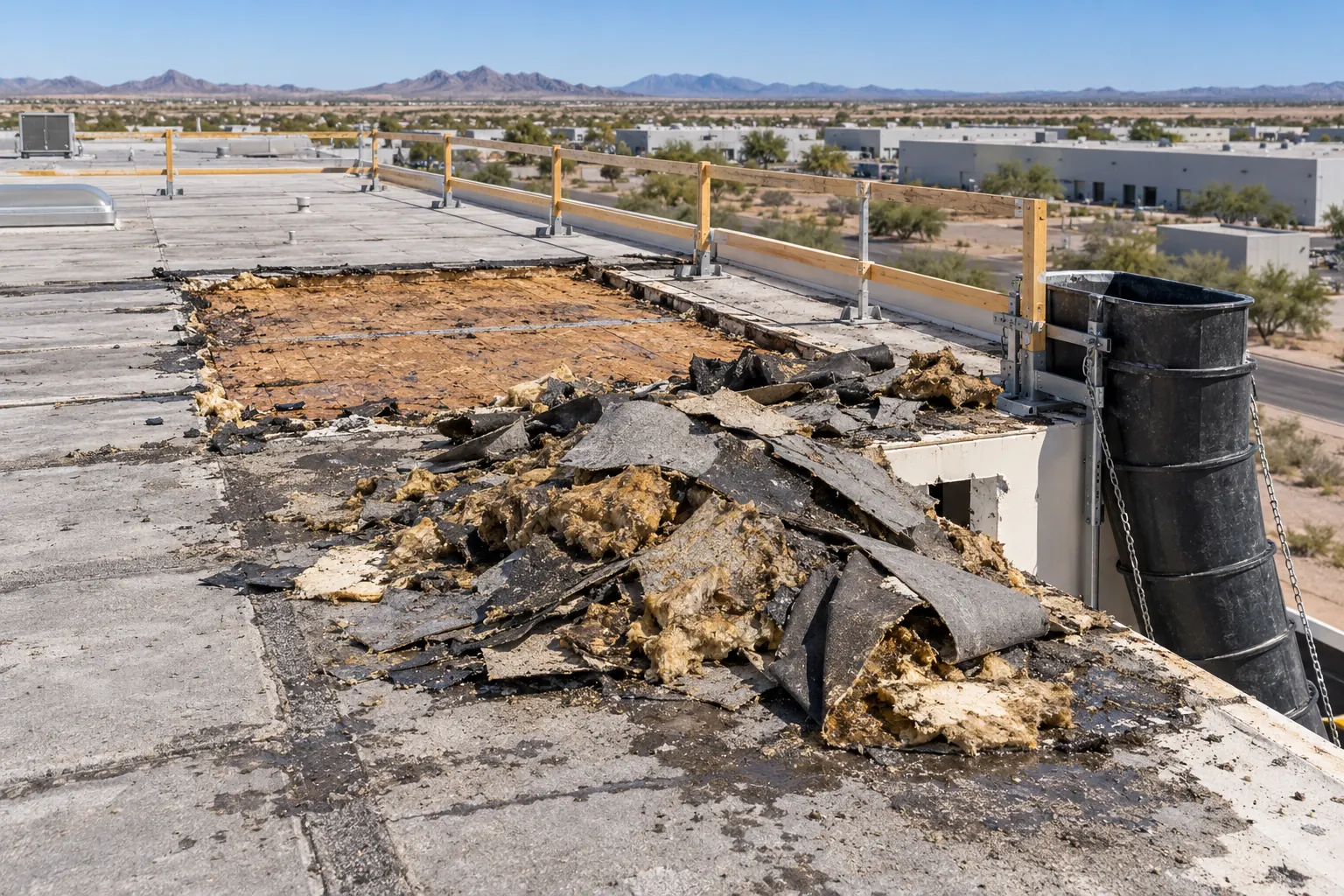
We map ponding rings and low spots, check each drain height, and core the wet-looking areas to count layers and test the insulation.
A taper plan sets board thickness and crickets so every area slopes to a drain or scupper, and checks edge, curb, and scupper heights against the new build-up.
Old layers come off where needed, wet boards are thrown out, and the deck is checked before new insulation goes down.
Tapered boards and crickets go in, drains are reset or added, and overflow scuppers are cut where walls trap water.
A water test confirms flow to each drain, and you get photos and the taper plan for your records, so future units and repairs keep the slope intact.
Neighboring areas west and south of Maryvale, each with its own roof work.
West across Loop 101, where hotel and office roofs are worked during quiet hours.
South across I-10, where commerce-park roofs are shared by several tenants.
Southwest along I-10, where solar racks and rooftop units crowd many roofs.
Daily heat ages the membrane, dries out sealant, and makes the roof expand and contract. On an older flat roof, water that ponds speeds that wear, so cracks show up first where water sits and the sheet heats and cools around it.
Water still standing two days after rain marks an area to fix. Short-lived puddles that dry by the next day are less of a concern, though dirt rings left behind show where to watch after the next storm.
Sometimes. Tapered insulation can go over a dry existing roof during a recover, if the building is under its code limit on layers. Wet areas still come out first.
Maryvale is an urban village inside the City of Phoenix, so Phoenix Planning & Development handles commercial permits, including reroofs that add tapered insulation, drains, or overflow scuppers.
A small, sloped ridge of tapered insulation built behind a curb or between drains, so water splits around an obstacle and flows to a drain instead of pooling against it.
If the main drain clogs, water rises until it finds a way out. An overflow scupper gives it a planned exit through the wall.
Some do, from past recovers. A core cut counts the layers, and that decides whether a recover is allowed or a tear-off is needed.
Tapered insulation raises the roof surface in places, so edge metal, scuppers, and curb heights get checked against the new thickness. We plan those details in the taper layout before any boards are ordered.
Send photos of where water sits, and we will set up the inspection and taper plan.
Leave a name and number and we will call you back about the roof.
Or call now: (623) 310-0160