
Commercial Roofing Services
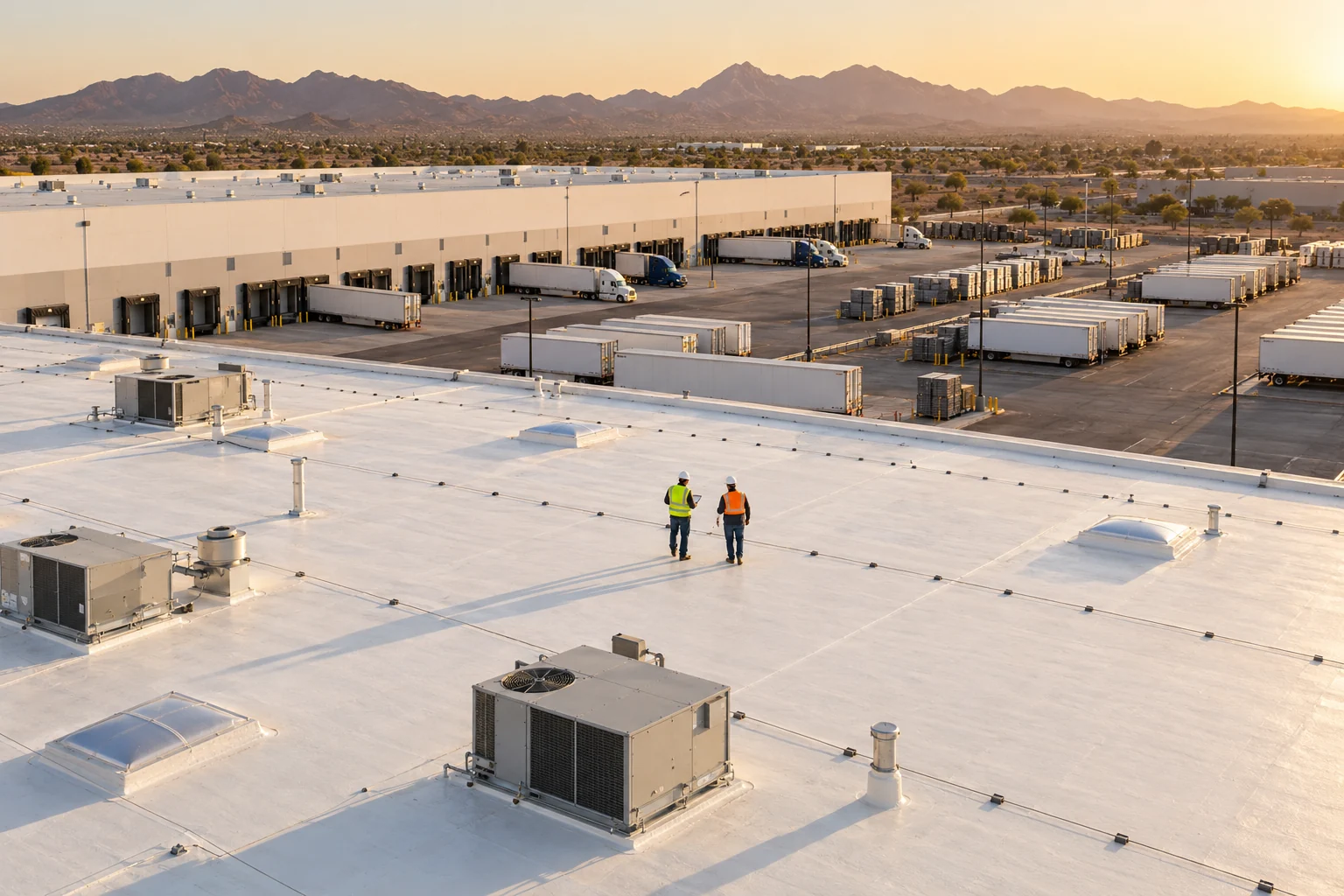
A commercial roof is more than its exposed membrane or panels. Insulation, attachment, roof edges, penetrations and drainage all affect how it performs. When a leak or aging surface prompts a roofing request, those supporting components need consideration alongside the visible material.
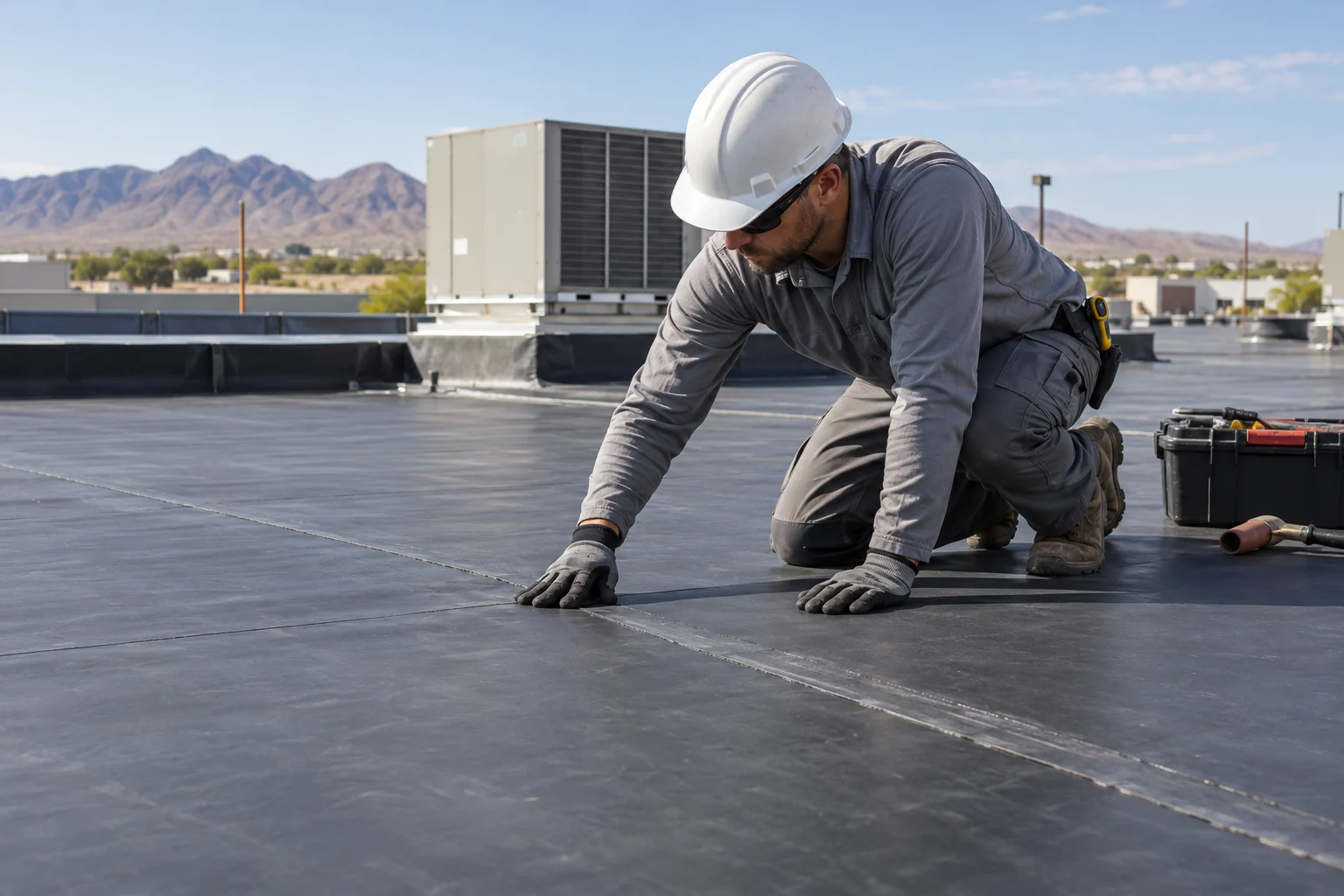
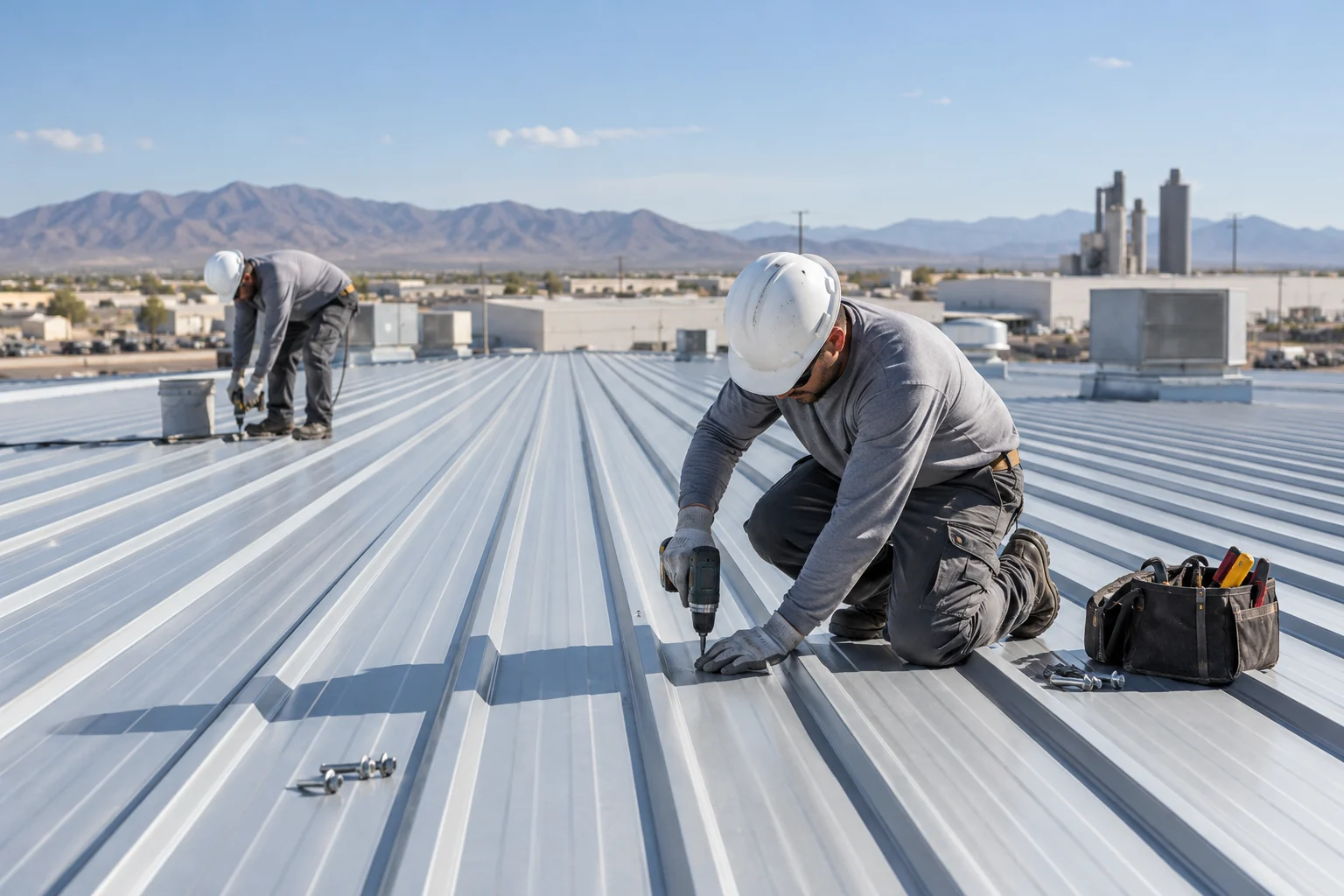
TPO and PVC are thermoplastic membrane systems with welded seams. EPDM is a rubber membrane with its own seam and flashing methods. Metal roofing requires a different approach to panels, connections and movement. Similar-looking roofs may therefore need different materials and repair techniques.
Repair, Restore Or Replace
Repair is appropriate when a defined defect can be corrected within an otherwise serviceable roof. Restoration may suit a compatible assembly that can remain after preparation and repairs. Replacement becomes relevant when the existing materials cannot reasonably support the intended work.
These are condition-based choices. A single leak does not establish that every roof layer must be removed, and a roof’s age alone does not confirm that a coating will work. The inspection needs to connect visible symptoms with the condition of the assembly.
Plan For An Occupied Property
Roofing work must account for the business below it. Equipment access, deliveries, customer entrances and sensitive interior areas can affect sequencing. Tell us about those conditions when requesting an estimate so the building’s operational needs are part of the discussion.
If different roof sections have different materials or histories, they may need different treatment. A useful plan can separate a localized repair from broader renewal rather than forcing one solution across every area.
Know The Roof You Are Repairing
TPO, PVC and EPDM may all be described as membrane roofing, but they use different compatible components and methods. Metal roofing involves panels and their connections. The existing system must be identified before repair materials are chosen.
Previous work can complicate the visible surface. A coating or patch may differ from the original roof beneath it. The assessment needs to consider what is present now rather than relying only on the building’s age or an older description of the roof.
Look Beyond The Interior Stain
Water may travel through a roof assembly before appearing inside. The ceiling location helps direct inspection but does not define the repair by itself. Seams, flashing, drains and adjoining building components may need consideration.
Describe when the symptom occurs and any recent rooftop changes. If several areas are affected, identify them separately. A clear history can help distinguish a localized defect from broader conditions without requiring you to diagnose the source.
Retain Sound Materials Where Practical
A repair or partial renewal needs a dependable connection to the roof that remains. That may require removing unsuitable material around the visible defect. The scope should reach a sound boundary rather than remain artificially small.
Localized damage does not automatically justify full replacement, while widespread deterioration may limit what patching can accomplish. Inspection establishes the extent and helps determine which option can address the actual condition.
Roof Details Are Part Of The Work
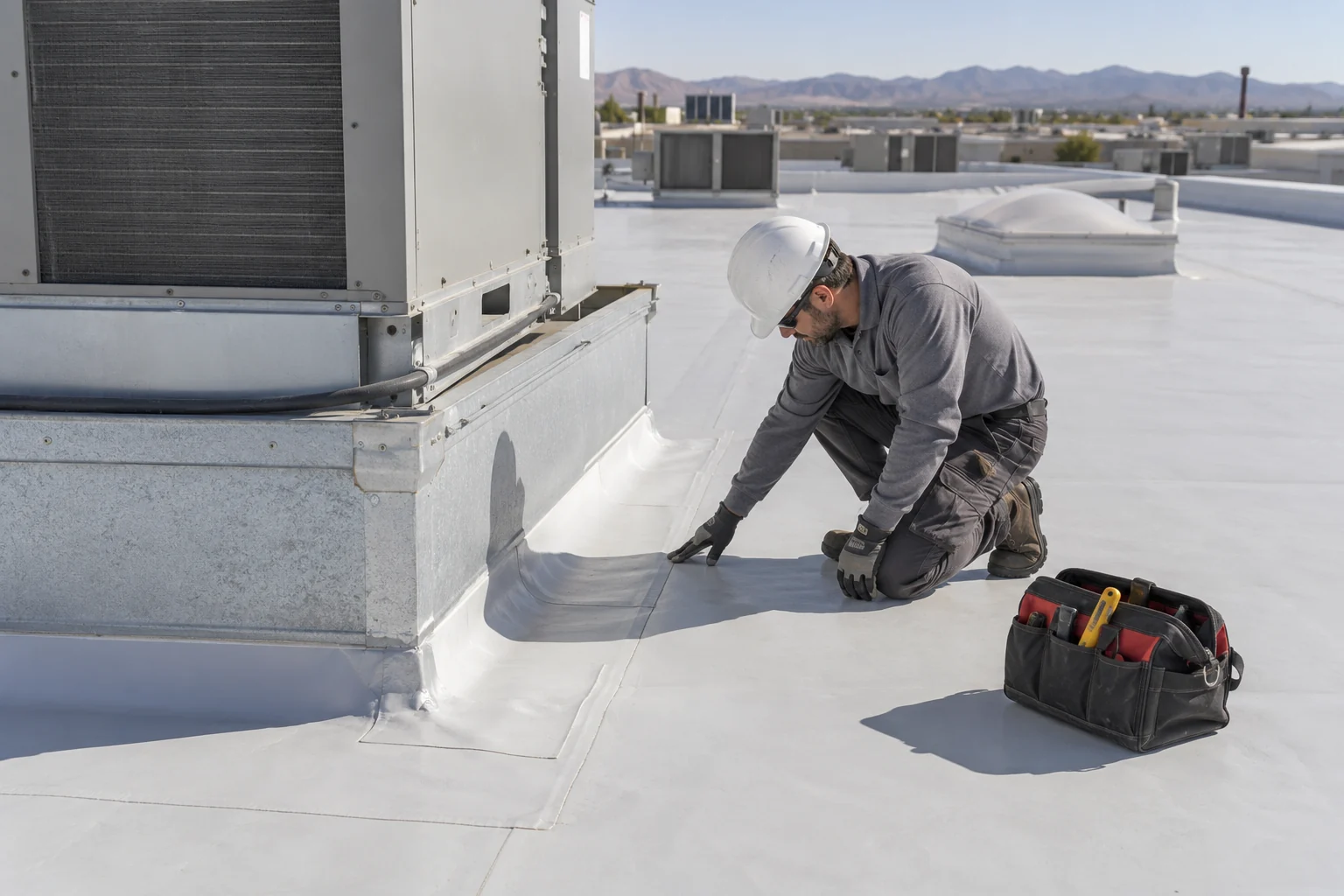
A roof is not complete at the edge of its open surface. Connections to walls, equipment, pipes and outlets need appropriate materials and construction. These details should be considered when repairs or replacement are planned.
Later building changes can affect them again. New equipment and penetrations require compatible roofing attention. Ongoing maintenance remains relevant after a project, because the assembly continues to experience weather and building activity.
Plan Ahead Or Address A Current Problem
You can request an assessment for an active leak, visible damage or a future roofing decision. State the purpose so the inspection addresses the question you need answered. A roof’s age alone does not establish the correct scope.
Use safe observations and known information in the form. Roof access and investigation belong in the assessment. The resulting estimate follows the actual system, materials and work required for the commercial property.
What If The Roof Has No Current Leak?
A planned assessment can still be useful when you are considering renewal or coordinating roofing with other building work. State that objective in the request. The inspection can review existing condition and the requirements of the proposed work without assuming that a roof must leak before it deserves attention. The appropriate scope follows the actual assembly and your stated project need.
Get An Estimate
Describe the roof concern and property location in the estimate request. Select the material if you know it; otherwise choose Not Sure. A site assessment establishes the suitable work and actual scope. Roof area alone cannot determine the cost of a repair or the construction requirements of a replacement.