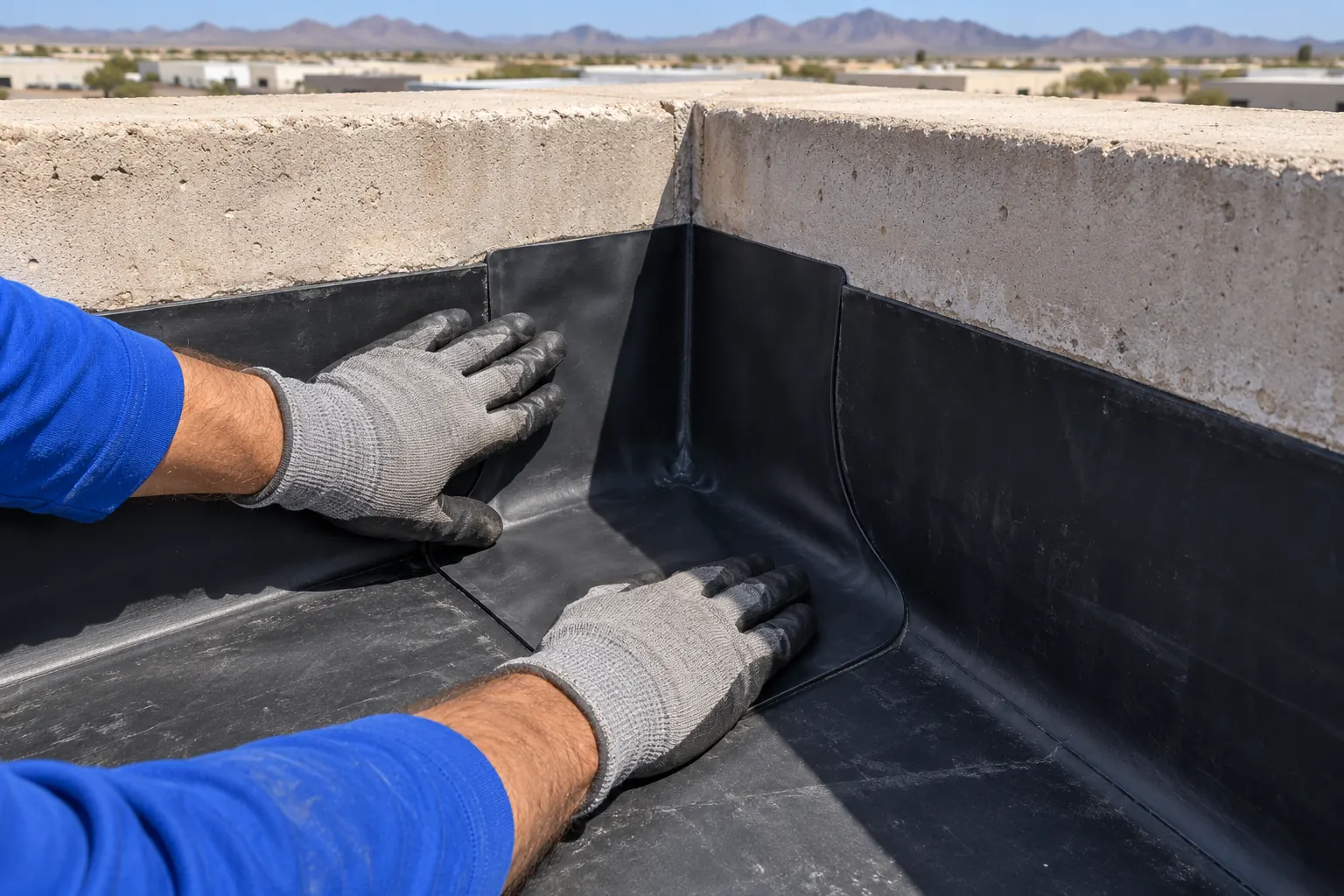
Flashing At Walls And Corners
Inside corners, parapets, and curbs get new primed flashing and corner patches, the details where rubber roofs give out first.

As an EPDM roofing contractor in Tolleson, we install, repair, and replace rubber roofs on older buildings, sealing taped seams and flashing crowded curbs, pipes, and drains.
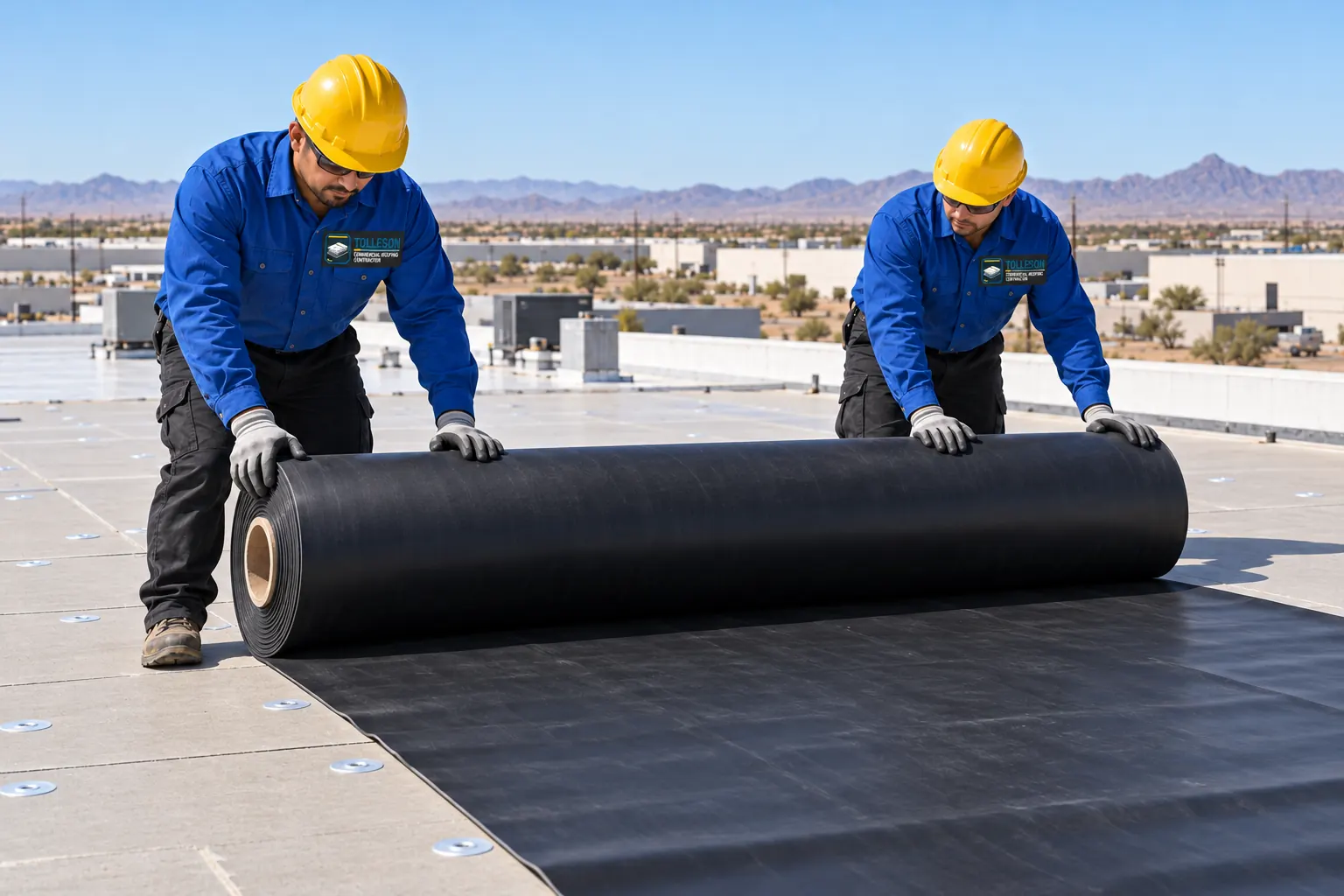
EPDM fits low-slope roofs that move or carry lots of penetrations. Check your roof against both lists.
Rubber sheet lasts a long time. Leaks on West Valley EPDM roofs start at the seams and the details around them.
Seam tape or adhesive that dried out and released after years of heat.
Clean and prime the lap, install new seam tape, and cover the end laps with a patch.
Pipe boot cracked at the collar, or a clamp that loosened in the sun.
Replace the boot with a molded EPDM boot, prime the base, and tighten a stainless clamp.
Wall flashing pulled down as the sheet shrank and the termination bar loosened.
Install new wall flashing up the parapet, reset the bar, and seal the top under the coping.
Drain clamp ring off its seat on the rubber, letting water track under the sheet.
Remove the clamp ring, set new sealant and a target patch, and re-clamp the drain.
Black EPDM absorbing heat across the whole field during summer afternoons.
Price a white EPDM sheet at replacement, or a reflective coating over intact rubber.
Four EPDM jobs we take on, chosen by what the inspection finds.
Inside corners, parapets, and curbs get new primed flashing and corner patches, the details where rubber roofs give out first.
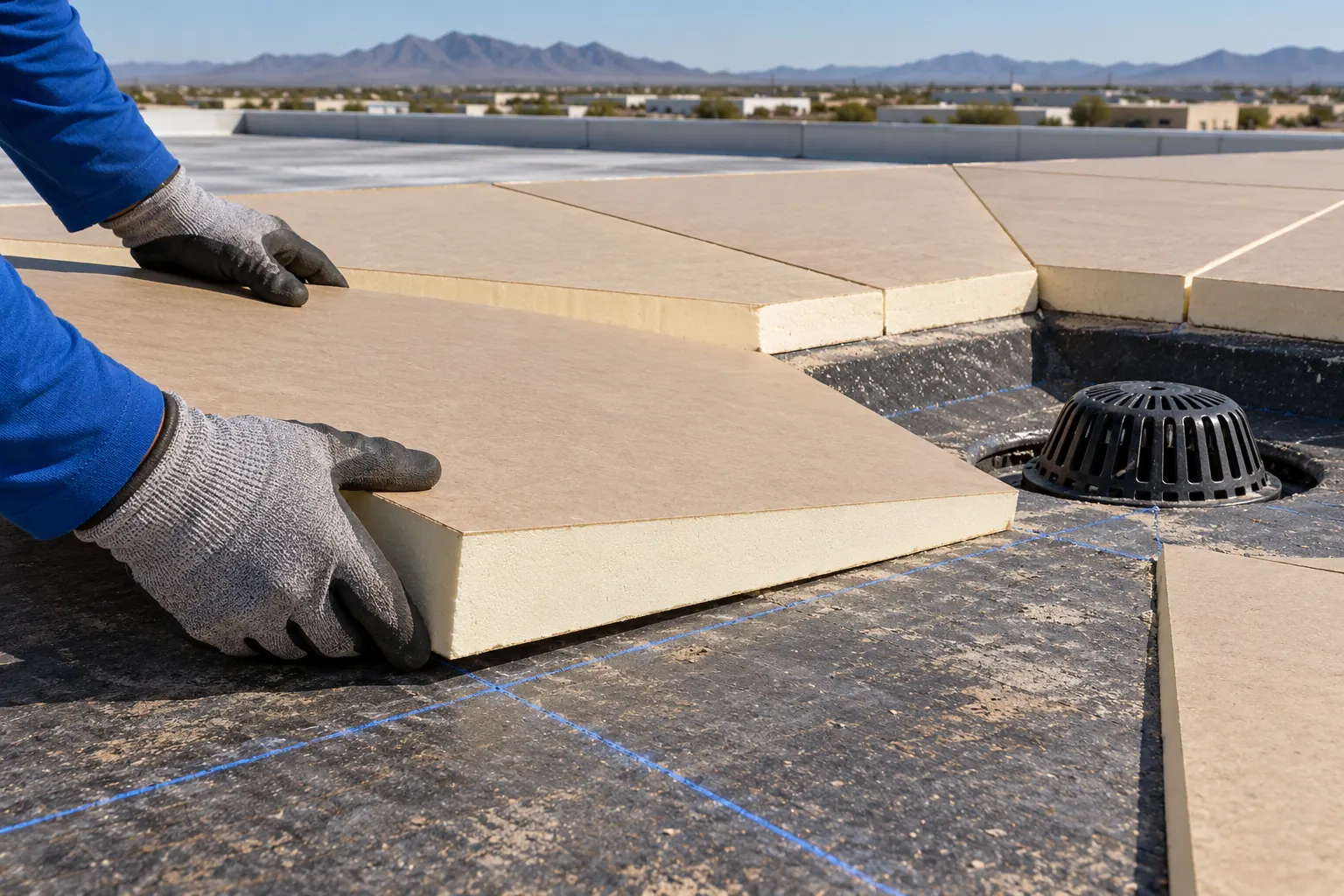
After a tear-off, tapered boards and cover board go down before the new rubber sheet, so water runs to the drains.
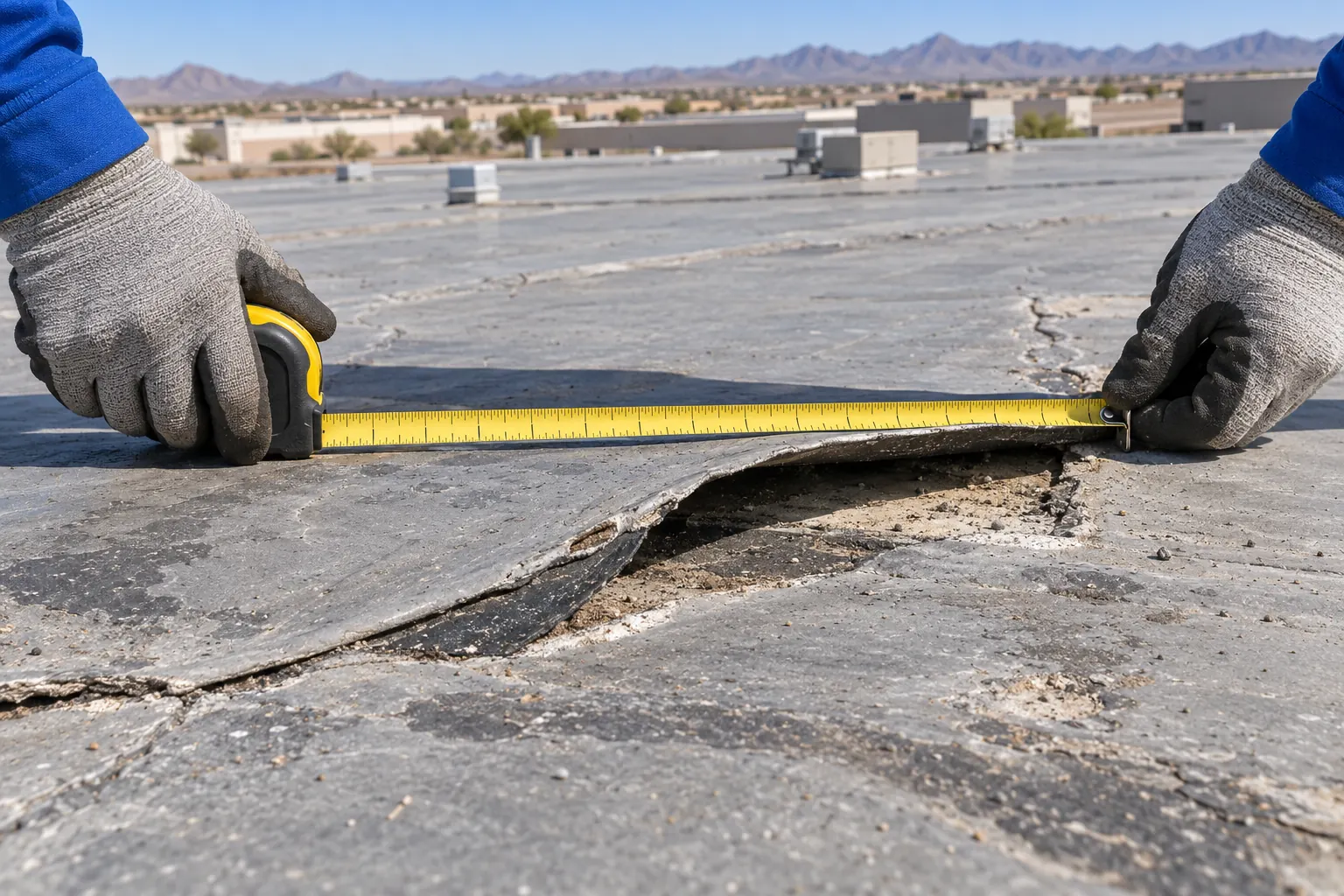
Released laps, splits, and punctures on a pliable EPDM roof get cleaned, primed, and patched with matching rubber.
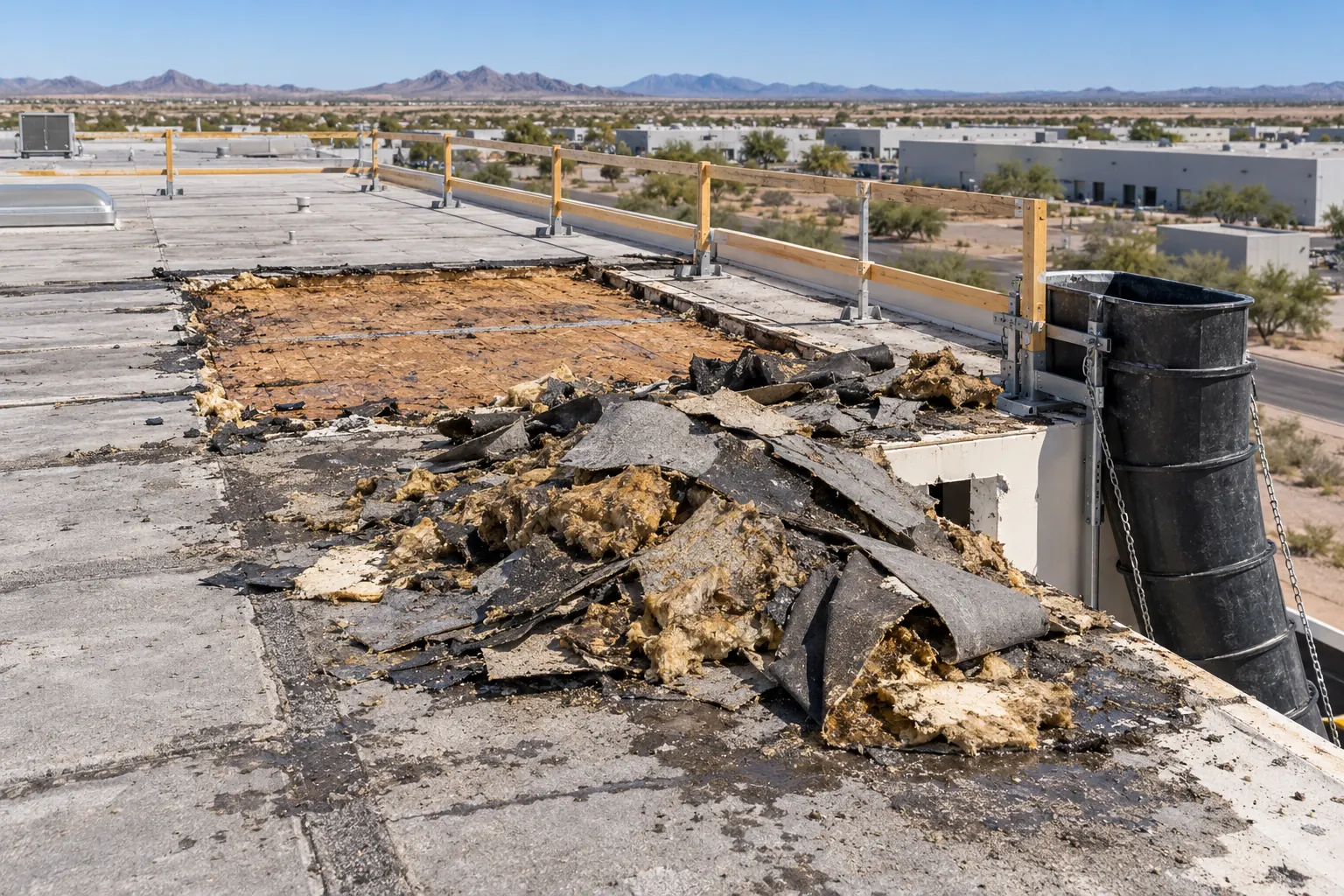
Shrunken or soaked EPDM comes off in sections, and the deck under each section is checked before new sheet goes down.
Weigh your rubber roof against these six points.
| Roof Factor | Repair The EPDM | New EPDM Roof |
|---|---|---|
| Seams | Some laps released in one area | Laps failing across the roof |
| Sheet | Still stretches and recovers | Shrunk, cracked, or crazed |
| Walls and curbs | A few loose flashings | Sheet pulling away at every wall |
| Insulation | Dry in most cores | Wet over wide areas |
| Surface heat | Coat the black sheet white | Choose white EPDM at replacement |
| Roof age | Inside its 25 to 30 years | Past its expected life |
Send photos of the laps or the stain inside. We check whether your EPDM can take a seam repair or needs new sheet.
This is how we take an older Tolleson building from a leak to a tight rubber roof.
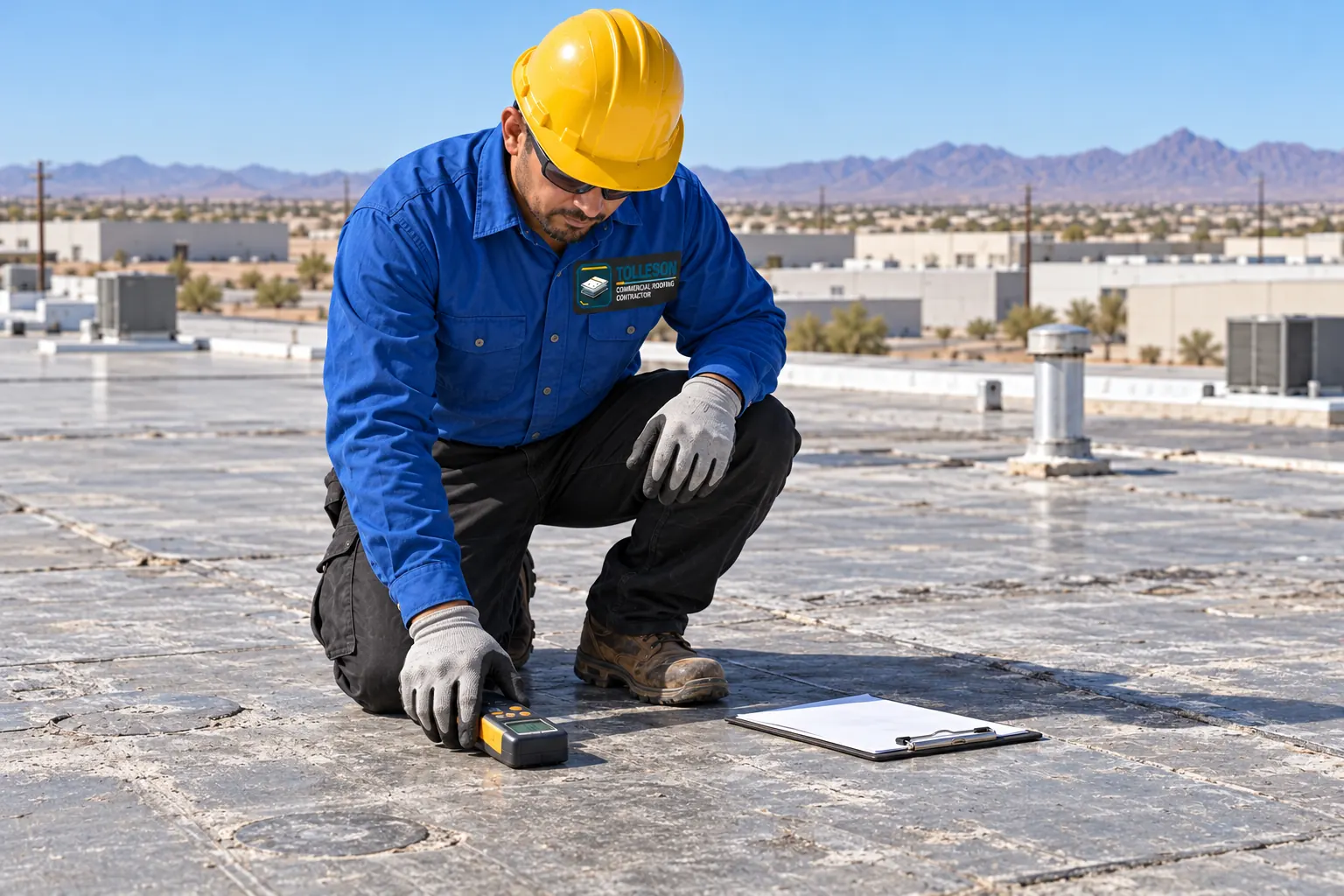
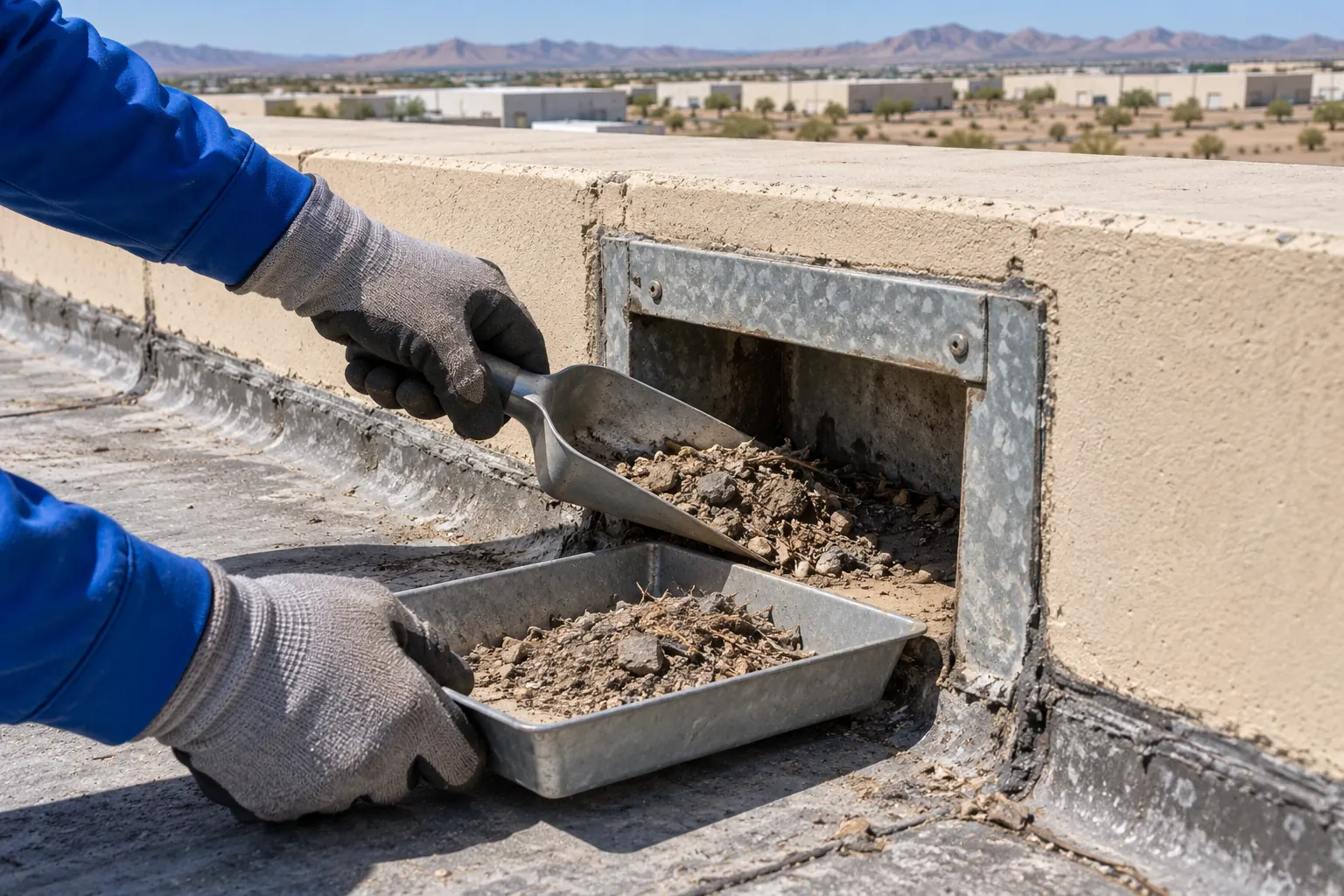
Every lap, boot, and wall flashing gets checked, and cores show whether the insulation under the rubber is dry enough to keep.
Dust and debris come out of drains and overflow scuppers first, so the roof drains while seams are opened and repaired.
Laps are cleaned, primed, and sealed with seam tape rolled down hard, and end laps get cover patches where water collects.
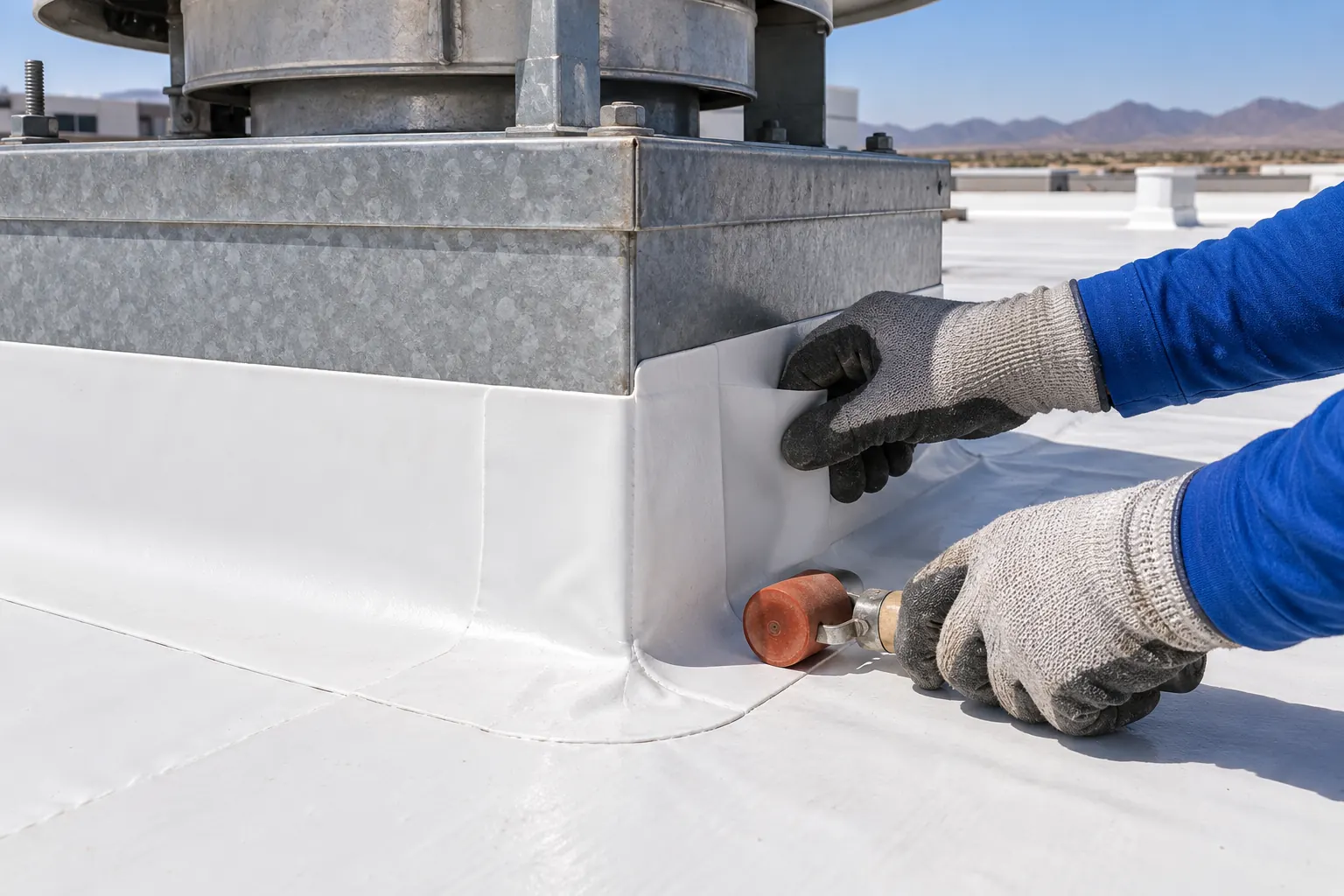
Walls, curbs, pipes, and drains get new primed flashing and molded boots, since those spots leak first on rubber roofs.
After a water check at the repaired areas, you receive photos of each seam and detail plus notes on what to watch.
Two other systems we compare against EPDM during an inspection.
Large open warehouse roofs with few penetrations often go to TPO instead, with welded laps in place of taped seams.
TPO roofing in Tolleson
Sloped shop roofs shed water better as metal, and retrofit framing can turn a leaking flat roof into a metal one.
Commercial metal roofing in TollesonEPDM fits buildings that need a flexible, forgiving sheet: older roofs crowded with penetrations, or decks that move as temperatures swing. Standard black EPDM absorbs heat here, so ask about white EPDM or a reflective coat, and expect careful detailing at curbs and drains because the seams are taped.
Often. If the sheet still stretches and the insulation is dry, released seams and failed flashings can be redone with primer and tape. A brittle or shrunken sheet is past repair, and we will show you the core and the cracked areas.
For a roof over cooled space, a white top surface keeps the sheet cooler on summer afternoons than black rubber. The extra cost and the cooling effect depend on the building, so we price both sheets side by side.
Yes, when the rubber is intact and clean. EPDM needs a primer made for rubber before the coating, and open seams get taped first, since a coating will not hold a lap together.
Wind-driven rain from monsoon cells pushes water under loose wall flashing and open end laps that stay dry in light rain. We check those spots first, along with drains that back up when dust washes into them.
Modern EPDM seams use primer and pressure-sensitive seam tape, rolled down hard. Older roofs often used liquid adhesive, which dries out over the years and is a common source of released laps.
Tell us how old the rubber roof is and where it leaks, and we'll check the seams, boots, and walls.
Leave a name and number and we will call you back about the roof.
Or call now: (623) 310-0160