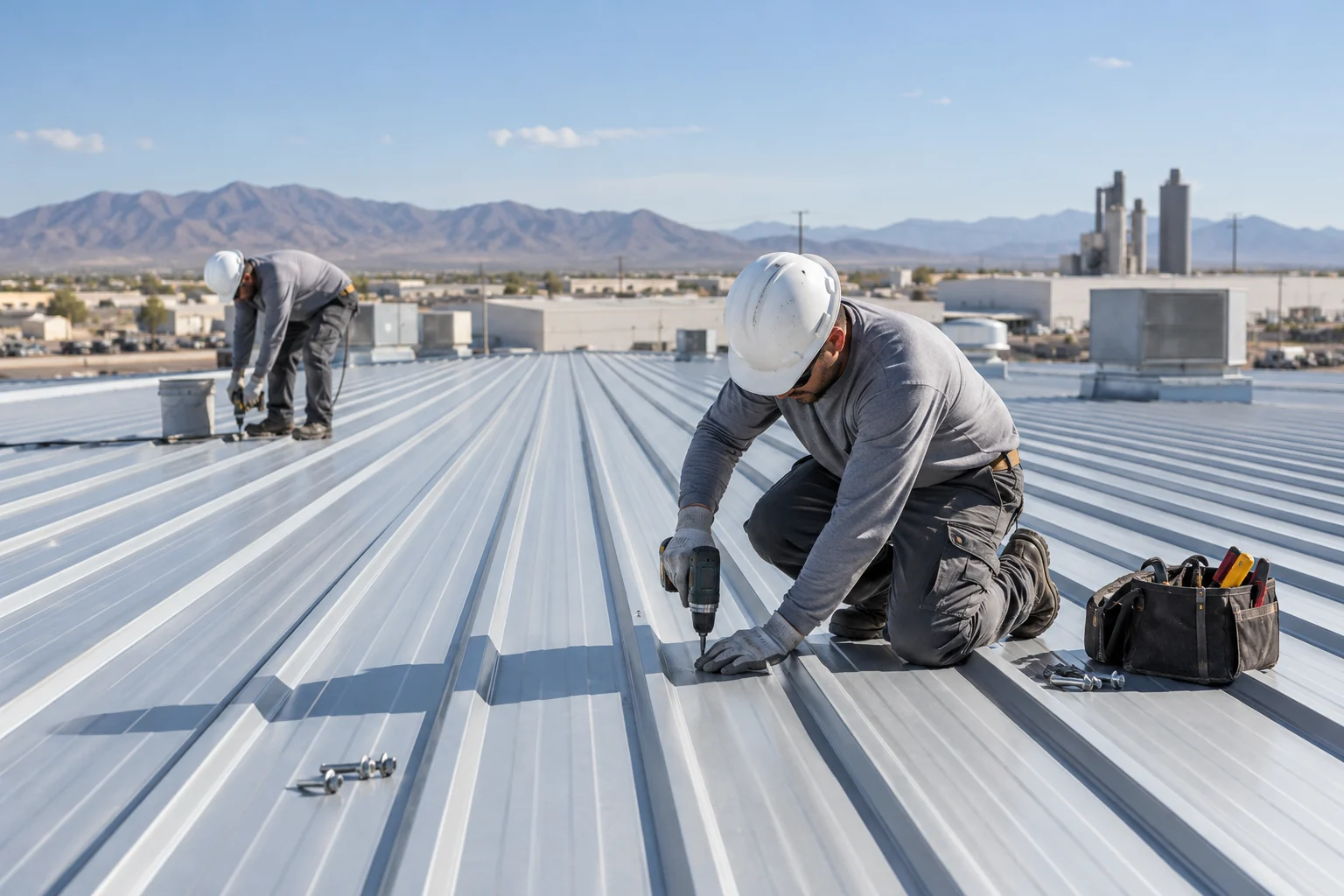
Inspect Panels And Attachment
A metal roof can have sound open panels and still leak at fasteners, seams or penetrations. Conversely, a deteriorated panel may need replacement even when nearby joints appear intact. The assessment needs to consider each condition on its own terms.
Previous repair materials and coatings also affect the available options. Retaining the roof requires a plan compatible with its existing finish and the movement of its components.
Targeted Metal Roof Repairs
Localized work may include addressing appropriate fasteners, damaged panels or failed details. A sealant-only response may be insufficient when attachment or metal condition is the underlying issue. Repairs should correct the actual defect and tie into suitable adjacent material.
Where restoration is appropriate, preparation and detail treatment precede coating. A protective finish cannot replace structurally unsound metal or resolve an unstable connection.
Plan A Broader Roofing Project
If the roof cannot support the intended repair or restoration, replacement may be the practical option. The assessment then includes supporting conditions, roof transitions, access and the effect of removal on the occupied property.
Building operations may influence the order of work. Loading areas, equipment access and interior activities should be discussed early rather than treated as an afterthought.
Panel Condition And Connection Condition
These are related but separate parts of a metal roof assessment. A panel may remain useful while its fasteners or flashing need correction. In another area, deterioration of the metal itself may limit repair. The scope should identify each condition rather than applying one surface treatment to every symptom.
A coating does not replace missing metal or restore an unsuitable structural component. Where restoration is considered, the retained roof must first be capable of supporting that work. Necessary panel and detail repairs come before the finish.
Previous Repairs Can Change The Surface
Metal roofs may have older sealants, patches or coatings at problem areas. Their attachment and compatibility affect the next repair. Unsuitable material may need removal, while sound compatible work may remain after preparation.
The assessment should not assume that a uniform-looking finish means a uniform substrate. Different repaired areas can need different treatment. Choosing materials for the current roof is more useful than relying only on an old description of the original panels.
Evaluate Penetrations And Wall Connections
A leak can occur where a panel roof meets a curb, pipe or wall even when the open panels appear sound. These transitions need appropriate flashing and connection details. Repeatedly treating the nearest panel seam may miss the source.
The condition of the adjoining component also matters. A roofing repair needs suitable surfaces and a coherent connection across the transition. If a detail is unstable or deteriorated, rebuilding it may be more appropriate than adding another layer of sealant.
What If Only Part Of The Roof Is Damaged?
Localized replacement or repair may be possible when adjacent material remains serviceable. The inspection defines where the work can connect reliably to retained panels and details. A small visible defect can require a larger affected area, but it does not automatically require replacing the whole roof.
Broader deterioration can change that decision. The useful question is whether the intended correction has a sound assembly to connect to. The answer should follow the condition found, not a general promise to save every metal roof.
Organize A Commercial Roofing Project
Roof access, occupied areas, vehicles and equipment service can influence the order of work. Explain those requirements when requesting an estimate. Repair, restoration and replacement involve different activities, and their practical effects depend on the actual scope.
Later building changes remain relevant after the project. New equipment penetrations and modifications to the roof require appropriate details. A newly repaired or restored roof should continue to be treated as a system rather than a surface that accepts any available patch.
Start With The Concern
Describe active leakage, visible corrosion, damaged panels or the reason you are considering planned replacement. Include known coating history and the affected section if available. The estimate follows inspection of the roof and necessary work; area alone does not price panel replacement, connection repairs or supporting conditions.
Should Surface Color Determine The Repair?
No. The panel condition, existing finish and connections determine the work. Similar-looking metal roofs may need different preparation and corrective repairs. The estimate should follow those conditions instead of treating a preferred coating color as a complete restoration specification.
Get An Estimate
Tell us whether the concern is recurring leakage, visibly damaged metal, aging finishes or a planned roof replacement. Approximate area is useful for context, but the estimate depends on the panel system and the actual work required.