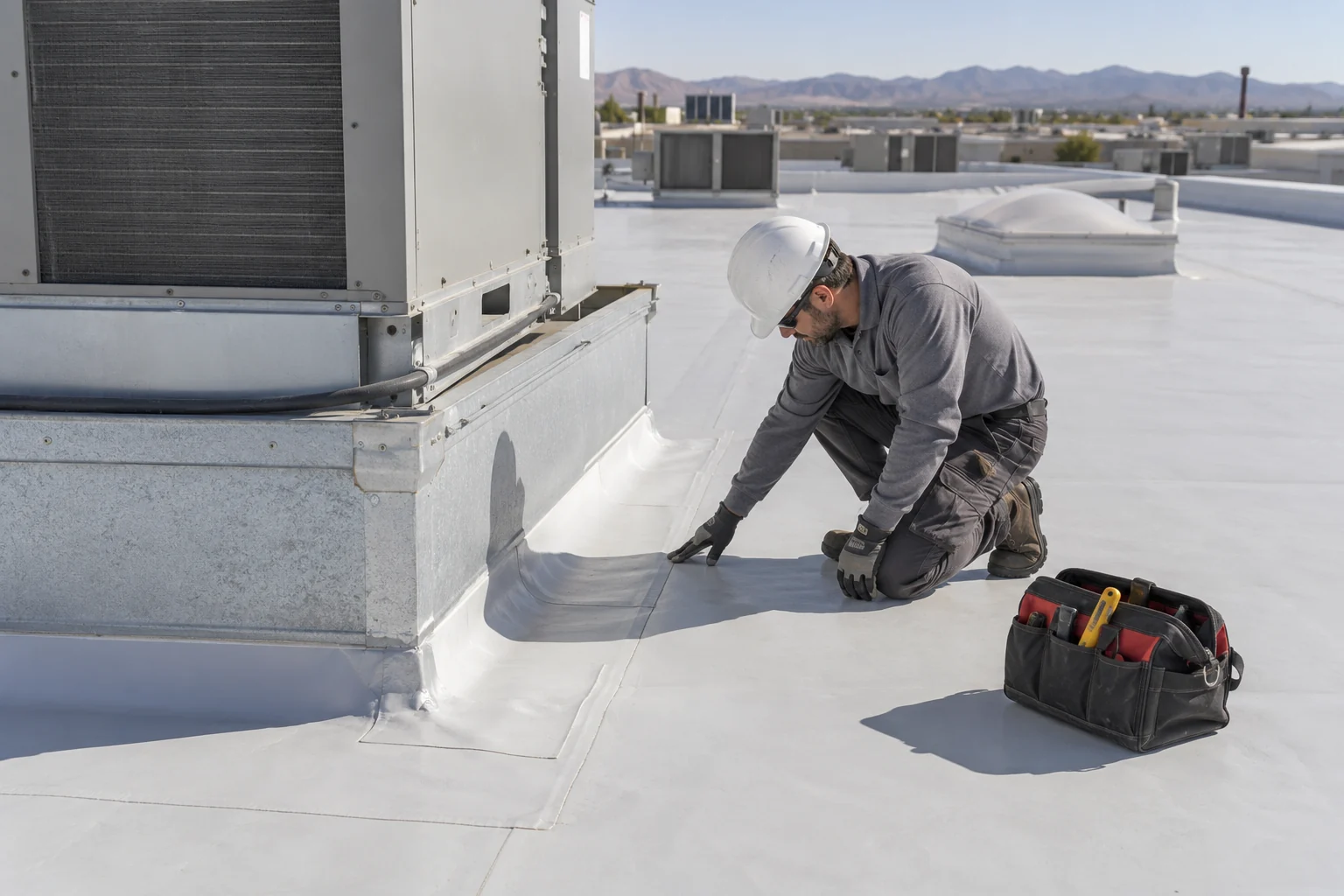
Inspect Flashing And Edges
The roof’s protection must continue through penetrations and perimeter transitions. A failure at a curb or wall can cause leakage even when the main membrane remains sound. The inspection should include those details.
Compatible repair materials and proper connections matter more than a surface treatment chosen only for convenience.
Retain Serviceable Roofing
A targeted repair may be appropriate where the defect is defined and surrounding roofing is sound. If conditions prevent a reliable repair, broader options can be assessed. Neither the roof’s age nor one visible stain provides the full answer.
Roofing That Includes The Details
TPO, EPDM, PVC and metal roofing all depend on more than their broad exposed surface. The system must connect to walls, drains, equipment and roof edges. A replacement or repair needs to address those connections, because an otherwise sound surface can still leak through a defective transition.
The appropriate materials differ by system. Thermoplastic membrane work is not interchangeable with EPDM repair, and a metal panel connection needs a different approach again. Identifying the existing assembly is part of choosing the work.
When A Flashing Repair Is Enough
A localized defect may be corrected when the adjacent roof and adjoining component remain suitable. For example, the scope may focus on a particular penetration rather than the entire roof. The inspection needs to establish that the repair can connect to sound material on all sides.
If nearby material is deteriorated or previous patches interfere with the connection, the work may extend beyond the obvious opening. A larger repair does not necessarily mean full replacement, but it should address the limits of the affected area.
Look At Both Sides Of A Connection
A roof-to-wall or roof-to-curb transition involves more than the membrane itself. The condition of the adjoining component can influence water entry and the ability to complete a suitable repair. Covering the visible seam without considering that condition can leave part of the problem unresolved.
Recent changes are useful information. If equipment, wall work or another alteration preceded the symptom, mention it without assuming it proves the cause. The assessment can then consider the changed conditions.
Replacement Requires Assembly Planning
When the existing roof cannot reasonably support a repair, replacement may be appropriate. That decision includes the deck, insulation, attachment and drainage as well as the membrane or panels. A new exposed surface does not automatically resolve unsuitable material below it.
The replacement scope also needs a practical connection to retained building components. Edges and penetrations should not be left as incidental finishing details after the main roof has been selected.
Plan For Occupancy And Future Access
Roofing work can occur above active commercial space. Entrances, tenant access and equipment servicing should be discussed before the work is organized. Different scopes create different access needs, so no universal level of disruption should be promised.
Future maintenance matters too. New equipment penetrations and other alterations need roofing attention after the project is complete. Keeping those changes compatible helps preserve the integrity of the system.
What To Include In Your Request
Describe whether the concern is a leak near a detail, a damaged surface or planned renewal. If the affected section is known, identify it. An interior observation from a safe location is enough to begin; there is no need to inspect a roof edge yourself.
The estimate follows inspection and the actual work required. A generic area calculation cannot identify the number of details, hidden damage or preparation needed at your property.
What If A Detail Has Been Patched Many Times?
Several layers may obscure the original connection and affect which materials can bond to it. The inspection should determine what remains suitable and what needs removal or reconstruction. Keeping every patch is not automatically the least disruptive useful repair if it leaves an unreliable base.
The condition of the adjoining wall, curb or pipe should also be considered. A sound-looking membrane cannot make a deficient neighboring component weatherproof. The repair needs a dependable connection across the whole transition. Describe the history if known, including whether earlier work changed the leak pattern. A recurring interior symptom can justify looking beyond the old patch to nearby details or another water-entry route. The next step follows the condition found rather than simply repeating the material used last time.
Get An Estimate
Begin a Litchfield Park commercial roofing request with the building location and the concern at the roof or its details. Known repair history is useful, but a material diagnosis is not required. Describe safe observations and access needs. Assessment determines which surfaces can remain and what connection or assembly work is necessary before the estimate is established.