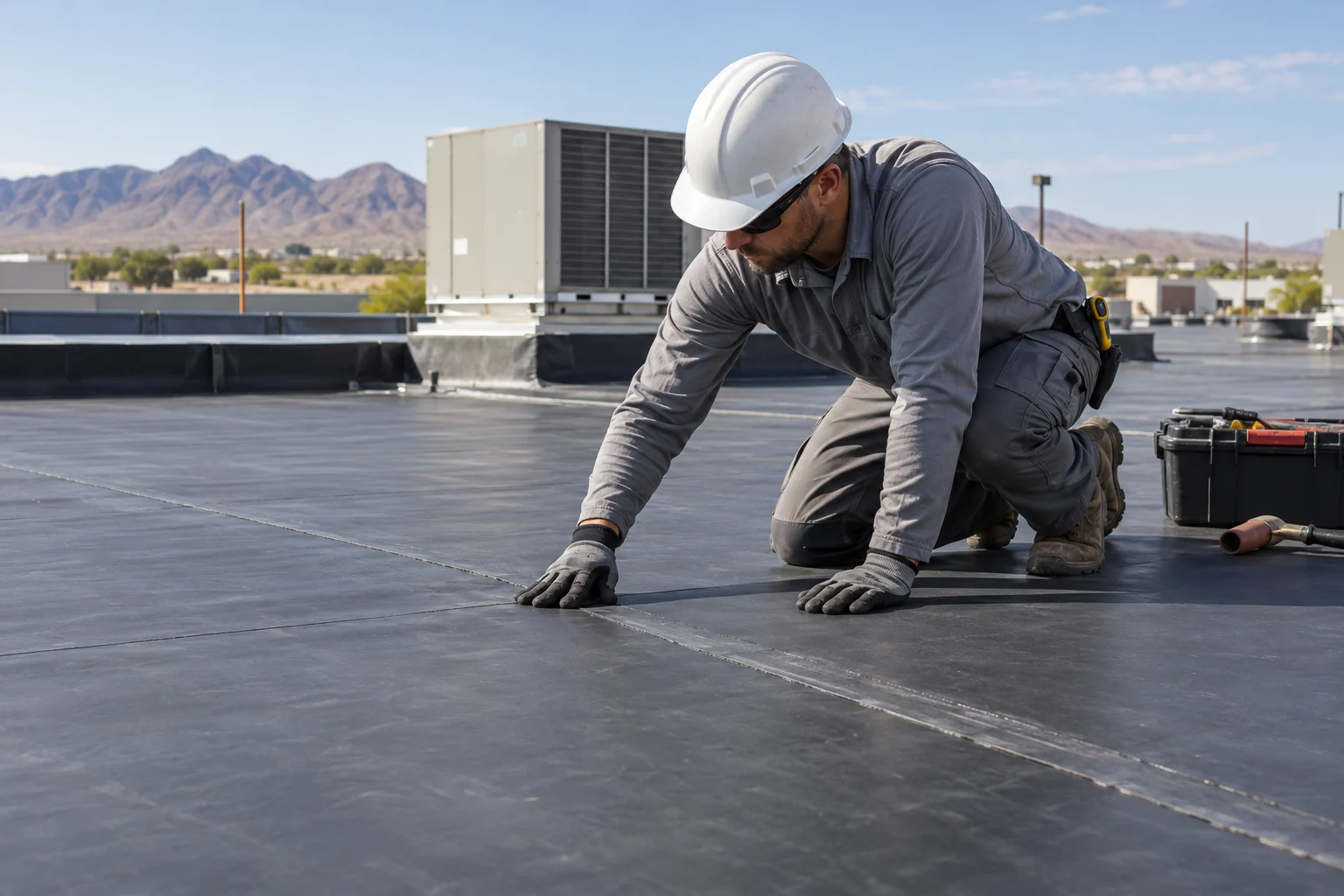
Understand The Existing Membrane
EPDM roofing uses system-specific seam and flashing materials. It should not be treated as interchangeable with thermoplastic roofing simply because both are sold as single-ply membranes. Prior repairs and surface contamination also affect what can bond successfully.
An inspection looks at the condition around a defect, not only the visible opening. Loose or deteriorated adjacent material can change the size and type of repair required.
Seams, Curbs And Penetrations
Transitions around pipes, equipment and walls must remain compatible with the main roof. Separation, stressed flashing or unsuitable previous patches may create water-entry routes. Reworking those details can be more appropriate than repeatedly adding surface sealant.
Drainage outlets and roof edges are also part of the system. When water is reported inside, the evaluation should consider those locations along with the open field of membrane.
When More Extensive Work Is Needed
A localized issue in serviceable EPDM may support a targeted repair. Widespread deterioration or moisture problems may require removal of affected material and a broader plan. The scope follows the evidence, rather than an assumption that the entire roof must be replaced because one area leaks.
For replacement, the deck, insulation and attachment need assessment as well as the membrane. The finished roof depends on those layers even though they will not remain visible.
Recognize An EPDM Assembly
EPDM is a synthetic rubber roofing membrane. Its repair approach differs from thermoplastic roofing, even though both are commonly described as single-ply systems. The seam products, primers and flashing components must be suitable for the particular work.
An existing roof may also carry coatings or patches that change the exposed surface. The assessment needs to identify those conditions rather than assume every part of the roof presents untouched original membrane. Known history helps, but an uncertain material can be resolved through inspection.
Prepare A Reliable Repair Area
A patch needs more than a visible place to sit. The surrounding membrane must be suitable for the selected materials, and loose or contaminated surfaces may need preparation. If deterioration extends beyond the opening, the repair area may need to extend as well.
This condition-based boundary is important. Keeping a repair small is not useful if its edges connect to unsuitable roofing. At the same time, one localized defect does not establish that every section of membrane has failed.
Inspect Changes In Shape
Corners, curbs and pipe penetrations create conditions different from the open membrane. Flashing must connect through those changes without leaving an unresolved separation or unsuitable termination. A leak at one of these details may require reconstruction rather than another surface layer.
The adjoining component matters too. A wall or equipment curb in poor condition can affect the roof connection. The assessment should consider both sides of the transition before deciding that the membrane alone is responsible for the symptom.
Moisture And Supporting Materials
A roof can appear dry after rainfall while moisture remains below its surface. Where the inspection raises that concern, further evaluation can help establish affected areas. The scope should address unsuitable insulation or roofing before closing the assembly.
Local removal may be appropriate when adjacent materials remain serviceable. Widespread deterioration calls for a different plan. The decision should follow the extent of the condition rather than an automatic rule that every wet area requires complete roof replacement.
Coordinate Repairs With Operations
Access to occupied space, equipment and the roof itself can influence how work is organized. Include restrictions in the request so the roofing assessment can account for the actual property. A repair near a busy entrance may have different practical needs from one in an isolated section.
Future equipment changes also need compatible roofing work. A newly repaired EPDM area should not receive unrelated patching products simply because a later alteration is small. Maintaining suitable connections remains part of caring for the roof.
Repair Or Plan For Renewal?
If you are considering future roofing work rather than responding to a current leak, say so. The assessment can consider the condition of the broader assembly and whether localized work remains appropriate. Age and appearance alone do not establish the answer. Inspection provides the basis for a scope that matches your building’s actual needs.
Does Every Older Roof Need Replacement?
No. The assembly’s current condition and ability to support the intended work determine whether a suitable repair remains practical.
Request Roofing Work
Use the estimate form to describe the building and symptoms. If the roof has several sections or materials, note which area is affected. We can begin the discussion without requiring you to identify every component or measure the damaged area from the roof.